
Note: This article contains affiliate links. If you click on these links and make a purchase, we may earn a small commission at no extra cost to you. This helps support our research and content. Read our full affiliate disclosure here.
If you want more juice and less waste from leafy greens, root vegetables, and firm produce, choosing the right juicer matters. A juicer built for vegetables extracts liquid efficiently, preserves nutrients, and handles fibrous pulp without frequent clogs. This guide focuses on top-performing juicers for vegetables and explains the practical tradeoffs between extraction method, throughput, and cleaning. Below we shortlist seven strong options across common extraction styles and capacities. Read on to see the evaluation criteria we used and what to expect from each type so you can pick a model that fits your kitchen routine and vegetable juicing habits.
Top Picks at a Glance
| Best Overall The best all-around choice for most situations | Breville Juice Fountain Cold | 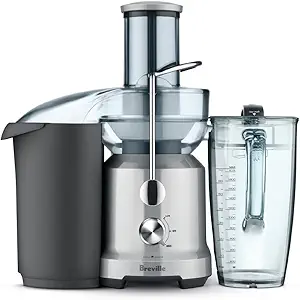 |
| Best Quality Built to a higher standard if you want something more solid | Hurom H70 Slow Juicer |  |
| Best Value The sweet spot between price and what you get | nutribullet Juicer NBJ50100 |  |
| Best Budget The cheapest option that still gets the job done reliably | Juilist Centrifugal Juicer AMR526 |  |
| Top Rated A top-rated pick with lots of positive feedback | Breville Juice Fountain Plus JE98XL |  |
| Most Popular A crowd favorite that many people choose with confidence | Hamilton Beach Big Mouth Juicer |  |
| Best Seller A high-volume bestseller chosen again and again | EanOruus 3-in-1 Masticating Juicer E-18 |  |
Breville Juice Fountain Cold

| Capacity | 2 liters |
|---|---|
| Wattage | 850 watts |
| Number of Speeds | 2 |
| Feed Chute | 3 inch extra-wide |
The Breville Juice Fountain Cold is a high-speed centrifugal juicer built to extract juice quickly from whole fruits and vegetables while minimizing heat-related nutrient loss. It uses an 850-watt motor and Cold Spin Technology with a precision mesh filter to reduce heat during extraction, and the 3-inch extra-wide chute accepts many whole items to cut prep time. Practical touches include a 70 fl oz seal-and-store jug with froth separator, a detachable juice nozzle for drip-free pouring, and an LED overload indicator to protect the motor. The two-speed control lets you choose between lower-speed extraction for soft produce and high speed for harder vegetables like carrots and beets. Cleanup is simplified by several dishwasher-safe parts, though the main body and some components require hand washing. As a centrifugal model it is fast and effective for bulk vegetable juicing but will produce slightly more foam and less dry pulp than masticating juicers, and it is larger and heavier than compact models which matters if counter space is limited.
Best for: Buyers who want a fast, high-yield juicer for regular vegetable and mixed produce juicing and value quick prep and bulk storage over the absolute lowest-foam extraction.
Less Ideal for: People whose priority is maximum nutrient retention, minimum foam, or the smallest possible countertop appliance should consider a slow masticating juicer or a more compact model instead.
- Cold Spin Technology and precision mesh filter help reduce heat-related nutrient degradation
- Extra-wide 3" chute lets you juice many whole fruits and vegetables with less prep
- Large 70 fl oz seal-and-store jug with froth separator stores juice for up to three days
- Fast 850-watt motor processes tough vegetables quickly and the LED overload indicator protects the motor
- Centrifugal design produces more foam and slightly wetter pulp than slow masticating juicers
- Relatively large and heavy footprint may be inconvenient for small kitchens
Verdict: A fast, vegetable-friendly centrifugal juicer that balances big-chute convenience, cold-extraction tech, and bulk storage for everyday home juicing.
Hurom H70 Slow Juicer

| Wattage | 150 watts |
|---|---|
| Power Source | Corded Electric |
| Material | Acrylonitrile Butadiene Styrene (ABS) |
| Blade Material | Ultem |
| Recommended Uses For Product | Fruits, Nuts, Seeds, Vegetables |
The Hurom H70 is a single-auger masticating juicer built to extract maximum liquid from fruits and vegetables while keeping cleanup simple. It uses a strainer-free Easy Clean chamber and a two-part auger system that separates pulp without a mesh filter, so rinsing the main parts takes under a minute and reduces mineral buildup. The wide self-feeding hopper accepts larger pieces, which cuts prep time when juicing carrots, beets, leafy greens, and apples. At 150 watts and slow-rotate operation the unit runs quietly and focuses on extracting higher yields with a smooth texture and minimal pulp. Its compact footprint makes it easy to leave on the counter for daily use or tuck away when not needed. Trade-offs are the hand-wash-only parts and the moderate power level, which means very dense batches may go slower than high-speed machines, but the H70 favors yield and nutrient-preserving cold press performance over speed.
Best for: Buyers focused on maximum juice yield and smooth texture from vegetables who value easy cleanup and a compact, quiet cold-press machine for regular use.
Less Ideal for: People who need the fastest throughput for large-volume juicing sessions or who prefer fully dishwasher-safe parts should consider other options.
- Strainer-free Easy Clean design that rinses quickly and reduces maintenance.
- Wide self-feeding hopper reduces chopping and speeds prep.
- Slow masticating action yields smooth juice with less pulp and higher extraction.
- Compact, portable form factor fits small countertops and stores easily.
- Hand-wash only parts require manual cleaning despite easy-rinse design.
- 150-watt motor and slow processing mean larger or very dense batches take more time.
Verdict: If you want high vegetable juice yield and smooth, low-pulp results with minimal daily cleanup in a compact, quiet unit, the Hurom H70 is a top choice.
nutribullet Juicer NBJ50100

| Maximum Power | 800 watts |
|---|---|
| Number of Speeds | 2 |
| Capacity | 1.5 liters |
| Power Source | Corded Electric |
The NutriBullet Juicer is a compact centrifugal juicer built for fast, everyday vegetable and fruit juicing. Its 3" feed chute accepts whole produce so you spend less time prepping, and the 800W motor with two speeds adjusts for soft greens or hard roots. Juice is collected in a 27oz sealing pitcher with a froth separator and no-drip spout, while a large self-contained pulp basin reduces mess and lets you juice multiple pieces before emptying. Most removable parts, including the stainless steel sieve and pitcher, are dishwasher-safe which simplifies cleanup. Because it is a centrifugal model it extracts juice quickly but may produce slightly more foam and a drier pulp compared with slow masticating juicers, and very leafy greens may require tougher shredding or additional passes. For routine vegetable-focused juicing where speed and easy cleanup matter, this unit delivers practical, user-friendly performance.
Best for: Buyers who want fast, low-effort vegetable and fruit juicing with easy cleanup and the convenience of a wide feed chute for whole produce.
Less Ideal for: Users seeking maximum juice yield from leafy greens or those who prefer the quiet, slow extraction and higher nutrient retention of masticating juicers.
- 3" wide feed chute lets you juice whole fruits and vegetables with minimal prep
- 800W motor with two speeds handles both soft and hard produce
- Sealing 27oz pitcher with froth separator and no-drip spout for easy pouring and short-term storage
- Large self-contained pulp basin reduces countertop mess and is simple to remove for cleaning
- Most removable parts are dishwasher-safe for quick cleanup
- Centrifugal design can produce more foam and slightly less yield on leafy greens compared with masticating juicers
- May require multiple passes or chopping for very fibrous produce
Verdict: A fast, easy-to-use centrifugal juicer built for convenient vegetable juicing with a wide feed chute and dishwasher-safe parts.
Juilist Centrifugal Juicer AMR526

| Maximum Power | 800 watts |
|---|---|
| Wattage | 400 watts |
| Feed Chute | 3" |
| Number of Speeds | 3 |
| Material | Stainless Steel |
The Juilist centrifugal juicer is a countertop machine aimed at fast, everyday juicing of fruits and many vegetables. It uses an 800W peak (400W running) motor with a 3" wide mouth feed chute so you can fit larger pieces with less prep, and three speed settings to match softer produce or harder roots. The stainless steel cutting disc and micro-mesh filter are said to boost yield and the visible window lets you watch extraction while the double safety lock and overheating protection add basic safety. Cleanup is straightforward: included brush plus dishwasher-safe components make maintenance easier than older models. It is compact and suited to small kitchens, but as a centrifugal design it will generate more foam and slightly less pulp control than a slow masticating juicer, and it is not recommended for high-fiber, low-juice vegetables in large quantities. For quick morning juices and mixed fruit-and-vegetable blends, this unit delivers fast results and easy cleanup at a budget-friendly size.
Best for: Buyers on a tight budget who want a fast, compact juicer for everyday vegetable-and-fruit blends and easy cleanup.
Less Ideal for: People who prioritize maximum juice yield from leafy greens or need a juicer for heavy, high-fiber vegetable juicing should consider a slow masticating model instead.
- 3" wide feed chute reduces prep time for larger pieces
- Three speed settings let you match speed to soft or hard produce
- Dishwasher-safe parts and cleaning brush simplify maintenance
- Visible window and safety features (double lock, overheat protection) improve usability
- Centrifugal extraction produces more foam and less fiber control than slow juicers
- Not recommended for very high-fiber or frozen produce
Verdict: A fast, budget-friendly centrifugal juicer that saves prep time with a wide chute and delivers easy cleanup for everyday vegetable-and-fruit juices.
Breville Juice Fountain Plus JE98XL

| Power | 850 watts |
|---|---|
| Number of Speeds | 2 |
| Feed Chute | 3 inch wide |
| Capacity | 35.2 fl oz Juice Jug |
The Breville Juice Fountain Plus JE98XL is a centrifugal juicer built for fast, everyday vegetable and fruit juicing. Its 850W motor and titanium-reinforced disc with a stainless steel micro mesh filter basket extract juice quickly, while the 3-inch wide chute reduces prep by allowing many items to be juiced whole or with minimal cutting. Two speeds let you choose a gentler setting for leafy greens and a higher setting for harder root vegetables, and the included 35.2 fl oz juice jug has an integrated froth separator to reduce foam when pouring. Cleanup is straightforward thanks to a detachable pulp container and dishwasher-safe parts, and the unit stores neatly with cord wrap under the base. Expect efficient, rapid yields from firm vegetables, but as a centrifugal model it will produce slightly more foam and less long-term nutrient preservation than a slow masticating juicer and it can be louder during operation. For a reliable, no-fuss machine focused on speed and daily veg juicing, it performs very well.
Best for: Buyers who prioritize a reliable, fast juicer for daily vegetable and mixed-fruit use and value minimal prep and straightforward cleaning.
Less Ideal for: Those focused on maximum nutrient retention, very quiet operation, or extracting the highest yield from leafy greens should consider slow masticating juicers instead.
- Powerful 850W motor for quick extraction of hard vegetables
- 3-inch wide feed chute reduces prep time by handling many whole items
- Titanium-reinforced disc and stainless steel micro mesh basket for efficient juice extraction
- Built-in froth separator in the juice jug produces less foam when pouring
- Detachable pulp container and dishwasher-safe parts simplify cleanup and storage
- Centrifugal design can produce more foam and slightly less nutrient retention than slow juicers
- Operation is noticeably louder compared with masticating models
Verdict: Choose this model when you want a dependable, fast centrifugal juicer that minimizes prep and delivers consistent vegetable juice day after day.
Hamilton Beach Big Mouth Juicer

| Maximum Power | 800 watts |
|---|---|
| Power Source | Corded Electric |
| Number of Speeds | 1 |
| Materials | Plastic, Stainless Steel |
| Capacity | 5 pounds |
The Hamilton Beach Big Mouth Juicer is a centrifugal extractor built for quick home juicing of both hard and soft produce. Its 3 inch feed chute lets you drop in whole apples, celery stalks, or handfuls of carrots so you spend less time prepping, while the 800 watt motor spins a stainless steel strainer to separate juice from pulp and maximize yield. Typical use is straightforward: feed fruit or vegetables, push with the pusher, and collect juice beneath the spout; pulp ends up in a large bin that helps reduce interruptions during longer sessions. Removable parts are dishwasher safe and a cleaning brush is included, which cuts cleanup time compared with non-removable designs. The unit has a single speed and simple knob control, so it is easy to operate but lacks speed variability for delicate leafy greens. Motor overload protection is helpful for safety, but centrifugal extraction introduces more foam and slightly less nutrient retention than slow press juicers. For buyers looking for a fast, low-fuss machine for everyday vegetable and fruit juices, this model is a practical choice.
Best for: Buyers who prioritize fast, everyday vegetable and fruit juicing with minimal prep and want a reliable, easy-to-use machine backed by strong user feedback.
Less Ideal for: Those seeking the highest nutrient yield, lowest foam, or adjustable-speed cold-press performance should consider a masticating juicer instead.
- Large 3" feed chute reduces prep by fitting whole fruits and many vegetables
- 800 watt motor designed to extract juice from both hard and soft produce
- Removable parts are dishwasher safe and includes a cleaning brush for easier cleanup
- Generous pulp bin capacity so you can juice multiple items without frequent emptying
- Single speed centrifugal design can produce more foam and slightly lower nutrient retention than slow masticating juicers
- No included juice cup or pitcher, so you need to supply your own container
Verdict: Choose this model if you want a fast, user-friendly centrifugal juicer that handles whole fruits and vegetables with minimal prep.
EanOruus 3-in-1 Masticating Juicer E-18

| Capacity | 100 fluid ounces |
|---|---|
| Maximum Power | 250 watts |
| Power Source | ac |
| Voltage | 110 volts |
The EanOruus E-18 is a single-auger masticating juicer designed for steady, low-speed extraction of fruits and vegetables and also includes strainers for nut milk and sorbet. It is typically used for batch juicing thanks to the extra-large 100 oz hopper and a wide 6.5-inch chute that lets you drop in whole apples and other produce with minimal prep. A 250-watt AC brushless motor provides consistent torque for high-yield extraction while built-in features such as auto-reverse and overheat protection help prevent jams and protect the motor during heavy vegetable work. Detachable parts and a removable pulp outlet simplify cleaning, though components are hand-wash only. The machine is relatively heavy and sized for countertop placement, so it suits kitchens with space for a dedicated juicer. For people prioritizing quiet, high-yield vegetable juicing and occasional nut milk or sorbet, this model delivers strong utility, but those needing dishwasher-safe parts or a smaller footprint should consider alternatives.
Best for: Buyers who want a reliable, quiet masticating juicer that handles heavy vegetable workloads and occasional nut milk or sorbet without constant feeding or fiddly prep.
Less Ideal for: Those who need a compact, lightweight unit or prefer dishwasher-safe components and minimal hand cleaning.
- Large 100 oz hopper reduces refills for batch juicing and family use
- 6.5-inch wide chute accepts whole fruit to cut prep time
- 250W AC brushless motor gives steady torque for fibrous vegetables and higher juice yield
- Auto-reverse and overheat protection reduce clogging and protect the motor
- Includes interchangeable strainers for juice, nut milk, and sorbet versatility
- Removable parts require hand washing only, which adds cleaning time
- Relatively large and heavy, so it needs dedicated counter space
Verdict: Choose this juicer if you want a high-capacity, torque-rich masticating machine that reliably extracts vegetables and doubles as a nut milk and sorbet maker.
Choosing the Right Juicer for Vegetables: Key Factors to Consider
Extraction Method
The extraction method—centrifugal, masticating (slow), or triturating (twin-gear)—directly affects yield and nutrient retention. Slow masticating and twin-gear systems generally produce higher yields from leafy greens and fibrous roots because they apply pressure and shear more gently, squeezing liquid out of cell walls. Centrifugal machines can be faster but may leave wetter pulp and struggle with stringy vegetables.
Choosing the right method affects daily workflow: if you plan to juice large batches of kale or wheatgrass, a slow or twin-gear extractor is often worth the extra time because it reduces waste and can make cleanup easier by producing drier fiber.
Pulp Moisture and Fiber Management
Pulp dryness is a practical indicator of how much juice you are extracting. Drier pulp means you are extracting more liquid and nutrients from the same amount of vegetables, which matters when produce is expensive or you want concentrated servings. Fiber management also influences clog potential; machines that chop and compress pulp effectively reduce blockages and the need to stop and clear the feed.
If you plan to reuse pulp for cooking or compost, check how coarse the discharged fiber is. Some juicers produce very fine, compacted pulp ideal for composting, while others eject loose, wet fiber that requires more handling.
Throughput and Chute Size
Throughput defines how much produce you can process in a session without fatigue. Wide-chute designs let you feed larger pieces with less prep, saving time when you are juicing several pounds of vegetables. Conversely, machines with narrow inlets require more chopping but may control feed speed better for delicate leafy greens.
Consider whether you want to juice single servings or batch-prepare for the week. A higher-throughput unit often pairs with features like continuous pulp ejection or larger collection containers to support longer runs without emptying.
Ease of Cleaning and Maintenance
Regular vegetable juicing creates frequent cleaning cycles, so disassembly complexity, the number of components, and whether parts are dishwasher-safe matter. Screens and cutting assemblies that are easy to brush clean reduce the friction of daily use. Also factor in how easy it is to remove trapped fibers or to access tight corners where debris accumulates.
Maintenance includes occasional part replacement and motor care. Models with clear cleaning guides and readily replaceable wear parts will be less frustrating over time, especially if you juice several times per week.
Motor Strength and Protection
Vegetable juicing often involves dense roots like beets and carrots that demand sustained torque. A motor rated for higher continuous load and equipped with thermal protection will handle heavy use better. Look for systems that monitor load and slow the auger or cut power to prevent damage when overloaded.
Good protection extends the life of the machine and reduces the risk of sudden stalls. For frequent vegetable juicers, a robust motor and intelligent overload controls are essential.
Build Materials and Food Safety
Materials that contact produce should be food-safe and resistant to staining and odor retention. Metal sieves, BPA-free plastics, and stainless-steel augers offer better longevity and easier sanitation than soft plastics that stain or retain flavors.
Also consider how materials affect durability. Metal and reinforced composites tolerate harder vegetables and repeated use better than thin plastic parts that may warp. Clear information about part composition helps set expectations for longevity and maintenance.
Vegetable Prep Tips for Better Juice
Proper prep increases yield and reduces strain on any juicer. Trim woody ends, remove thick peels only when necessary, and cut roots into lengths that match your feed chute. Chopping leafy greens into loose bundles helps machines feed them evenly instead of creating clogs.
- Pack leafy greens tightly before feeding to increase extraction efficiency.
- Slice dense roots like beets and carrots into 1- to 2-inch pieces if your chute is narrow.
- Alternate fibrous stalks with softer vegetables to maintain consistent feed and prevent jams.
How Pulp Texture Affects Use
Pulp texture influences post-juicing uses and cleanup. Very dry, compact pulp indicates efficient extraction and is easier to compost. Loose, wet pulp can be harder to handle and may need additional drying if you plan to use it in recipes or for storage.
- Drier pulp usually means higher yield and less waste.
- If you plan to cook with pulp, look for coarser discharge that retains more structure.
Daily Routines for Regular Vegetable Juicers
Set a simple routine to make vegetable juicing sustainable. Prep vegetables the night before and store them cold to cut morning time. Run a quick pre-rinse on parts right after juicing and perform a full clean every few uses to avoid residue buildup that affects flavor and performance.
- Keep a small brush handy for screen cleaning after each session.
- Rotate produce types across sessions to avoid concentrated residue buildup from strongly colored roots.
Noise and Kitchen Placement
Noise level varies between extraction methods. Masticating machines tend to operate more quietly than centrifugal models, which use high-speed spinning. Think about where you will run the juicer and choose placement that minimizes disruption, such as on a sturdy countertop near a sink for quick cleanup.
- Place the juicer near a dedicated collection bowl or sink to speed processing.
- Consider rubber feet or a mat to reduce vibration on thin countertops.
How We Chose the Best Juicer for Vegetables
We evaluated juicers using criteria that matter for vegetable-centric juicing. First, extraction yield and fiber handling were central: we prioritized designs and feed systems that consistently extract high juice volume from leafy greens, carrots, beets, and celery while producing relatively dry pulp. Second, clogging resistance and continuous throughput were assessed to see how well a unit maintains flow when processing long or stringy vegetables. Third, ease of cleaning and disassembly influenced selection because frequent vegetable juicing increases maintenance time; models with fewer parts and accessible screens scored higher. Fourth, build durability and motor protection were considered to ensure the unit can handle dense root vegetables without overheating or stalling. Finally, versatility for produce prep — such as chute size and pre-cutting requirements — and noise level during operation were used as tiebreakers. We excluded units optimized only for citrus or delicate fruits where vegetable performance is poor. We also excluded juicers with inadequate warranty or unclear part materials. The list reflects machines that balance real-world throughput, yield, and upkeep for regular vegetable juicing.
Our full evaluation process is outlined in our review methodology.
FAQ
Can I juice leafy greens like kale and spinach effectively?
Yes. Slow masticating or twin-gear juicers typically extract more juice from leafy greens than high-speed centrifugal machines. Feeding greens in small, compact bundles helps the machine pull out liquid more efficiently.
How often should I clean the juicer when juicing vegetables daily?
Rinse removable parts after every session and perform a thorough clean with a brush and warm water every few uses. Frequent cleaning prevents fiber buildup and staining, which can affect performance and hygiene.
Will juicing vegetables remove all the fiber I need?
Juicing separates most insoluble fiber from the liquid, so the juice provides concentrated vitamins and minerals but less fiber than whole vegetables. If you want both nutrients and fiber, combine juice with smoothies or add some pulp back into recipes.
Is it safe to juice root vegetables like beets and carrots regularly?
Yes, if the juicer is designed to handle dense roots and you follow prep guidance. Choose models with sufficient motor torque and protection to avoid stalls, and rotate produce to reduce strain and staining on parts.
How can I reduce clogging when juicing celery and other stringy vegetables?
Alternate feeds of fibrous stalks with softer vegetables, chop long stalks into shorter pieces, and slowly push produce into the chute. Machines with augers or twin gears that compress and shear fiber are less prone to clogging.
Final Verdict
When choosing a juicer for vegetables, prioritize extraction yield, pulp dryness, and ease of cleaning. Those factors determine how much usable juice you get, how often you must stop for maintenance, and how sustainable daily use will be. Expect tradeoffs between speed and yield: faster centrifugal units save time but often leave wetter pulp, while slower masticating or twin-gear options usually extract more but require longer runs. Decide whether you value maximum nutrient extraction and dry pulp for composting or quick throughput with minimal prep. Focus on machines that match your typical batch size and cleanup tolerance to make vegetable juicing a practical, repeatable habit.