
Note: This article contains affiliate links. If you click on these links and make a purchase, we may earn a small commission at no extra cost to you. This helps support our research and content. Read our full affiliate disclosure here.
If you prefer smooth, pulp-free juice, choosing the right juicer matters for texture, cleanup, and how much juice you actually get from produce. A juicer that removes pulp changes the drinking experience by delivering clearer liquid and reducing the need to strain afterward. This guide shortlists the top options for people who want consistent pulp separation, good yield, and reasonable cleanup. Below you will find our top picks across a range of styles and use cases, plus the evaluation criteria we used and practical buying guidance to help you choose the best juicer for your routine.
Top Picks at a Glance
| Best Overall The best all-around choice for most situations | Breville Juice Fountain Cold BJE430 | 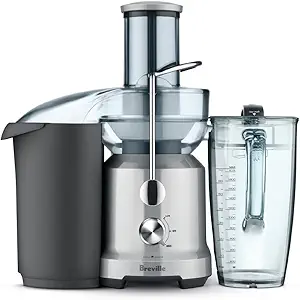 |
| Best Quality Built to a higher standard if you want something more solid | Hurom H400 Slow Juicer |  |
| Best Value The sweet spot between price and what you get | nutribullet Juicer NBJ50100 |  |
| Best Budget The cheapest option that still gets the job done reliably | Elite Gourmet ETS623 Citrus Juicer |  |
| Top Rated A top-rated pick with lots of positive feedback | Breville Juice Fountain Plus JE98XL |  |
| Most Popular A crowd favorite that many people choose with confidence | EanOruus 3-in-1 Masticating Juicer E-18 |  |
| Best Seller A high-volume bestseller chosen again and again | BLACK+DECKER Citrus Juicer CJ625 |  |
Breville Juice Fountain Cold BJE430

| Maximum Power | 850 watts |
|---|---|
| Number of Speeds | 2 |
| Power Source | Corded Electric |
| Capacity | 2 liters |
The Breville Juice Fountain Cold is a high-performance centrifugal juicer built for quick, everyday juicing and larger batches. Its 850-watt motor and 3-inch extra-wide feed chute let you juice whole fruits and many vegetables with minimal prep, while Cold Spin Technology and a precision mesh filter aim to reduce heat-related nutrient degradation. The included 70 fl oz seal-and-store jug and large pulp container make it easy to run multiple pieces of produce and save juice for up to three days, and the detachable spout and invertible nozzle help reduce drips for cleaner counters. Two speed settings handle soft or hard produce, and an LED overload indicator protects the motor from strain. Cleanup is simplified by several dishwasher-safe parts and an included cleaning brush, though the main housing and some components still require hand-washing. As a centrifugal model it extracts juice quickly but leaves more fine pulp and slightly less yield than slow masticating machines, so if maximum dry pulp or the highest possible nutrient extraction is your priority, a cold-press juicer may perform better.
Best for: Buyers who want fast, regular juicing with minimal prep and the ability to make and store larger batches of juice for family use.
Less Ideal for: Those focused on achieving the absolute highest juice yield and driest pulp or who prefer very quiet, slow-press extraction should consider a masticating juicer instead.
- Cold Spin Technology and precision mesh filter help minimize heat-related nutrient loss
- 3-inch extra-wide chute reduces prep time by fitting whole fruits and many vegetables
- Large 70 fl oz seal-and-store jug and roomy pulp container support batch juicing
- 850-watt motor with two speeds handles both soft and hard produce reliably
- Centrifugal design leaves more fine pulp and slightly lower yield than slow masticating juicers
- Some parts still need hand washing despite several dishwasher-safe components
Verdict: A fast centrifugal juicer that minimizes heat damage and speeds prep with a wide chute while letting you batch and store juice easily.
Hurom H400 Slow Juicer

| Special Features | Masticating |
|---|---|
| Wattage | 240 watts |
| Power Source | Corded Electric |
| Number of Speeds | 1 |
| Capacity | 2 liters |
The Hurom H400 is a slow, single-auger masticating juicer built to maximize juice yield while keeping pulp to a minimum. It uses a low-speed auger and a strainer-free chamber design to separate juice with very little pulp, and the self-feeding wide-mouth hopper reduces prep by allowing larger pieces or whole fruit. The motor runs quietly, so you can juice early without much noise, and Hurom's Slow Squeeze approach aims to limit oxidation so juice stays fresher for up to 72 hours refrigerated. Cleaning is simplified by the easy-clean chamber set that avoids the traditional fine strainer and heavy scrubbing, though parts are hand-wash only. At 240 watts it is more powerful than many compact masticators, which helps with leafy greens and firmer produce, but it is a countertop appliance with multiple plastic components that require careful assembly and cleaning. For buyers prioritizing smooth, low-pulp juice and high yield, the H400 delivers predictable results with minimal noise and prep.
Best for: Buyers who want smooth, low-pulp juice with high yield and who prioritize quiet operation and minimal produce prep in a household juicer.
Less Ideal for: If you want a fully dishwasher-safe unit, a simple centrifugal juicer for speed over yield, or a bare-minimum budget model, this higher-end masticator is not the best fit.
- Strainer-free chamber reduces pulp and simplifies cleaning compared with traditional fine-strainer designs
- Self-feeding wide-mouth hopper lowers prep time by fitting larger fruit pieces or whole small apples
- Low-speed masticating extraction preserves nutrients and limits oxidation for juice that can keep up to 72 hours refrigerated
- Quiet motor suitable for early-morning use or family kitchens
- Higher 240-watt motor helps process leafy greens and firmer produce more consistently than lower-powered masticators
- Requires hand washing of parts rather than dishwasher-safe cleaning
- Multiple plastic components mean careful assembly and storage to avoid damage
Verdict: Choose the H400 if you want a quiet, high-yield slow juicer that reliably produces smooth, very low-pulp juice.
nutribullet Juicer NBJ50100

| Maximum Power | 800 watts |
|---|---|
| Number of Speeds | 2 |
| Capacity | 1.5 liters |
| Power Source | Corded Electric |
The NutriBullet Juicer is a straightforward centrifugal juicer built for quick, low-effort juice prep. Its 800W motor and two-speed control let you handle both soft and harder produce, while the large 3" feed chute accepts whole fruits and vegetables so you spend less time prepping. Juice collects in a 27oz sealing pitcher with a no-drip spout and froth separator so you can pour or store juice for up to 48 hours, and the self-contained 1.5L pulp basin keeps mess contained and easy to remove for disposal. Sieve, basin and pitcher are dishwasher-safe which speeds cleaning, and the stainless steel sieve should hold up to frequent use. Because it is a centrifugal model, it extracts quickly but leaves more fine pulp and foam than slow masticating juicers, so yield and shelf life will be lower than cold-press machines. The unit is best when you want fast batches and minimal chopping rather than maximum extraction efficiency.
Best for: Buyers who prioritize fast, low-prep juicing and easy cleanup and want a reliable everyday machine that handles whole fruits and vegetables with minimal chopping.
Less Ideal for: If your priority is maximum juice yield, very long refrigerator storage, or the quietest operation, a slow masticating juicer would be a better choice.
- Large 3" feed chute accepts whole fruits and vegetables to reduce prep time
- Powerful 800W motor with dual speeds for soft or hard produce
- Self-contained 1.5L pulp basin and no-drip spout make juicing less messy
- Sealing 27oz pitcher with froth separator lets you store juice for up to 48 hours
- Dishwasher-safe parts and included cleaning brush simplify cleanup
- Centrifugal design leaves more fine pulp and foam compared with masticating juicers
- Not the highest juice yield or longest shelf life versus slow-press models
Verdict: Choose this juicer when you want fast, low-prep batches and easy cleanup rather than the highest possible juice yield.
Elite Gourmet ETS623 Citrus Juicer

| Maximum Power | 40 watts |
|---|---|
| Power Source | Corded Electric |
| Capacity | 24 oz |
| Special Features | Quiet Motor |
The Elite Gourmet ETS623 is a small, straightforward citrus juicer designed for everyday home use. It uses a 40-watt motor and an auto-reversing reamer to extract juice from oranges, lemons, limes, and grapefruit, while a built-in pulp and seed filter reduces pulp in the final pour. The detachable 24 oz container has an ergonomic handle and easy-pour spout so you can serve directly from the juicer, and the compact footprint fits small kitchens or RVs. Parts are dishwasher-safe on the top rack for easier cleanup, though hand washing is recommended for longevity. The unit is ETL listed and made from BPA-free and stainless steel materials, and it is intended to be quieter than typical models. Trade-offs include modest motor power compared with larger juicers and a limited batch capacity, so it is best for single-serve or small-batch juicing rather than heavy daily use.
Best for: Buyers who want an affordable, space-saving citrus juicer that reduces pulp and makes small batches of fresh juice quickly in apartments, dorms, or RVs.
Less Ideal for: People who need high-volume juicing or heavy daily use should choose a larger, more powerful juicer built for continuous extraction.
- Auto-reversing reamer improves extraction from citrus
- Built-in pulp and seed filter yields smoother juice with less pulp
- Compact 24 oz container with easy-pour spout and handle for serving
- Top-rack dishwasher-safe removable parts for quicker cleanup
- Quiet 40-watt motor for low-noise operation
- 40-watt motor and small capacity limit heavy or continuous juicing
- Detachable parts are recommended for hand washing to maximize lifespan
Verdict: A compact, budget-friendly citrus juicer that uses an auto-reversing reamer and built-in filter to deliver smoother, low-pulp fresh juice for small batches.
Breville Juice Fountain Plus JE98XL

| Power | 850 watts |
|---|---|
| Number of Speeds | 2 |
| Feed Chute | 3-inch extra wide |
| Capacity | 1 liters |
The Breville Juice Fountain Plus JE98XL is a centrifugal juicer built for quick, everyday juice preparation. It uses an 850W motor driving a titanium-reinforced disc and stainless steel micro-mesh filter basket to extract juice from whole fruits and vegetables fed through a 3-inch chute, so prep time is minimal. Two speeds let you switch to low for soft or leafy produce and high for harder items, and the included 35.2 fl oz juice jug has a built-in froth separator to reduce foam in the glass. Cleanup is straightforward: the pulp container detaches and many parts are dishwasher safe, and the cord wraps neatly under the base for storage. Because it is a centrifugal design, it produces juice quickly but leaves a finer pulp and more foam than slow masticating models, and it can be louder during high-speed operation. For buyers focused on reliable, fast extraction and simple maintenance, this model delivers consistent performance with durable stainless-steel components.
Best for: Home cooks who want fast, reliable juice with minimal prep and straightforward upkeep, and who prioritize consistent daily performance over ultra-fine pulp extraction.
Less Ideal for: People whose priority is maximum dry pulp yield, lowest oxygenation, or the quietest possible operation should consider slow masticating juicers instead.
- Extra-wide 3-inch chute reduces prep by allowing whole fruits and vegetables
- Titanium-reinforced disc and stainless steel micro-mesh basket for solid extraction performance
- Built-in froth separator in the juice jug produces clearer juice
- Detachable pulp container and dishwasher-safe parts for easier cleaning
- Two-speed control adapts to soft and hard produce
- Centrifugal design leaves finer, wetter pulp compared with slow masticating juicers
- Can be noticeably noisy at high speed
Verdict: Choose this Breville if you want a dependable, fast centrifugal juicer that minimizes prep and delivers consistently extracted, low-froth pours.
EanOruus 3-in-1 Masticating Juicer E-18

| Maximum Power | 250 watts |
|---|---|
| Wattage | 250 watts |
| Power Source | ac |
| Voltage | 110 volts |
| Capacity | 100 fluid ounces |
The EanOruus E-18 is a single-auger masticating juicer aimed at high-volume home use and meal prep. It uses a slow 250W AC motor and interchangeable strainers so you can extract juice, produce creamy nut milk, or turn frozen fruit into sorbet; the included sorbet strainer and pulp filter make those modes straightforward. A 6.5-inch wide chute and a 100 oz hopper let you load whole fruits and large batches with minimal chopping or frequent refills, which is handy when making several servings or prepping ahead. The unit emphasizes quiet, high-torque operation and claims auto-reverse and overheat protection for stuck ingredients. Most removable parts are designed to be washed by hand and the detachable pulp outlet reduces mess during long runs. The trade-offs are typical for slow masticators: cleaning still requires some disassembly and hand washing, and the plastic components mean it is not a premium metal-bodied appliance. For buyers focused on nutrient retention and low-foam extraction who want a workhorse that handles whole fruit and makes multiple recipes, this model delivers practical, high-capacity performance.
Best for: Buyers who prioritize low-foam, nutrient-rich extraction and need a high-capacity juicer for batch prep or family servings and who value social proof from strong customer feedback.
Less Ideal for: If you want a compact, quick-rinse centrifugal juicer or prefer all-metal construction for heavy daily commercial use, this model is not the best fit.
- Large 6.5-inch wide chute accepts whole fruits to reduce prep time
- 100 oz hopper supports batch juicing and meal-prep quantities
- 250W AC motor with high torque for fibrous ingredients and quiet operation
- Interchangeable strainers for juice, nut milk, and sorbet increase versatility
- Auto-reverse and overheat protection help prevent jams during heavy use
- Removable parts require hand washing and some disassembly to clean thoroughly
- Major components are plastic rather than metal, which may feel less durable
Verdict: Choose the EanOruus E-18 when you want a quiet, high-capacity masticating juicer that handles whole fruits and also makes nut milk and sorbet.
BLACK+DECKER Citrus Juicer CJ625

| Power Source | Corded Electric |
|---|---|
| Wattage | 150 watts |
| Special Features | Auto-Reversing |
| Blade Material | Stainless Steel |
| Product Care Instructions | Dishwasher Safe |
The BLACK+DECKER CJ625 is a straightforward countertop citrus juicer built for everyday use. It uses two cone sizes and an auto-reversing reamer to extract juice from lemons, limes, and oranges while a removable pulp basket captures solids so you can choose how much pulp ends up in the pitcher. The clear, marked container doubles as a pitcher with a drip-free spout for easy measuring and pouring, and most parts are dishwasher-safe for simple cleanup. With a compact footprint and corded power it handles frequent household juicing without taking much counter space. It is not a high-speed commercial machine, so very large volumes will require breaks between batches, and the plastic construction is basic compared with higher-end metal models. For buyers focused on reliable, low-effort citrus juicing with controllable pulp, this model delivers dependable results at a practical everyday scale.
Best for: Buyers who want a simple, dependable citrus juicer that separates pulp and yields measurable juice without fuss or complicated features.
Less Ideal for: People who need a heavy-duty or commercial juicer for continuous large-volume juicing or who prefer metal construction and premium styling.
- Auto-reversing cones improve juice extraction from both halves
- Adjustable pulp control with removable basket lets you control pulp level
- Clear pitcher with measurement markings and drip-free spout for easy pouring
- Dishwasher-safe removable parts simplify cleaning
- Plastic body and parts are basic compared with premium metal-bodied juicers
- Not designed for continuous high-volume or commercial use
Verdict: Choose this juicer if you want a reliable, easy-to-clean citrus machine that separates pulp and delivers measured juice with minimal effort.
Choosing the Right Juicer That Remove Pulp: Key Factors to Consider
Extraction Method
The extraction method determines how the juicer separates liquid from solids and is the biggest factor in pulp removal. Centrifugal units use high-speed spinning to fling pulp outward while masticating or cold-press units crush and press produce more slowly. The different mechanics affect how fine the pulp is and whether additional filtering is needed.
Understanding the method helps you set expectations for texture, yield, and how the juicer handles leafy greens, wheatgrass, or citrus. For reliable low-pulp results, favor designs with dedicated separation chambers or integrated fine screens that are optimized for removing fiber.
Juice Yield and Efficiency
Yield matters because even a juicer that produces clear juice is a poor choice if it wastes a lot of liquid in the pulp. Yield is influenced by auger size and geometry, screen pore size, and pressure applied during extraction. Higher-yield designs recover more juice from the same amount of produce, which reduces waste and lowers ongoing food costs.
Consider how often you will juice and what produce you use. If you frequently juice hard or dense items, prioritize models known for extracting more from apples, carrots, and beets while still keeping pulp minimal.
Ease of Cleaning
A juicer that is difficult to disassemble or clean will see less regular use, regardless of extraction performance. Look for machines with easily removable screens and chambers, dishwasher-safe parts, or simple brush access. Fine screens that deliver low pulp can be trickier to clean because trapped fibers can clog holes.
Evaluate whether the design minimizes nooks where pulp accumulates and check whether the manufacturer provides a cleaning brush or clear cleaning instructions. Faster cleanup encourages daily use and preserves performance over time.
Compatibility with Produce Types
Different juicers handle fruits and vegetables differently. Some excel with soft citrus and berries, others are better with hard roots and fibrous greens. If you plan to juice a variety of produce, choose a unit that maintains low-pulp results across that range.
Also consider whether the juicer requires chopping or pre-processing certain items. Machines that accommodate larger pieces reduce prep time, while those optimized for specific foods may produce the cleanest juice but limit versatility.
Speed and Throughput
Throughput is how quickly the juicer processes ingredients, which affects convenience for daily use. High-speed centrifugal machines are fast but may produce more foam and some residual pulp. Slower masticating or press-style units often take longer per batch but can produce drier pulp and clearer juice.
Balance the desire for low pulp against how much time you are willing to spend. For regular morning routines, faster machines with good separation may be preferable; for occasional use where clarity is paramount, slower extraction can be worth the time.
Durability and Maintenance
Materials and construction influence long-term reliability. Metal or reinforced plastic components in high-stress areas last longer under frequent use. Consider the warranty terms and availability of replacement screens or seals since wear can reduce pulp separation quality over time.
Routine maintenance, such as inspecting seals and cleaning filters promptly after use, preserves performance. A more durable unit may cost more up front but maintain low-pulp extraction longer without replacement parts.
How Pulp Removal Works
Pulp removal depends on separating solid fibers from juice using mechanical and filtration techniques. Most low-pulp systems combine a shredding or crushing stage with a fine screen or press that holds back fibers while allowing liquid to pass.
Some designs include multiple separation stages to reduce foam and trap microfibers. Understanding these internal steps helps you evaluate whether a machine will meet your expectations for clarity and mouthfeel.
- Shredding or crushing breaks down produce into a slurry.
- Filtration screens or presses separate fibers from liquid.
- Secondary settling or anti-foam systems improve clarity.
Preparing Produce for Best Results
How you prepare fruits and vegetables influences both yield and clarity. Removing large seeds, trimming tough skins, and cutting produce into recommended sizes reduces strain on the machine and improves pulp separation.
For fibrous items, alternating pieces of soft and hard produce can help clear the filter and maintain steady throughput. Citrus often benefits from specialized settings or attachments to avoid excess bitterness.
- Trim tough peels and large seeds before juicing.
- Cut produce into sizes suitable for the feed chute.
- Alternate item types to keep the screen from clogging.
Maintaining Performance Over Time
Regular cleaning and immediate removal of trapped fibers are key to preserving pulp removal performance. Allowing pulp to dry inside screens creates hard-to-remove residue that degrades separation efficiency.
Inspect seals and screens periodically for wear and replace them according to the manufacturer's schedule. Proper storage of parts and avoiding excessive force during assembly will prolong the machine's effective life.
- Rinse or soak removable parts right after use.
- Use the provided brush to clear fine screen holes.
- Replace worn screens to maintain low-pulp output.
Noise and Kitchen Impact
Noise levels vary across extraction methods and can influence when you use the juicer. High-speed machines are typically louder but faster, while slow-press units operate quietly but take more time.
Consider the placement of the machine in your kitchen and whether sound containment or running times matter for household schedules. Some models include vibration-damping feet to reduce noise transfer.
- High-speed extraction: louder, faster processing.
- Low-speed extraction: quieter, longer cycles.
- Look for sound-damping design if noise is a concern.
Common Troubleshooting Tips
If juice contains more pulp than expected, check the screen for clogs and verify the unit is assembled correctly. Overfilling the feed chute or feeding produce too quickly can overwhelm separation components.
For persistent issues, try smaller feed sizes and alternate harder and softer ingredients. If the issue continues, inspect for worn filters or compromised seals that let fibers pass into the juice.
- Check and clean the fine screen if juice is cloudy.
- Avoid overloading the chute; feed at a steady rate.
- Inspect seals and replace parts showing wear.
How We Chose the Best Juicer That Remove Pulp
We prioritized models that demonstrate consistent pulp separation and measurable juice yield. First, we evaluated extraction method and internal design features that control how well a juicer separates solids from liquid. Next, we considered throughput and efficiency to reflect real-world kitchen use, focusing on how much usable juice the machine produces from common fruits and vegetables. Durability and materials were assessed to ensure long-term performance with fibrous produce. We also weighed ease of cleaning and the presence of removable components that simplify maintenance. Noise and user ergonomics were included to represent daily use comfort. Finally, we screened for sensible safety features and clear manufacturer guidance on produce prep. Exclusions: we excluded machines that deliver only pulpy juice or require extensive manual straining, and models without clear separation mechanisms. The final list favors juicers that balance clean separation, reasonable yield, and manageable upkeep.
Our full evaluation process is outlined in our review methodology.
FAQ
Will a juicer that removes pulp still work with leafy greens?
Yes, many low-pulp juicers handle leafy greens, but performance varies by extraction method. Cold-press and masticating systems typically extract greens with less residual fiber than high-speed centrifugal units.
Does removing pulp reduce the nutritional value of juice?
Removing pulp changes fiber content but does not eliminate vitamins or minerals dissolved in the liquid. Some nutritional benefits tied to insoluble fiber are reduced, so consider keeping whole fruits or smoothies if you want more fiber.
How often should I clean the filter to maintain pulp removal?
Clean the filter after every use and inspect it regularly for trapped fibers. Prompt cleaning prevents buildup that can clog holes and reduce the machine's ability to separate pulp effectively.
Can I adjust how much pulp remains in the juice?
Some machines allow adjustments via different screen sizes or pressure settings to vary clarity. Where adjustments are not available, using a secondary fine mesh strainer can further reduce pulp.
Is a low-pulp juicer harder to maintain?
Not necessarily. Low-pulp designs with removable screens that are easy to access are straightforward to maintain. The key is routine cleaning and replacing worn components when needed.
Final Verdict
When choosing a juicer that removes pulp, prioritize the extraction method and the quality of the separation system first, then weigh yield and ease of cleaning. Expect tradeoffs between speed and clarity: faster machines save time while slower presses typically produce drier pulp and clearer juice. Balance how often you will use the machine with the types of produce you plan to juice. By focusing on pulp separation efficiency, durable construction, and maintenance convenience, you can confidently pick a juicer that fits your routine and delivers consistently smooth juice.