
Note: This article contains affiliate links. If you click on these links and make a purchase, we may earn a small commission at no extra cost to you. This helps support our research and content. Read our full affiliate disclosure here.
If you mostly print text, invoices, or black-and-white documents, choosing an efficient monochrome printer can save time and money. A good budget monochrome printer delivers reliable daily use, low per-page running costs, and enough speed for small offices or home workloads. This guide shortlists the top budget-friendly monochrome printers and explains the practical tradeoffs you should expect when prioritizing purchase price versus long-term cost. Below you will find our top picks for value-minded buyers plus concise guidance on the specs and features that matter for dependable black-and-white printing. Use the evaluation notes to match a printer to your typical monthly print volume and workflow.
Top Picks at a Glance
| Best Overall The best all-around choice for most situations | Xerox B230 Monochrome Printer |  |
| Best Quality Built to a higher standard if you want something more solid | Brother HL-L2460DW Laser Printer |  |
| Best Value The sweet spot between price and what you get | Canon imageCLASS LBP122dw |  |
| Top Rated A top-rated pick with lots of positive feedback | HP LaserJet Pro M402N |  |
| Most Popular A crowd favorite that many people choose with confidence | Canon imageCLASS LBP6030w |  |
| Best Seller A high-volume bestseller chosen again and again | Brother HL-L2405W Laser Printer |  |
Xerox B230 Monochrome Printer
| Printer Type | Laser |
|---|---|
| Printer Output Type | Monochrome |
| Maximum Copy Speed Black and White | 36 pages_per_minute |
| Maximum Sheet Capacity | 250 |
| Duplex | Automatic |
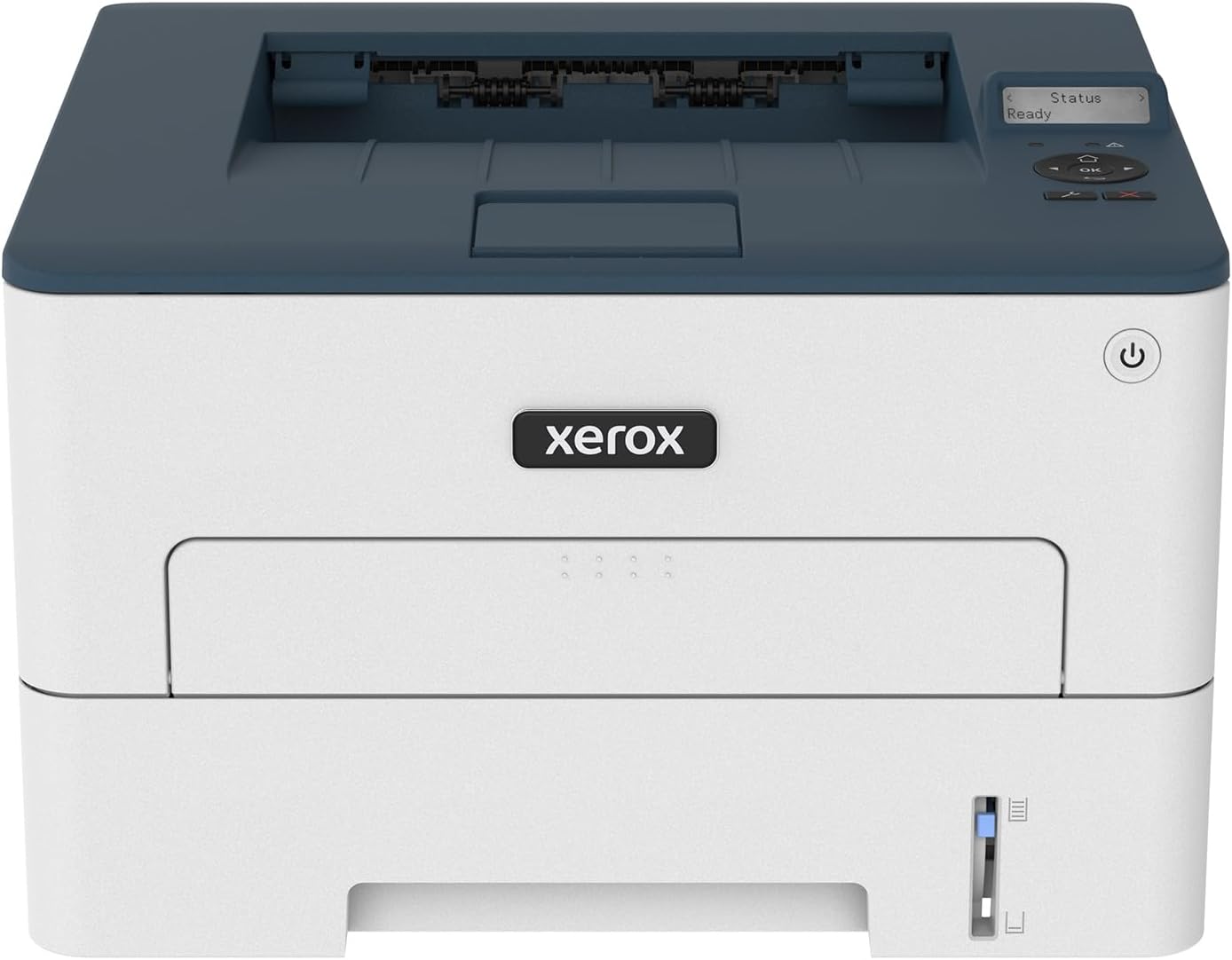
The Xerox B230 is a small-footprint black-and-white laser printer aimed at home offices and small teams that need steady, no-frills document output. It prints up to 36 ppm and handles letter and legal sizes, with a 250-sheet paper tray and automatic two-sided printing to reduce paper use. Built-in Wi‑Fi, Wi‑Fi Direct and support for AirPrint and Mopria make mobile and Chromebook printing straightforward, and the 1 GHz dual-core processor with 256 MB memory keeps typical text jobs moving without long delays. Setup is guided and user-facing controls include a small LCD for basic status. For budget-conscious buyers the B230 delivers low running costs and toner recycling through Xerox programs. Limitations include monochrome-only output and modest memory and interface options compared with higher-end office devices, so heavy multifunction needs like scanning or high-volume duty cycles beyond the stated monthly recommendation will require a different model.
Best for: Buyers who want a reliable, space-saving monochrome printer that handles regular document printing for a small home office or light small-business use without extra multifunction features.
Less Ideal for: Owners who need color output, integrated scanning or heavy daily multifunction duties should look at multifunction or higher-volume office models instead.
- Fast monochrome print speed up to 36 ppm for quick document batches
- Automatic duplex printing saves paper and simplifies two-sided jobs
- 250-sheet tray reduces how often you refill paper for moderate workloads
- Built-in Wi‑Fi, Wi‑Fi Direct and mobile printing support for easy phone/tablet printing
- Compact footprint designed to fit in tight home office spaces
- Print-only device with no built-in scanner or copier functions
- Memory and interface options are modest for advanced office workflows
Verdict: A compact, budget-friendly monochrome laser that gives fast, reliable black-and-white printing and easy mobile setup for small offices.
Brother HL-L2460DW Laser Printer

| Printer Type | Laser |
|---|---|
| Printer Output Type | Monochrome |
| B&W Pages per Minute | 36 pages_per_minute |
| Maximum Print Resolution Black and White | 1200 x 1200 dots_per_inch |
| Printer Connectivity Type | Ethernet, USB, Wi-Fi |
The Brother HL-L2460DW is a compact monochrome laser printer built to deliver reliable, high-speed black-and-white output for home offices and small teams. It prints up to 36 pages per minute and reaches the first page in roughly 8.5 seconds, so it keeps up with heavy document workflows. The 250-sheet tray and manual feed for envelopes reduce interruptions during long runs, while automatic duplexing saves paper on two-sided jobs. Connectivity options include dual-band Wi‑Fi, Ethernet, and USB, and the Brother Mobile Connect app lets you send jobs and monitor supplies from a phone. Print quality is sharp at a maximum 1200 x 1200 dpi, and energy-efficient operation meets ENERGY STAR and EPEAT Silver expectations. Limitations include monochrome-only output and a single tray design with no integrated scanner or copier, so it is strictly a dedicated black-and-white printer and not a multifunction device. Toner replacement is tied to Brother Genuine TN830 series cartridges, which affects running-cost choices.
Best for: Buyers who prioritize fast, reliable black-and-white output for heavy document printing in a compact footprint and want straightforward network and mobile printing control.
Less Ideal for: Users who need color printing, scanning, copying, or a multifunction device should look at all-in-one models instead.
- Fast print speed up to 36 ppm for high-volume document jobs.
- Automatic duplex printing reduces paper use and speeds two-sided workflows.
- 250-sheet input tray lowers the frequency of paper refills for busy users.
- Multiple connectivity options including dual-band Wi‑Fi, Ethernet, and USB plus mobile app control.
- Sharp monochrome output at up to 1200 x 1200 dpi for clear text and graphics.
- Monochrome only with no scanning or copying functions.
- Single-tray design limits paper source flexibility for mixed media workflows.
Verdict: If you need a fast, budget-friendly dedicated monochrome printer that handles large text-based workloads and networked mobile printing, this Brother model is a strong choice.
Canon imageCLASS LBP122dw

| Printer Type | Laser |
|---|---|
| Printer Output Type | Monochrome |
| B&W Pages per Minute | 30 |
| Maximum Sheet Capacity | 150 |
| Printer Connectivity Type | USB, Wi-Fi |
The Canon imageCLASS LBP122dw is a small, print-only monochrome laser designed for home and small-office use where speed and low maintenance matter. It delivers up to 30 pages per minute and an initial-page-out time around five seconds, which makes it useful for quick drafts, homework, and routine document batches. The printer supports automatic two-sided (duplex) printing to save paper, holds up to 150 sheets in the tray, and connects via USB, Ethernet, or Wi-Fi so you can print from PCs or mobile devices with the Canon PRINT app. It ships with a starter toner and accepts Canon Genuine Toner 071 / 071 H for full yields. The 5-line LCD and simple controls keep setup and everyday use straightforward, and the compact footprint fits tight workspaces. Limitations include print-only functionality—no scanning or copying—and modest paper capacity and media handling compared with larger office models, so heavier workloads will require more frequent toner and paper replenishment.
Best for: Buyers who want a no-frills, fast monochrome printer that minimizes maintenance and fits into a small home or home-office setup focused on document printing and efficiency.
Less Ideal for: Users who need multifunction features like scanning or copying, or who regularly print large monthly volumes and need higher paper capacity and media handling.
- Fast black-and-white print speed up to 30 ppm for quick document output
- Automatic duplex printing reduces paper use for two-sided documents
- Wi-Fi, USB and Ethernet connectivity plus mobile app printing for flexible setup
- Compact footprint and simple 5-line LCD make it easy to fit and operate in small spaces
- Print-only device with no scan or copy functions
- 150-sheet input capacity is modest for heavier print volumes
Verdict: A compact, fast monochrome laser that delivers efficient two-sided printing and reliable mobile connectivity for budget-focused home and small-office users.
HP LaserJet Pro M402N

| Printer Type | Laser |
|---|---|
| B&W Pages per Minute | 40 pages_per_minute |
| Maximum Print Resolution Black and White | 1200 x 1200 dpi |
| Maximum Sheet Capacity | 250 |
| Printer Connectivity Type | Ethernet, USB |
The HP LaserJet Pro M402N is a no-frills monochrome laser printer built for steady, business-style printing. It handles plain paper and wakes quickly to deliver up to 40 pages per minute, making it well suited for routine letter/A4 print runs and busy workgroups. Connectivity is wired only via Ethernet or USB, which keeps setup simple and reliable but means no built-in Wi-Fi. A preinstalled introductory toner gets you started and the printer supports higher-yield cartridges for lower running cost over time. The LED control and single tray design keep operation straightforward, and a 250-sheet capacity reduces the need for constant refills. Image quality is sharp at up to 1200 x 1200 dpi for crisp black text and basic graphics, while security and energy-saving features help in shared environments. As a Renewed unit, expect lower upfront cost with trade-offs typical of refurbished hardware, such as variable cosmetic wear and limited accessory freshness. For buyers prioritizing dependable, fast black-and-white output on a budget, this M402N delivers practical value.
Best for: Buyers who need a fast, dependable black-and-white printer for regular office or home-office use and who prioritize consistent wired networking and low running cost over wireless features.
Less Ideal for: Users who require built-in wireless printing, automatic duplexing, or a brand-new unit with full retail accessories and packaging.
- Fast monochrome printing up to 40 pages per minute for high-volume jobs
- Sharp text and basic graphics at 1200 x 1200 dpi
- 250-sheet tray reduces paper refills for office use
- Wired Ethernet and USB connectivity offer stable, low-latency connections
- Supports high-yield toner cartridges to lower cost per page
- No built-in Wi-Fi or duplex printing, limiting wireless convenience and automatic two-sided output
- Renewed condition may include cosmetic wear and shorter accessory freshness compared with new units
Verdict: A budget-friendly, reliability-focused monochrome laser that delivers fast, sharp wired printing for offices that do not need wireless or duplex features.
Canon imageCLASS LBP6030w

| Printer Type | Laser |
|---|---|
| Printer Output Type | Black & White |
| B&W Pages per Minute | 19 pages_per_minute |
| Printer Connectivity Type | Wi-Fi |
| Compatible Cartridge | Canon Genuine Toner 125 (1,600 page yield) |
The Canon imageCLASS LBP6030w is a small, wireless monochrome laser printer built for daily document printing in home or small-office settings. It prints only black-and-white at up to 19 pages per minute with an initial-page time around eight seconds, which makes it useful for letters, invoices, and class handouts. The single 150-sheet tray and 100-sheet output capacity keep it compact while handling modest print volumes, and built-in Wi‑Fi plus USB connectivity lets you print from laptops and mobile devices without a wired network. It uses Canon Genuine Toner 125 cartridges rated at about 1,600 pages, so running costs are predictable if you stick with the recommended supply. Notable limitations are the lack of duplexing and scanning functions, and the small duty features mean it is not suited to heavy daily workloads or full office fleets. Energy Saver mode keeps idle power low, and the printer's compact footprint fits tight workspaces, but buyers should plan for moderate toner replacement frequency if monthly printing is high.
Best for: Buyers focused on a reliable, space-saving monochrome printer for occasional to moderate home or small-office document jobs who value simple wireless setup and predictable toner options.
Less Ideal for: Teams or users who need duplexing, scanning, or heavy daily print volumes should choose a multifunction or higher-capacity office laser instead.
- Compact footprint that fits small desks and home offices
- Wireless and USB connectivity for printing from laptops and mobile devices
- Fast first page and up to 19 ppm for quick black-and-white output
- Uses Canon Genuine Toner 125 with a defined yield for predictable supply management
- Low idle power consumption in Energy Saver mode
- No automatic duplexing for two-sided printing
- Print-only device with no scanner or multifunction features
- Small paper tray limits suitability for high-volume users
Verdict: A compact, wireless monochrome laser that delivers fast, reliable document printing for budget-conscious home and small-office users.
Brother HL-L2405W Laser Printer

| Printer Type | Laser |
|---|---|
| Print Speed | 30 pages per minute |
| Max Print Resolution | 1200 x 1200 dpi |
| Paper Tray Capacity | 250 sheets |
| Connectivity | USB, Wi-Fi |
The Brother HL-L2405W is a compact monochrome laser printer aimed at home and small home-office use. It prints only black-and-white documents at up to 30 pages per minute and produces sharp 1200 x 1200 dpi output suitable for text, invoices, and simple graphics. Set up is straightforward using the built-in dual-band Wi‑Fi or a USB 2.0 connection, and the Brother Mobile Connect app makes sending jobs from a phone or tablet convenient. The 250-sheet tray reduces refill frequency, and a manual feed supports envelopes and specialty paper. This model ships with a starter toner and is compatible with Brother Genuine TN830 and higher-yield TN830XL cartridges; enrollment in Brother Refresh subscription is optional for automatic toner deliveries. Important limitations are one-sided printing only and manual duplexing, so expect extra steps for double-sided jobs, and color printing is not supported. For buyers who prioritize reliable, economical black-and-white printing in a small footprint, this is a sensible, low-risk choice.
Best for: Buyers seeking a dependable, no-frills monochrome printer for home or small office who value simple wireless setup and consistent text output over advanced features.
Less Ideal for: People who need built-in automatic double-sided printing, color output, or multifunction features like scanning and copying should consider other models.
- Fast monochrome printing up to 30 pages per minute for quick document output
- Dual-band Wi‑Fi plus USB connectivity lets multiple devices print wirelessly or locally
- 250-sheet input tray reduces how often you need to reload paper
- Produces sharp 1200 x 1200 dpi text and graphics for professional-looking documents
- No automatic duplexing or color printing, so double-sided or color tasks require extra steps or a different device
- Starter toner has limited yield, requiring replacement cartridges for regular heavy use
Verdict: A compact, reliable monochrome laser printer that delivers fast, sharp black-and-white prints with easy wireless setup, ideal for budget-conscious home offices.
Choosing the Right Monochrome Printer on a Budget: Key Factors to Consider
Print Speed and Throughput
How fast a monochrome printer can produce pages affects daily productivity. Higher pages-per-minute ratings and quick first-page-out times reduce wait during print bursts and keep small teams moving. For budget models, advertised speeds are often measured under ideal conditions, so consider speed in the context of realistic duty cycles and typical document types.
If you print occasional drafts, a modest speed is acceptable. If you routinely print dozens of pages at once, prioritize a printer with higher sustained throughput to avoid slowdowns and long queues.
Toner Yield and Ongoing Cost
Purchase price is just one part of the equation. Toner yield and the cost per page determine long-term expense, which can outstrip a low upfront cost if cartridges are small or expensive. Check manufacturer yields and whether high-yield or third-party options are available to lower per-page costs.
Also consider how easy it is to find replacement cartridges where you live. A model with slightly higher upfront cost but double the toner yield can be more economical over a year of moderate printing.
Duty Cycle and Recommended Monthly Volume
Duty cycle indicates the maximum pages a printer is designed to handle monthly. For budget monochrome printers, duty cycles vary widely. Choosing a model with a recommended monthly volume that matches or exceeds your typical usage helps avoid premature wear and possible increased maintenance needs.
If your monthly volume is close to the upper limit of the printer's recommendation, expect a shorter interval between part replacements and more frequent maintenance.
Connectivity and Driver Support
A budget printer should still integrate cleanly into your environment. Look for reliable USB, wired Ethernet, or wireless options depending on how you print. Mobile printing standards and built-in app or cloud support can be useful, but core driver stability for your operating system matters most for day-to-day reliability.
Confirm that drivers are available for your OS version and that the printer supports basic network security features if it will be shared on an office network.
Paper Handling and Media Support
Even monochrome printers vary in paper handling. Consider standard tray capacity, the size and weight of supported media, and whether a multipurpose feeder is available for envelopes or thicker stock. A larger input tray reduces the frequency of refills in busy environments.
Also check for duplexing if you want automatic double-sided printing. Budget models sometimes omit automatic duplex to lower cost, which increases paper use if you routinely print two-sided documents.
Maintenance and Serviceability
Ease of replacing toner, clearing paper jams, and accessing consumable parts influences uptime and frustration. Models designed for simple cartridge swaps and clear user-access panels reduce maintenance time. Availability of online support resources and straightforward error reporting also matters for non-technical users.
Consider whether common consumables are modular and user-replaceable, and whether reset procedures are documented. These details affect both daily convenience and total cost of ownership.
Matching Printer Choice to Monthly Volume
Estimate your average monthly page count before choosing. Light users printing a few dozen pages monthly can prioritize lower upfront cost. Moderate users printing a few hundred pages monthly should look for higher-yield toner and stronger duty cycles. Small teams or light departmental use may require models rated for higher monthly volumes to avoid frequent part replacements.
If your volume fluctuates seasonally, size your purchase around peak months rather than average months to ensure reliability during busy periods.
- Under 200 pages/month: prioritize low upfront cost and compact size
- 200 to 1,000 pages/month: balance toner yield with a higher duty cycle
- Above 1,000 pages/month: choose models designed for small-office throughput
Understanding Toner Yield Labels
Toner yield is commonly reported using a standard coverage percentage, often 5 percent per page. Realistic documents with more dense text or graphics use more toner, so actual yield can be lower. Look for manufacturer-stated yields and check whether there are optional high-yield cartridges that materially reduce per-page cost.
Also factor in how warranty, recycling programs, or included starter cartridges influence initial yield expectations. Some budget printers include low-yield starter toner that must be replaced sooner.
- Manufacturer yield is a starting estimate, not a guarantee
- High-yield cartridges typically lower cost per page despite higher per-unit price
- Starter cartridges in some units may be low yield
Connectivity Options for Home and Small Office
Decide if you need wired network access, Wi-Fi, or just a direct USB connection. Wired Ethernet is ideal for multi-user offices where stable connection and security are priorities. Wireless options are convenient for mobile devices and home networks, but verify driver support and setup simplicity.
Beyond raw connection type, look for features like wireless direct printing, basic mobile print standards, and a clear control panel for local setup. Simple, reliable connections matter more than having every modern casting feature on a budget model.
- USB only: simplest for a single-user setup
- Ethernet: best for shared office use and consistent performance
- Wi-Fi: flexible for multiple devices and mobile printing
Space, Noise, and Physical Footprint
Budget monochrome printers are often compact, but footprint and noise levels vary. If the unit sits in a shared workspace or home office, consider sound levels during printing as a comfort factor. Also check whether the device requires clearance for top or front access when replacing cartridges or clearing jams.
Measure the intended placement area and compare with printer dimensions. A slightly larger model with better paper handling could be a worthwhile tradeoff if space allows.
- Check dimensions and recommended clearance
- Consider noise during continuous print jobs
- Verify whether front or top access is required for maintenance
When Automatic Duplexing Matters
Automatic duplexing cuts paper consumption by half for two-sided documents and can be a significant operational saving over time. Budget models sometimes omit duplexing to reduce cost. If you regularly print reports, manuals, or double-sided handouts, choose a model with built-in duplex to save paper and time.
If duplexing is optional, evaluate whether manual two-sided printing is acceptable for your workflow. Manual duplexing can be tedious for large jobs.
- Automatic duplexing saves paper and time
- Manual duplexing is inexpensive but labor-intensive
- Consider duplex when aiming to reduce long-term paper costs
How We Chose the Best Monochrome Printer on a Budget
We focused on real-world criteria that matter when buying a budget monochrome printer. Our selection prioritized measurable specs and ownership costs over styling or feature bloat. Key evaluation criteria included print speed and first-page time to reflect how well each unit handles typical office bursts; duty cycle and recommended monthly volume to gauge whether a printer will tolerate your expected workload; toner yield and cost per page to estimate ongoing operating expense; connectivity and driver support for reliable integration with common home or small-office setups; and ease of maintenance, including cartridge replacement and basic troubleshooting. We excluded machines that are clearly positioned as color printers, all-in-one photo devices, or industrial models whose price and duty cycle fall outside typical small-office budgets. We also filtered out models lacking replaceable high-yield consumables or units with limited connectivity options. The picks that remain are those that balance low entry price with reasonable long-term costs and dependable basic printing performance.
Our full evaluation process is outlined in our review methodology.
FAQ
How much should I expect to print each month with a budget monochrome printer?
That depends on your role. Light home users often print fewer than 200 pages monthly. Small offices or heavy home offices can range from several hundred to over a thousand pages. Match the printer's recommended monthly volume to your typical or peak usage to avoid overworking the device.
Are aftermarket or third-party toner cartridges safe to use?
Third-party cartridges can lower per-page cost but vary in quality. They often work fine, but they may affect yield, print consistency, or warranty conditions. If you consider third-party options, choose reputable suppliers and be prepared for possible tradeoffs in reliability.
Do budget monochrome printers support duplex printing?
Some do and some do not. Automatic duplexing is less common in the lowest-cost models. If two-sided printing is important for reducing paper use or producing booklets, prioritize units with built-in duplex functionality.
How can I estimate the true cost per page?
Divide the replacement toner price by the rated yield to get a baseline cost per page, then adjust for realistic coverage greater than the standard 5 percent if your documents use denser text or graphics. Include occasional maintenance parts and paper costs for a more complete estimate.
What connectivity should I choose for a small shared office?
Wired Ethernet provides the most reliable shared access in small offices. Wi-Fi is acceptable for mixed-device environments, but confirm driver and network security support. For a single-user setup, USB is the simplest and most stable option.
Final Verdict
When choosing a monochrome printer on a budget, balance upfront cost against the expected long-term operating expense and monthly volume. Prioritize models with enough duty cycle and toner yield to match your routine printing and prefer automatic duplexing and solid connectivity when those features align with your workflow. Focus on the practical tradeoffs: lower purchase price can make sense for very light use, but users with moderate or heavy printing needs will typically save money and hassle by investing in higher-yield consumables and stronger duty cycles. Use the criteria in this guide to pick the right balance of speed, reliability, and running cost for your situation.