
Note: This article contains affiliate links. If you click on these links and make a purchase, we may earn a small commission at no extra cost to you. This helps support our research and content. Read our full affiliate disclosure here.
If you want a 3D printer that gets out of the box and onto useful prints with minimal fuss, a plug-and-play machine is the right direction. These printers emphasize simple setup, reliable first prints, and preconfigured software so you can focus on design and prototypes rather than firmware and tuning. This guide shortlists the top options for users who prioritize convenience, solid print consistency, and straightforward maintenance. We evaluated each pick for setup speed, print reliability, and day-to-day usability. Read on to find a ready-to-print solution that matches your skill level and project goals.
Top Picks at a Glance
| Best Overall The best all-around choice for most situations | Creality K2 Pro Combo |  |
| Best Quality Built to a higher standard if you want something more solid | QIDI Q2 3D Printer |  |
| Best Value The sweet spot between price and what you get | ELEGOO Neptune 3 Pro |  |
| Best Budget The cheapest option that still gets the job done reliably | Entina Tina2C Mini 3D Printer |  |
| Top Rated A top-rated pick with lots of positive feedback | Bambu Lab P1S 3D Printer |  |
| Most Popular A crowd favorite that many people choose with confidence | Creality K1C 3D Printer |  |
| Best Seller A high-volume bestseller chosen again and again | FLASHFORGE AD5X 3D Printer | 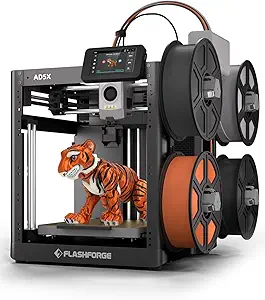 |
Creality K2 Pro Combo

| Build volume | 300×300×300 mm |
|---|---|
| Max chamber temp | 60°C |
| Print speed (max) | 600 mm/s |
| Included consumable | 500 g Hyper RFID filament |
The Creality K2 Pro Combo is a feature-rich desktop FDM printer built for fast, multicolor production and straightforward out-of-the-box use. It pairs a 300×300×300 mm build volume with Creality's CFS smart filament system to enable up to 16-color prints, automatic filament identification, and moisture-proof storage for less filament fuss. The machine uses FOC step-servo motors and linear rails to hit very high motion specs (Creality advertises up to 600 mm/s) while a high-performance direct-drive extruder with hardened steel gears handles abrasive filaments and supports a quick-swap hotend. Practical conveniences include intelligent auto bed probing, filament detection, power-loss recovery, WiFi/LAN control and dual AI cameras for remote monitoring and nozzle flow tuning. The enclosed, actively heated chamber (up to 60°C) improves results on temperature-sensitive materials. Trade-offs are that a machine with this level of integration and size is relatively heavy and aimed at users who will benefit from advanced filament and speed features rather than absolute simplicity for single-color hobby prints.
Best for: Buyers who want a ready-to-run desktop printer capable of fast, multicolor and multi-material work and who value integrated filament management and remote monitoring to speed project workflows.
Less Ideal for: Casual hobbyists who only need occasional single-color prints or buyers who need an ultra-compact, lightweight machine for tight workspaces.
- Large 300×300×300 mm build volume for big parts or batch printing
- CFS smart filament system enabling multicolor prints with auto identification and storage
- Very high advertised print speed and acceleration for faster turnarounds
- Active chamber heating to stabilize prints with engineering materials
- Direct-drive extruder with hardened gears suitable for abrasive filaments
- Complex feature set increases setup and maintenance compared with basic plug-and-play printers
- Large, heavier unit less convenient to move or fit in small workspaces
Verdict: If you need a plug-and-play desktop printer that prioritizes high-speed multicolor and multi-material production with smart filament handling and chamber control, the K2 Pro Combo is a strong choice.
QIDI Q2 3D Printer

| Build volume | 270×270×256 mm |
|---|---|
| Max nozzle temp | ≤370°C |
| Chamber temp | ≤65°C |
| Max toolhead speed | ≤600 mm/s |
| Filament diameter | 1.75 mm |
The QIDI Q2 is a plug‑and‑play enclosed 3D printer built for users who want faster, more reliable prints without deep tuning. It combines a metal CoreXY frame and linear guide rails for stability at higher speeds (up to 600 mm/s) and an integrated nozzle that doubles as a leveling sensor to improve first layer accuracy. The 65°C active heated chamber and 370°C capable nozzle let you print a wide range of materials from PLA and PETG to nylon, PC, and carbon‑fiber composites when paired with the QIDI BOX for multi‑material work. Practical conveniences include auto‑leveling, filament run‑out and tangle detection, power‑loss recovery, an AI camera for monitoring, and a triple filtration system for cleaner air during indoor use. The result is a machine that shortens setup time and reduces failed prints, especially for demanding materials. Expect a steeper power envelope than hobbyist open‑frame printers and a larger footprint, so it is best where space and ventilation are available.
Best for: Buyers who prioritize print performance and material versatility and want a mostly ready‑to‑run enclosed printer that minimizes setup and failed prints while enabling engineering plastics.
Less Ideal for: If you need a very small benchtop printer, a lightweight portable unit, or you prefer fully open‑source tinkering from the chassis up, this enclosed, performance‑focused machine is not the best fit.
- Enclosed metal CoreXY frame and linear rails for stable high‑speed printing
- 65°C heated chamber and 370°C nozzle support advanced engineering filaments
- Integrated nozzle leveling sensor for consistent first layers and easier setup
- Auto‑leveling, filament run‑out detection, power‑loss recovery, and AI camera for reliable unattended prints
- Triple filtration (G3 + H12 HEPA + activated carbon) reduces odors and particulates
- Larger, heavier enclosed unit requires more workspace than compact hobby printers
- Advanced materials and high‑speed settings may still need tuning for optimal results
Verdict: Choose the QIDI Q2 when you want a plug‑and‑play enclosed printer that delivers high‑speed, high‑temperature capability and reliable results for demanding materials.
ELEGOO Neptune 3 Pro

| Build volume | 225×225×280 mm |
|---|---|
| Noise level | 47 dB |
| Filament diameter | 1.75 mm |
| Extruder type | Dual-gear direct drive |
The ELEGOO Neptune 3 Pro is a ready-to-print FDM desktop machine that targets users who want fast setup and steady results. It ships with main parts pre-assembled and a toolkit so you can start printing in minutes, and the 225×225×280 mm (8.85×8.85×11 in) build area handles most hobby and functional parts. The dual-gear stainless steel direct-drive extruder and widened heat sink improve filament feed and heat control, making flexible filaments like TPU and common thermoplastics easier to run. Auto bed leveling (36-point) plus a PEI magnetic flexible platform simplify first-layer tuning and part removal, while filament runout detection and power-loss resume reduce failed prints on longer jobs. The kit also adds dual lead screws for a stable Z axis and quieter stepper motors that keep noise around 47 dB. Limitations: the printer is not enclosed, so it is less suited for high-temperature materials that need an ambient chamber, and advanced users may find firmware and slicing tweaks necessary to reach top-out print quality. For buyers focused on quick, dependable prints, it balances convenience and capable hardware well.
Best for: Buyers who want a plug-and-play desktop printer that minimizes setup time and reliably produces usable parts for hobbies, functional prototypes, and small projects.
Less Ideal for: Users who need an enclosed heated chamber for advanced high-temperature materials or those seeking a fully professional, out-of-the-box perfect print without any calibration work.
- Mostly pre-assembled for quick setup and use
- Dual-gear direct-drive extruder for improved filament feeding and fewer clogs
- 36-point auto bed leveling and PEI magnetic plate simplify first-layer adhesion and part removal
- Filament runout sensor and power-loss resume reduce failed long prints
- Dual lead screws and POM V-guide wheels for stable Z-axis motion
- Open-frame design is not ideal for high-temperature or highly warped materials
- Some tuning of slicer settings and firmware adjustments may be needed to optimize print quality
Verdict: A practical, near plug-and-play desktop FDM printer that gets hobbyists printing quickly while offering reliable hardware for everyday projects.
Entina Tina2C Mini 3D Printer

| Print volume | 3.9 × 3.9 × 3.9 inches |
|---|---|
| Connectivity | 2.4G WiFi, TF card |
| Control | Poloprint Cloud app |
| Printer type | FDM / Mini 3D Printer |
The Entina Tina2C is a fully assembled mini FDM 3D printer designed to get beginners printing quickly. It connects to the Poloprint Cloud app for guided setup, one‑click prints and an extensive model library so users can start a project in minutes, and it also supports 2.4 GHz Wi‑Fi plus TF card offline printing. Practical features such as intelligent auto‑leveling, power‑loss recovery, a flexible magnetic build plate and a quick‑swap printhead simplify maintenance and improve first‑print success for learners. The printer is compact and relatively quiet, with integrated LED lighting and safety-minded rounded edges that make it suitable for home or classroom use. Expect limitations common to mini printers: a small 3.9 × 3.9 × 3.9 inch build volume restricts projects to small models, and advanced users will find fewer customization options compared with larger hobbyist machines. For families and classrooms the easy app workflow and self‑cleaning nozzle deliver a low-friction introduction to 3D printing.
Best for: Buyers seeking a budget-friendly, plug-and-play 3D printer for kids, classrooms, or first-time hobbyists who prioritize ease of setup and guided app workflows.
Less Ideal for: Makers who need large build volume, advanced material support, or deep firmware and hardware customization should look at larger hobbyist or prosumer models.
- Fully assembled, app-guided setup that can start prints quickly
- Supports Wi‑Fi and TF card offline printing for flexible workflows
- Auto-leveling, power-loss recovery and magnetic build plate improve print success and maintenance
- Compact, low-noise design with integrated LED lighting suitable for home or classroom use
- Very small 3.9 × 3.9 × 3.9 inch build volume limits project size
- Fewer advanced tuning and customization options compared with larger hobbyist printers
Verdict: If you want the easiest plug-and-play 3D printer for kids and beginners, the Tina2C delivers a guided app experience and simple maintenance in a compact, budget-friendly package.
Bambu Lab P1S 3D Printer
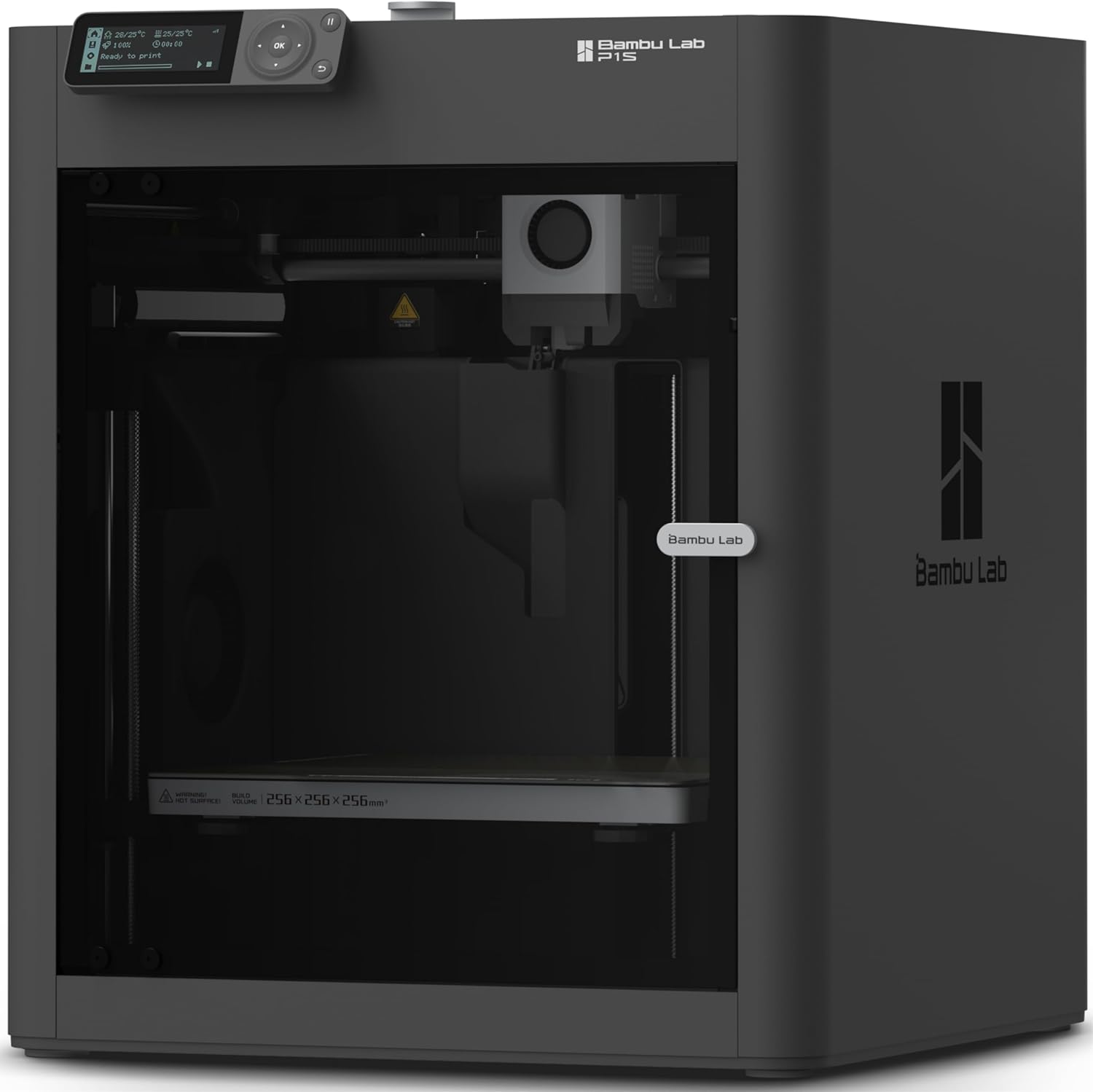
| Build Volume | 256×256×256 mm³ |
|---|---|
| Max Speed | 500 mm/s |
| Max Acceleration | 20 m/s² |
| Supported Filaments | PLA, PETG, TPU, PVA, PET, ABS, ASA |
The Bambu Lab P1S is a plug-and-play enclosed CoreXY FDM printer aimed at users who want fast, dependable results without a long setup. It ships with automatic bed leveling and a guided, short assembly process that gets the machine printing in minutes, and the enclosed frame plus high acceleration and top speed improve consistency when running tougher materials. The printer supports a broad range of common filaments such as PLA, PETG, TPU and PVA and its direct-drive extruder expands usable filament types while reducing feeding issues with flexible materials. A built-in camera enables time-lapse capture and the bundled MakerWorld model library helps beginners find reliable prints quickly. Practical limitations include the 256 mm cubed build volume that limits very large parts and the maker-focused ecosystem which may require learning for advanced multi-material setups that need the optional AMS. For buyers who prioritize a reliable, ready-to-run machine that delivers fast, repeatable prints, the P1S is a strong choice.
Best for: Buyers who want a fast, factory-ready 3D printer that reliably produces quality prints with minimal setup and routine tuning.
Less Ideal for: Users needing very large build volumes or turnkey multi-material/multi-color printing out of the box should consider other solutions.
- Enclosed CoreXY design improves temperature stability and print consistency
- Automatic bed leveling and short setup time make it plug-and-play for beginners
- High top speed and acceleration reduce print times for typical models
- Direct-drive extruder handles flexible filaments more reliably
- Supports a wide range of common filaments (PLA, PETG, TPU, PVA, ABS, ASA)
- Build volume (256×256×256 mm) limits very large single-part prints
- Multi-color or multi-material printing requires an optional AMS accessory
Verdict: If you want a plug-and-play, speed-oriented printer that reliably prints common filament types with minimal setup, the Bambu Lab P1S is a top pick.
Creality K1C 3D Printer

| Build volume | 8.66 x 8.66 x 9.84 inch |
|---|---|
| Max nozzle temperature | 300 ℃ |
| Supported filaments | PLA, ASA, ABS, TPU, PLA-CF, PET-CF |
| Extruder type | Clog-free direct extruder |
The Creality K1C aims to get you printing quickly by shipping mostly assembled and with simple boot-up guidance so you can go from box to first print in minutes. It supports PLA, ABS, TPU and carbon-fiber blends and uses a clog-free direct extruder with a steel-tipped copper nozzle and titanium-alloy heatbreak to handle higher temperatures up to 300°C. Built-in auto Z offset and auto leveling remove much of the fiddly setup, and an AI camera offers live monitoring and failure detection plus time-lapse capture. The machine targets speed with up to 600 mm/s and aggressive acceleration, and an upgraded multi-fan cooling path improves layer cooling for better bridges and overhangs. Practical benefits include fast iteration, fewer feeding clogs, and hands-off calibration for hobbyists or small-prototype workflows. Trade-offs to expect are that very high claimed speeds will depend on part geometry and tuning, and some advanced users may prefer more open control over firmware and motion tuning than a plug-and-play unit provides.
Best for: Buyers who want a low-effort, fast desktop printer for rapid prototyping and hobby projects and who value easy setup and automated monitoring over deep firmware customization.
Less Ideal for: Users who need full, open firmware control, extensive aftermarket modification, or guaranteed top-end speeds for industrial production should consider more configurable printers.
- Mostly preassembled and quick to start printing, reducing setup time
- Clog-free direct extruder with high-temp capability (up to 300°C) supports carbon-fiber blends
- Auto Z offset and auto leveling simplify bed preparation
- AI camera for real-time monitoring and time-lapse recording
- Upgraded multi-fan cooling improves print quality on bridges and overhangs
- Actual maximum print speed depends on tuning and part geometry and may be lower in practice
- Less firmware and tuning openness compared with fully DIY machines
Verdict: If you want a fast, plug-and-play desktop printer that prints a wide range of materials with minimal setup and built-in camera monitoring, the Creality K1C is a strong choice.
FLASHFORGE AD5X 3D Printer

| Build volume | 220×220×220mm |
|---|---|
| Extruder max temperature | 300°C |
| Structure | Open, Core XY |
| Travel speed | 600mm/s |
| Nozzle sizes | 0.25mm–0.8mm |
The FLASHFORGE AD5X is a user-friendly CoreXY desktop printer built for faster prints and straightforward setup. It supports up to four-color printing and includes automatic filament feeding and a one-click auto leveling system that simplifies first-time bed calibration, making it closer to a plug-and-play experience. The 300°C direct-drive extruder and quick-detach nozzle options (0.25mm–0.8mm) let you switch between fine-detail and fast, chunky prints, and factory features like resume-after-power-loss and an intelligent filament system reduce failed jobs. The AD5X targets productivity with travel speeds up to 600mm/s and strong acceleration for rapid prototyping, while dual-channel cooling and vibration compensation help maintain print quality at higher speeds. Practical limitations include an open frame design that may struggle with heat-sensitive materials in uncontrolled environments and the usual learning curve for multi-color setups. For buyers who prioritize simple setup and faster throughput without diving deep into custom firmware or complex modifications, the AD5X delivers a balanced mix of convenience and performance.
Best for: Buyers who want a near plug-and-play desktop printer that balances simple setup with faster printing for rapid prototyping and multi-color hobby projects.
Less Ideal for: Users who need a fully enclosed, temperature-stable chamber for advanced high-temperature materials or those seeking the absolute simplest single-extruder printer with minimal workflow complexity.
- One-click auto leveling and automatic filament feed simplify initial setup and reduce manual calibration
- Supports up to four-color printing for more complex, multi-material-looking parts
- 300°C direct-drive extruder and multiple nozzle sizes provide flexibility for fine detail or fast prints
- High travel speed (600mm/s) and strong acceleration for faster prototyping and batch runs
- Open CoreXY frame may not maintain stable temperatures for very heat-sensitive materials
- Multi-color printing adds workflow complexity compared with single-extruder plug-and-play models
Verdict: A near plug-and-play CoreXY printer that speeds up prototyping and adds multi-color capability without demanding firmware tinkering.
Choosing the Right Plug-and-Play 3D Printer: Key Factors to Consider
Out-Of-Box Setup And Guided Onboarding
How fast you can go from unboxing to a successful test print is the single biggest practical difference among plug-and-play 3D printers. Machines with guided onboarding, pre-leveled beds, or assisted auto-level routines reduce setup time and lower the chance of early failures.
If you plan to use the printer in classrooms, workshops, or rapid prototyping workflows, prioritize models that require minimal calibration and include clear setup wizards or touchscreen guidance. Setup complexity directly affects how quickly you can iterate on designs and how much time you spend troubleshooting instead of printing.
Default Print Quality On Stock Settings
A true plug-and-play printer should produce usable parts without deep tuning. Look for machines that deliver acceptable dimensional accuracy, smooth surface finish, and consistent layer adhesion on the manufacturer's default profiles.
Default quality matters because many buyers do not want to tweak slicer parameters or replace hardware before getting good results. Reliable factory profiles save time and reduce frustration, particularly for users who will use the printer for prototyping, functional parts, or classroom demonstrations.
Reliability And Mechanical Robustness
Durable frame construction, stable gantry motion, and a solid Z-axis design all influence print consistency over time. Play in bearings, loose belts, or an unstable build plate lead to artifacts like wobble lines and layer shifts, which are especially noticeable on taller prints.
Consider how the machine is built and whether routine adjustments are straightforward. Machines designed with serviceability in mind let you keep consistent print quality with minimal downtime.
Filament Handling And Compatibility
Plug-and-play printers vary in what filaments they support without modification. If you plan to print PLA, PETG, or basic engineering filaments, confirm the printer's extruder, nozzle temperature range, and any filament detection features.
Filament path design and feeder quality affect jams and underextrusion. For mixed-use environments, look for printers with reliable feeding systems, straightforward spool mounting, and clear guidance for switching materials.
Software And Slicer Integration
A good software experience simplifies slicing, profile selection, and transferring prints to the machine. Some plug-and-play systems include preloaded slicer profiles and direct USB or Wi-Fi printing, which eliminates guesswork.
Evaluate whether the included software is actively maintained and whether it exports standard G-code. Ease of updating print profiles and connecting to the printer impacts long-term usability and integration into existing workflows.
Maintenance Needs And Accessibility
Even low-maintenance machines require occasional cleaning, nozzle changes, or belt tensioning. Consider how accessible common service points are and whether replacement parts are straightforward to install.
Ease of maintenance reduces downtime and keeps a plug-and-play machine reliable. Buyers who expect frequent use should prioritize designs that simplify routine tasks like clearing clogs, replacing nozzles, and leveling the bed.
Why Plug-And-Play Machines Matter
Plug-and-play 3D printers remove the technical friction between an idea and a physical part. By minimizing assembly and tuning, these machines enable more time for design iteration, classroom instruction, or small-batch production.
For many users, the main advantage is predictability. When hardware and software are tuned to work together out of the box, you spend fewer hours troubleshooting and more hours testing concepts or producing finished parts.
- Faster time to first print
- Lower learning curve for beginners
- Better consistency for non-technical users
Common Setup Steps And What To Expect
Most plug-and-play printers still require a few straightforward steps: mounting a filament spool, powering the system, running a guided bed leveling sequence, and starting a supplied test print. Expect printed instructions or an on-screen walkthrough to simplify these tasks.
Auto-leveling and pre-sliced test files are especially helpful. They let you confirm the machine and filament are behaving as intended before you load custom models.
- Mount filament and feed to the extruder
- Run guided or automatic bed leveling
- Start a manufacturer-supplied calibration print
Improving First-Print Success
Even with well-configured machines, simple habits improve first-print outcomes. Clean the build plate and ensure it is free of oils or dust. Use a fresh spool of filament and make sure filament path is unobstructed.
Adjust environmental factors when possible. Stable room temperature and minimal drafts help reduce warping and layer adhesion problems, especially for materials prone to shrinkage.
- Wipe the print surface with isopropyl alcohol if recommended
- Confirm filament tension and spool rotation
- Avoid drafts and rapid temperature swings during printing
Maintaining A Plug-And-Play Printer
Routine maintenance keeps a plug-and-play machine predictable. Regularly check belt tension, clean the build surface, and periodically inspect the extruder for filament build-up. These small tasks prevent gradual performance decline.
Keep spare consumables on hand, such as a replacement nozzle and a few sheets of build surface material. That ensures you can resolve common issues without extended downtime.
- Tighten or replace belts as needed
- Clean or replace nozzles after heavy use
- Store filament in dry conditions to avoid moisture problems
When To Move Beyond Plug-And-Play
If you need advanced materials, very large build volumes, or extreme dimensional precision, a more configurable machine may be warranted. Those users should expect to spend time tuning slicer settings, upgrading hot ends, or modifying firmware.
However, many hobbyists, educators, and small-shop users get years of useful work from well-chosen plug-and-play printers without needing to upgrade.
- Consider advanced machines for specialty materials
- Use plug-and-play printers for rapid prototyping and education
How We Chose the Best Plug-and-Play 3D Printer
We focused on practical, buyer-relevant dimensions that predict how quickly a machine becomes productive and how reliably it prints. Key evaluation criteria included out-of-box setup time, default print quality on stock settings, filament compatibility and feeding reliability, and the sturdiness of the motion and extrusion systems. Usability factors such as included software, touchscreen or guided setup flows, and the quality of documentation and support resources were also important. We tested how each machine handles common first-print issues like bed leveling and adhesion, and we considered maintenance needs such as nozzle access and part replacement. Exclusions: units that require extensive firmware flashing, complex assembly, or heavy manual tuning before reliable prints were excluded. The result is a curated list that favors machines you can run quickly and consistently for prototyping, hobby projects, or light production tasks.
Our full evaluation process is outlined in our review methodology.
FAQ
Are plug-and-play 3D printers good for beginners?
Yes. Plug-and-play printers reduce setup complexity and often include guided onboarding, making them a solid choice for new users who want predictable first prints without deep technical knowledge.
Can plug-and-play printers handle different filament types?
Often they handle common filaments like PLA and PETG without modification. Compatibility with higher-temperature or abrasive materials depends on the extruder and hot end, so check the machine's supported temperature range.
How much maintenance do these printers need?
They require routine, simple maintenance such as cleaning the build surface, checking belt tension, and occasional nozzle changes. Proper upkeep keeps prints consistent and reduces unexpected downtime.
Will a plug-and-play printer save time compared with a DIY kit?
Usually yes. Plug-and-play machines prioritize quick setup and reliable default profiles, which cuts the time spent on assembly and calibration compared with kit-based builds.
Can I upgrade a plug-and-play printer later?
Many models allow upgrades like alternate nozzles, improved build surfaces, or firmware tweaks. Upgrading may add complexity, so plan upgrades only if you need capabilities beyond the stock configuration.
Final Verdict
Prioritize machines that minimize setup time and deliver consistent prints on default profiles if convenience and predictability are your primary goals. Balance ease of use with the filament and build-volume support you need, and consider maintenance accessibility for longer-term reliability. Choose a plug-and-play 3D printer that matches how quickly you need results and how much hands-on tuning you are willing to do.