
Note: This article contains affiliate links. If you click on these links and make a purchase, we may earn a small commission at no extra cost to you. This helps support our research and content. Read our full affiliate disclosure here.
Buying a budget-friendly printer for home use means balancing size, running cost, and the quality you need for documents, photos, or school projects. You want something compact that sits on a desk or shelf, handles everyday pages reliably, and does not become expensive to run. This guide shortlists seven top options that meet those practical needs and walks through the factors that matter most for home printing, such as print resolution, cartridge yield, and wireless convenience. Below you will find our top picks and an explanation of how we evaluated them to help you choose the right low-cost printer for your household.
Top Picks at a Glance
| Best Overall The best all-around choice for most situations | Canon PIXMA TS6520 |  |
| Best Quality Built to a higher standard if you want something more solid | Brother Work Smart 1360 MFC‑J1360DW | 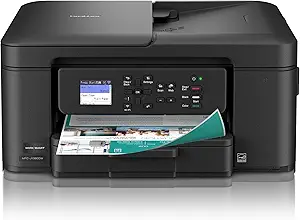 |
| Best Value The sweet spot between price and what you get | Epson Expression Home XP-5200 |  |
| Best Budget The cheapest option that still gets the job done reliably | HP DeskJet 2955 All-in-One Printer |  |
| Top Rated A top-rated pick with lots of positive feedback | Rongta F11 Portable Thermal Printer |  |
| Most Popular A crowd favorite that many people choose with confidence | Canon PIXMA TR4720 |  |
| Best Seller A high-volume bestseller chosen again and again | TATTMUSE A285M Portable Thermal Printer |  |
Canon PIXMA TS6520

| Printer Type | Inkjet |
|---|---|
| Duplex | Automatic |
| Printer Connectivity Type | USB, Wi-Fi |
| Display Type | OLED |
| Color Pages per Minute | 9 pages_per_minute |
The PIXMA TS6520 is a budget-friendly home all-in-one that handles everyday printing, photo pages, scanning, and copying with straightforward controls. It uses a two-cartridge hybrid ink system to produce sharp text and vibrant color prints, and supports mobile printing via the Canon PRINT app, AirPrint, and Mopria. Setup is quick thanks to reliable dual-band Wi-Fi and a simple 1.42-inch monochrome OLED that shows status and ink levels at a glance. Automatic two-sided printing and borderless photo support help reduce paper use and broaden creative options, while the flatbed scanner covers occasional scanning and copying needs. Expect modest sheet capacity and no automatic document feeder, so it is best for light to moderate home use rather than heavy office runs. Print speeds and resolution are competitive for the price, but replacement ink costs follow typical cartridge pricing so long-term running costs should be considered.
Best for: Buyers who want an affordable, compact all-in-one for light to moderate home use—printing homework, recipes, occasional photos, and occasional scans—without advanced office features.
Less Ideal for: Users who need fast, high-volume printing, frequent multi-page scanning, or a built-in ADF for heavy home office workflows should look at higher-capacity models.
- Automatic duplex printing saves paper and speeds two-sided jobs
- Dual-band Wi-Fi and mobile printing support for easy wireless use
- Compact footprint with intuitive 1.42-inch OLED for simple status and setup
- Hybrid two-cartridge ink system produces sharp text and vibrant photos
- No automatic document feeder, so multi-page scanning and copying require manual pages
- Starter ink tanks limit initial page yield and replacement cartridges add to running costs
Verdict: A compact, easy-to-use all-in-one that delivers good print and photo quality for budget-conscious homes looking for wireless convenience and automatic two-sided printing.
Brother Work Smart 1360 MFC‑J1360DW

| Printer Type | Inkjet |
|---|---|
| Functions | Print, Copy, Scan |
| Duplex | Automatic |
| Maximum Sheet Capacity | 150 |
| Printer Connectivity Type | USB, Wi-Fi |
The Brother Work Smart 1360 is a compact all‑in‑one inkjet aimed at home and small home‑office use, offering wireless and USB connectivity plus mobile printing via AirPrint and Mopria. It handles everyday tasks from reports and web pages to occasional photos using a 150‑sheet tray, a 20‑sheet single‑side ADF for batch scanning or copying, and a flatbed scanner for documents. Key practical features include automatic two‑sided printing to save paper, a simple 1.8" color display for basic control, and the Brother Mobile Connect app for setup and remote printing. Print speeds are competitive for the segment, up to 16 ppm black and 9 ppm color, and Page Gauge helps track ink levels. The trade‑offs are typical for budget inkjets: color photo quality is adequate but not studio grade, and ongoing costs depend on ink choice since standard cartridges yield modest page counts. For buyers focused on fast, reliable everyday document printing in a small footprint, this delivers good value; heavier photo or high‑volume office work will be better served by higher‑end models or laser alternatives.
Best for: Buyers who prioritize fast, reliable everyday document printing and easy mobile connectivity for a home or small home‑office setup and want a compact multifunction device that saves paper with automatic duplex.
Less Ideal for: Users needing high‑volume commercial printing, professional photo quality, or the lowest long‑term running costs should consider higher‑yield or laser options instead.
- Automatic duplex (two‑sided) printing reduces paper use and manual intervention
- 20‑sheet automatic document feeder plus flatbed scanner for mixed scanning and copying tasks
- Wireless, Wi‑Fi Direct, AirPrint and Mopria support for easy mobile printing
- 150‑sheet input tray keeps paper replenishment infrequent for typical home use
- Competitive ISO print speeds: up to 16 ppm black and 9 ppm color
- Standard yield cartridges have modest page yields so ink costs can add up with heavy use
- 1.8" color display is basic and not as convenient as a larger touchscreen
Verdict: A compact, performance‑oriented all‑in‑one that delivers fast, duplexed document printing and easy mobile setup for home users on a budget.
Epson Expression Home XP-5200

| Printer Type | Inkjet |
|---|---|
| Duplex | Automatic |
| Connectivity | USB, Wi-Fi |
| Maximum print Resolution Color | 4800 x 1200 dots_per_inch |
| Maximum Sheet Capacity | 150 |
The Epson Expression Home XP-5200 is a small, all-in-one inkjet built for typical home use — documents, schoolwork, and occasional photos. It prints up to 14 ppm black and 7.5 ppm color, supports automatic duplexing to save paper, and offers borderless photo printing and 4800 x 1200 dpi color resolution for better-looking photos than basic office printers. Setup and mobile printing are straightforward via Wi-Fi and the Epson Smart Panel app, and the 2.4" color display makes basic tasks and copying simple. The 150-sheet tray reduces trips to reload paper for light-to-moderate print volumes, and individual T222 cartridges mean you only replace the color that runs out. Limitations include modest color speed compared with laser models and dependence on genuine Epson cartridges for guaranteed performance, which may raise ongoing ink costs. It is engineered with a permanent PrecisionCore printhead for reliability, but it lacks advanced features like an automatic document feeder and larger input capacity required by heavier home offices.
Best for: Buyers who want a compact, reliable all-in-one for everyday home tasks and occasional photo printing and prioritize easy mobile setup and low daily fuss.
Less Ideal for: Users who need high-volume, fast color printing, advanced office features like an ADF, or the lowest long-term ink cost should consider other options.
- Automatic two-sided printing reduces paper use and manual flipping.
- High maximum print resolution (4800 x 1200 dpi) for sharp photos and color documents.
- 150-sheet input tray minimizes frequent paper refills for everyday home use.
- Wireless printing and Epson Smart Panel app make mobile printing and setup easy.
- Individual ink cartridges let you replace only the color that is depleted.
- Color print speed is relatively slow compared with monochrome speed and some competitors.
- Requires genuine Epson T222 cartridges for proper operation which can increase ink costs.
- No automatic document feeder for batch scanning or copying.
Verdict: A compact, easy-to-use all-in-one that delivers good photo-capable print quality and convenient wireless features for budget-conscious home users under $100.
HP DeskJet 2955 All-in-One Printer

| Printer Type | HP Thermal Inkjet |
|---|---|
| Maximum Sheet Capacity | 60 |
| Color Pages per Minute | 5.5 pages_per_minute |
| B&W Pages per Minute | 7.5 pages_per_minute |
| Printer Connectivity Type | Apple AirPrint; USB; Wireless (Wi‑Fi); Wireless direct printing; Mopria |
The HP DeskJet 2955 is a budget-focused all-in-one for simple home tasks like printing homework, recipes, and occasional photos, plus flatbed scanning and copying. It connects via dual-band Wi‑Fi, AirPrint, Mopria, or USB so you can print from phones, tablets, and computers, and the HP app simplifies mobile scanning and setup. The 60-sheet input tray and modest print speeds (about 7.5 ppm black, 5.5 ppm color) make it fine for light daily use but slow for bulk jobs. Manual duplexing is supported through driver prompts rather than automatic double-sided printing. It includes a 3‑month trial of Instant Ink which can lower ongoing ink costs if you opt into the subscription, and the printer is made with recycled plastics and ENERGY STAR certified. Expect basic control via an icon LCD and straightforward maintenance, but this model sacrifices high-speed throughput, large paper capacity, and professional photo quality to keep the price and size down.
Best for: Buyers looking for an inexpensive, space-saving all-in-one to handle occasional home printing, scanning, and copying with easy mobile connectivity and low initial cost.
Less Ideal for: Users who regularly print large volumes, need fast throughput, automatic duplexing, or professional photo-quality output should choose a higher-capacity model.
- Compact all-in-one design with print, scan, and copy in a small footprint
- Multiple wireless options including dual-band Wi‑Fi, AirPrint, and Mopria for easy mobile printing
- Includes 3-month Instant Ink trial to reduce ink replacement hassle and potential cost
- Energy efficient and built from a significant amount of recycled plastic
- Modest print speeds and a 60-sheet tray limit suitability for larger print jobs
- No automatic duplexing; double-sided prints require manual page flipping
- Limited to HP 68 series cartridges which may be relatively costly without a subscription
Verdict: A compact, budget-friendly all-in-one that gives reliable basic home printing and mobile convenience for buyers prioritizing low upfront cost.
Rongta F11 Portable Thermal Printer

| Printer Type | Thermal |
|---|---|
| Maximum Media Size | 8.5 x 11 inch |
| Connectivity | Bluetooth, USB |
| Maximum Print Resolution Black and White | 203 dots_per_inch |
| B&W Pages per Minute | 15 pages_per_minute |
The Rongta F11 is a lightweight thermal printer made for on-the-go, inkless printing from phones and computers. It connects over Bluetooth for mobile printing via the RONGTA app and via USB for PC and laptop use with a driver installed, and it supports thermal media up to 8.5 x 11 inches. With 203 dpi monochrome output and a rated speed of about 15 pages per minute, it handles simple documents, labels, receipts, and travel prints cleanly without ink cartridges. Its small footprint and built-in paper/USB compartment make it easy to carry and store, while the inkless thermal process reduces ongoing consumable complexity. Limitations include the monochrome-only output and reliance on thermal paper, which can fade over many years and is sensitive to heat; Bluetooth printing from PCs is not supported so laptop wireless workflows require drivers and a USB connection. For basic home printing tasks under $100, it is a practical, low-maintenance option if you accept thermal paper constraints.
Best for: Buyers who prioritize a dependable, low-maintenance printer for basic home tasks and travel-ready portability with simple mobile printing.
Less Ideal for: Users who need high-quality photo or color printing, long archival permanence, or a wireless PC printing workflow without installing drivers.
- Bluetooth and USB connectivity for mobile and wired printing
- Inkless thermal printing removes need for cartridges
- Supports full-sheet thermal media up to 8.5 x 11 inches
- Compact, lightweight design with built-in paper and USB compartment
- Prints only monochrome at 203 dpi so no color output
- Thermal paper can fade over time and is heat sensitive
Verdict: A compact, reliable inkless thermal printer for straightforward monochrome home printing and travel use under $100.
Canon PIXMA TR4720

| Printer Type | Inkjet |
|---|---|
| Print Resolution | 4800 x 1200 |
| Print Speed B&W | 8.8 pages_per_minute |
| Print Speed Color | 4.4 pages_per_minute |
| Connectivity | USB, Wi-Fi |
The Canon PIXMA TR4720 is a space-saving 4-in-1 inkjet designed for basic home use, combining printing, scanning, copying, and fax in a single compact unit. It connects via Wi-Fi or USB and supports mobile printing through Canon's app, so you can send jobs from a phone or tablet without drivers. Notable conveniences include a 100-sheet front paper tray, an auto document feeder for multi-page scanning and copying, and automatic two-sided printing to save paper. Print quality is solid for everyday documents and borderless photos up to letter size thanks to Canon's hybrid ink system, although color photo speeds are modest compared with higher-end models. With an LCD and simple controls the TR4720 is easy to operate, but it leans toward lower monthly volume use and users who want straightforward setup rather than advanced features. For buyers prioritizing compact all-in-one functionality and reliable wireless printing under a tight budget this model delivers useful features, but expect average speeds and ongoing ink costs typical of consumer inkjets.
Best for: Buyers who want an affordable, space-conscious all-in-one for occasional home printing, scanning, and faxing with easy mobile setup and sensible features.
Less Ideal for: Users who need high-volume, fast color/photo printing or the lowest long-term ink cost should consider larger or business-focused printers instead.
- Compact 4-in-1 design fits small home offices
- Automatic two-sided printing reduces paper use
- 100-sheet front tray plus auto document feeder for multi-page tasks
- Wi-Fi and Canon Print app support mobile printing and scanning
- Modest color print speed and overall ISO ppm compared with faster models
Verdict: A compact, budget-friendly 4-in-1 that gives reliable wireless home printing and basic duplexing features for buyers focused on value and simplicity.
TATTMUSE A285M Portable Thermal Printer

| Printer Type | Thermal |
|---|---|
| Maximum Media Size | 8.5 x 11 inch |
| Printer Connectivity Type | Bluetooth, USB |
| B&W Pages per Minute | 7 |
| Wattage | 11.1 watt-hours |
The TATTMUSE A285M is a small, rechargeable thermal printer intended for mobile and light home use where convenience matters more than full-featured output. It prints monochrome thermal pages at up to about 7 ppm and supports several thermal paper widths including US Letter and A4, making it useful for invoices, receipts, boarding passes, lists and single-sheet documents. Connection is simple for phones and tablets via Bluetooth and for laptops via USB-C with a driver, and the companion app lets you select paper size and file type. Because it is inkless it eliminates ink or toner costs and the need for cartridges, but it only works with specially coated thermal paper and cannot print color or standard copy paper. Battery capacity and manual duplex mean it is best for intermittent portable jobs rather than heavy daily office printing. For buyers who value portability and low running cost, it is a practical lightweight printer; those who need full desktop features, color, or standard paper handling will want a conventional inkjet or laser instead.
Best for: Buyers who want a low-maintenance, portable printer for occasional home or travel use and who prioritize convenience and low running costs over color or heavy-volume desktop features.
Less Ideal for: Users who need color printing, frequent high-volume document production, or standard copy-paper handling should choose a conventional inkjet or laser printer instead.
- Inkless thermal printing eliminates cartridges and ongoing ink costs
- Supports multiple thermal paper sizes including US Letter and A4
- Bluetooth for phones and USB-C connection for computers provides flexible connectivity
- Compact, lightweight and rechargeable for true portability
- Prints only black-and-white on thermal paper and cannot use regular copy paper
- Laptop/PC printing requires a driver install and wired connection
Verdict: If you need a truly portable, inkless printer for occasional home or travel printing of black-and-white documents, the A285M delivers low-cost, compact convenience under $100.
Choosing the Right Printer: Key Factors to Consider
Print Quality
Print quality determines how crisp text looks and how faithful photos appear. For home use, readable documents and acceptable snapshots are the primary goals. Resolution, measured in dots per inch, and the device's dithering or halftone handling affect text sharpness and photo gradients.
Higher-quality photo output typically requires better color handling and ink placement, which is less common on sub-$100 machines. Consider whether you will print occasional photos or mostly documents, and prioritize resolution and color accuracy accordingly.
Operating Cost
Initial price is only part of the total expense. Operating cost includes how many pages each cartridge produces and whether the printer accepts high-yield or refillable cartridges. Page yield and the price of replacement ink or toner determine the long-term cost per page.
For homes that print frequently, spending a bit more on a model with efficient ink usage or cheaper cartridges can save money over time. Check estimated black and color yields and look for options that offer multi-pack cartridges or third-party refill compatibility if that matters to your budget.
Connectivity
Connectivity affects where and how you print. Wi-Fi and mobile printing let you send documents from phones, tablets, and laptops without a cable. A reliable wireless setup simplifies sharing the printer across household devices.
Also consider direct-connection options like USB for single-computer setups and support for standard mobile protocols. Some budget printers sacrifice advanced features such as automatic cloud printing or network scanning, so confirm the wireless capabilities you need before choosing.
Size and Placement
Physical footprint matters in a home environment where desk and shelf space is limited. Measure the space where the printer will live and compare it to the machine's folded and extended dimensions, especially for models with paper trays that pull out.
A compact printer may have smaller input trays or fewer paper handling features but will fit better in tight spaces. Also consider weight if you plan to move the unit between rooms.
Speed and Duty Cycle
Print speed affects how long you wait for pages, which matters when printing school packets, multi-page documents, or impulse print jobs. Manufacturers often list different speeds for black and color output; look for realistic real-world speeds rather than peak claims.
Duty cycle indicates how many pages the device can handle monthly without excessive wear. For home use, a modest duty cycle is usually sufficient, but if your household prints heavily, choose a model rated for higher monthly volumes.
Ease of Use and Maintenance
A straightforward setup process, clear control panel, and easy cartridge replacement reduce frustration. Budget printers vary widely in how intuitive their software and drivers are, and some require manual driver downloads for certain operating systems.
Maintenance considerations include access to replacement parts, how simple it is to clear paper jams, and whether routine tasks like aligning heads or cleaning can be performed from a user menu. These factors influence how much time you spend managing the device.
How to Choose Between Inkjet and Monochrome Options
Budget printers generally fall into two groups: color inkjet machines and monochrome laser or ink-based models. Inkjet printers can produce color photos and graphics, which is useful for school projects, photos, and color documents. Monochrome options focus on sharp black-and-white text and often have lower per-page costs for text.
Consider what you print most. If you rarely need color, a monochrome device can be more economical and faster for pages of text. If occasional color is important, pick an inkjet that balances acceptable photo output with reasonable cartridge yields.
- Inkjet: good for photos and color graphics; variable operating costs
- Monochrome: better for text-heavy printing and often lower running costs
- Check cartridge yield and whether color cartridges are separate to avoid wasting ink
Setting Up Wireless Printing at Home
Wireless setup can be straightforward if you are comfortable with network passwords and mobile app prompts. Most modern budget printers support Wi-Fi and a companion app to guide installation. Confirm the printer supports your home network type and provides simple steps for adding multiple devices.
If you encounter connectivity issues, temporarily connecting via USB for initial configuration can help. Also look for models that support standard mobile printing protocols so you can print from phones without installing drivers.
- Use the manufacturer app for guided setup when available
- Connect via USB if Wi-Fi setup fails, then switch to wireless
- Ensure your router uses common security settings compatible with the printer
Managing Ongoing Costs and Supplies
To control long-term expense, learn how cartridges are sold: single colors, tri-color packs, or high-yield variants. Buying high-yield replacements or multipacks often lowers the per-page cost. Also check whether the printer supports generic or remanufactured cartridges if you plan to use them.
Keep spare cartridges on hand if you rely on printing for school or work to avoid downtime. Track your average monthly pages to estimate replacement frequency and budget accordingly.
- Compare page yield rather than just cartridge price
- Consider manufacturers' subscription plans only if they fit your print volume
- Store cartridges in a cool, dry place to extend shelf life
Tips for Better Photo Prints From a Budget Printer
Budget printers can produce acceptable photos with the right techniques. Use the highest quality setting for photos, select the appropriate paper type in the driver, and let prints dry fully before stacking. Using gloss or photo paper designed for inkjets will improve color vibrancy and sharpness.
Also manage expectations: you will not get professional lab quality from an economy home printer, but careful preparation and the right consumables can produce pleasing results for casual prints.
- Use dedicated photo paper and select the correct driver settings
- Let prints dry before handling to avoid smudging
- Calibrate colors in your image editor to reduce surprises
Troubleshooting Common Home Printer Problems
Paper jams and streaks are the most frequent issues. Follow the manual's guidance for jam removal and avoid forcing jammed paper. Regularly check feed rollers for dust buildup and use the built-in cleaning utilities to clear clogged nozzles on inkjets.
Driver conflicts and connectivity problems often arise after operating system updates. Keep firmware and drivers up to date and use the manufacturer's support resources if wireless printing fails. For persistent issues, temporarily connecting directly by USB can isolate network variables.
- Run nozzle checks and head cleanings for streaked or missing color
- Replace worn rollers if feed problems recur
- Update drivers after major operating system upgrades
How We Chose the Best Printer
We narrowed the field to models that consistently meet basic home-printing needs while staying within the under $100 price constraint. Our evaluation emphasized real-world performance metrics that matter to typical household users. Primary filters included print output quality for text and occasional photos, measured by resolution and ink handling; operating cost expressed as page yield and cartridge efficiency; connectivity options such as Wi-Fi, mobile printing, and USB; and physical footprint and ease of setup for small spaces. We also considered print speed for typical home tasks, reliability indicators like paper handling and jam frequency, and ease of maintenance including cartridge replacement and driver support. We excluded specialty machines that primarily target high-volume office use, heavy photo studios, or single-function thermal label units, because they do not align with typical home needs or the budget cap. The final shortlist emphasizes models that strike a practical balance between initial affordability and reasonable ongoing costs, with attention to wireless features and straightforward user interfaces that make setup and daily use simple.
Our full evaluation process is outlined in our review methodology.
FAQ
Are printers under $100 worth buying for home use?
Often yes. For basic document printing, homework, and occasional photos, budget printers offer acceptable quality and compact size. Just be mindful of operating costs and choose a model with reasonable cartridge yield.
How can I lower the cost per page on a cheap printer?
Lower costs by choosing high-yield cartridges, buying multipacks, and printing in draft mode for nonessential pages. Some buyers use compatible cartridges, which can reduce expense but may vary in reliability.
Will a budget printer handle occasional photo printing?
Usually it will for casual snapshots. Expect better results with proper photo paper and driver settings, but professional-grade photos are unlikely from entry-level machines.
Is wireless printing reliable on low-cost printers?
It depends. Many budget models include Wi-Fi that works well for basic tasks, but setup can be less polished and connectivity may be less robust than higher-end units. If reliability is critical, test the wireless features during setup and consider a USB fallback.
How often do I need to replace ink cartridges at home?
Replacement frequency depends on your monthly page volume and the types of documents printed. Text-heavy households may change cartridges less often than photo-heavy users. Tracking average pages per month helps predict replacement timing.
Final Verdict
For home printing under $100, prioritize the few features that matter most to your household: whether you need color photos, how many pages you print monthly, and whether wireless convenience is essential. Balance initial cost with operating expense by checking cartridge yields and connectivity options. Choose the model that matches your print habits and space constraints to get the most practical, cost-effective result.