
Note: This article contains affiliate links. If you click on these links and make a purchase, we may earn a small commission at no extra cost to you. This helps support our research and content. Read our full affiliate disclosure here.
If you drink celery juice regularly, the juicer you choose makes a big difference in yield, texture, and cleanup. A slow juicer for celery uses low-speed, cold-press extraction to recover more liquid from fibrous stalks while keeping heat and oxidation to a minimum. That means more nutrients and less waste in each batch. This guide covers the seven top slow juicers shortlisted for celery, focusing on juice yield, fiber handling, ease of cleaning, and everyday reliability. Use the comparison to pick a model that fits your counter space, maintenance tolerance, and how often you plan to press fresh celery. Read on for the selection criteria and practical buying advice before the product list.
Top Picks at a Glance
| Best Overall The best all-around choice for most situations | Omega Masticating Juicer MM900HDS |  |
| Best Quality Built to a higher standard if you want something more solid | Hurom H400 Slow Juicer |  |
| Best Value The sweet spot between price and what you get | BRECIOUS Slow Masticating Juicer ZM1506 |  |
| Best Budget The cheapest option that still gets the job done reliably | Elite Gourmet EJX600 Slow Juicer |  |
| Top Rated A top-rated pick with lots of positive feedback | NAMA J3 Cold Press Juicer | 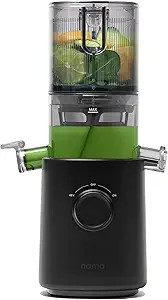 |
| Most Popular A crowd favorite that many people choose with confidence | Jocuu Slow Masticating Juicer |  |
| Best Seller A high-volume bestseller chosen again and again | EanOruus 3-in-1 Masticating Juicer E-18 |  |
Omega Masticating Juicer MM900HDS

| Wattage | 200 watts |
|---|---|
| Power Source | Corded Electric |
| Number of Speeds | 1 |
| Capacity | 0.8 liters |
The Omega MM900HDS is a slow masticating cold‑press juicer engineered to squeeze maximum juice from celery and other fruits and vegetables. It runs at a low speed (about 80 RPM) with triple‑stage masticating technology and includes a dedicated celery end cap plus a general end cap for other produce, so you get higher yield and less waste when juicing stalks and leafy greens. The wide feed chute and large tray reduce prep time, and most removable parts are top‑rack dishwasher safe for easier cleanup; pulp is ejected automatically. With a 200‑watt motor and durable stainless cutting components, it is meant for routine home use and can store juice up to 72 hours thanks to minimal oxidation. Important limitations are its single speed operation, which trades versatility for optimized cold‑press performance, and the machine is relatively heavy and takes counter space. The 15‑year parts and performance coverage is a strong reassurance for regular users who want a long‑term juicing appliance.
Best for: Buyers who want a dedicated, reliable cold‑press juicer optimized for daily celery and leafy‑green juicing and who prioritize nutrient preservation and long‑term durability.
Less Ideal for: People seeking a lightweight, multi‑speed machine for occasional centrifugal style juicing or those with very limited counter space should consider other options.
- Low 80 RPM masticating action preserves enzymes and reduces oxidation for fresher juice.
- Special celery end cap and a second end cap improve yield from celery and general produce.
- Triple‑stage extraction maximizes juice and reduces pulp waste.
- Most removable parts are top‑rack dishwasher safe for easier cleaning.
- Long 15‑year parts and performance coverage provides long‑term reliability.
- Single speed limits control for tasks that benefit from variable speeds.
- Relatively heavy and requires dedicated counter or storage space.
Verdict: Choose the Omega MM900HDS if you want a purpose‑built slow juicer that gets the most juice and nutrients from celery and greens with long-term durability.
Hurom H400 Slow Juicer
| Special Features | Masticating |
|---|---|
| Wattage | 150 watts |
| Power Source | Corded Electric |
| Voltage | 120 volts |
| Controller Type | Button |
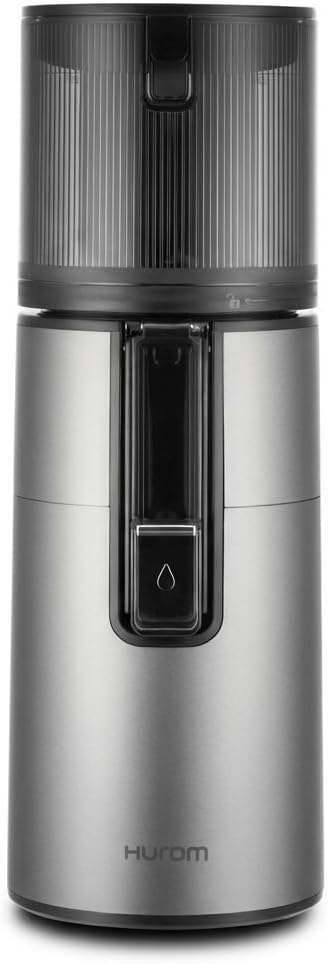
The Hurom H400 is a masticating slow juicer built to extract juice gently and quietly using a low-RPM auger and a self-feeding hopper that accepts whole produce. It is typically used for leafy greens and fibrous items like celery, as well as fruits, nuts, seeds, and soft ingredients for smoothies. Notable features include a 150-watt motor, a strainer-free easy-clean design, a titanium material build and blade, and a juice gauge and pulp management system that aim to maximize yield and minimize mess. In practice the H400 runs quietly, produces a high yield from hard and fibrous produce, and the included cleaning brush and disassemblable parts make cleanup straightforward, though hand-washing is required. The unit is corded-electric with simple button controls, so operation is direct but not programmable. Expect strong performance for celery juicing and other green juices, with the trade-off of a premium price and the need to rinse parts after each use rather than toss them in a dishwasher.
Best for: Buyers who prioritize high-yield, quiet cold-press juicing for celery and leafy greens and want a durable, easy-to-maintain masticating machine for daily fresh juice.
Less Ideal for: People who want dishwasher-safe parts, compact travel-friendly units, or a fully automated, multi-speed juicer should consider other options.
- Masticating extraction delivers higher yield from fibrous produce like celery
- Quiet low-speed operation suitable for early-morning juicing
- Strainer-free/easy-clean design and included cleaning brush reduce prep and cleanup time
- Titanium construction and blades offer durable, corrosion-resistant contact with produce
- Hand-wash only parts require manual cleaning after each use
- 150-watt corded motor is powerful but not a multi-speed programmable system
Verdict: A high-yield, quiet masticating juicer built for extracting celery and other fibrous greens with durable titanium components and an easy-clean design.
BRECIOUS Slow Masticating Juicer ZM1506

| Maximum Power | 150 watts |
|---|---|
| Number of Speeds | 2 |
| Power Source | Corded Electric |
| Voltage | 120 volts_of_alternating_current |
| Special Features | Reverse function, 95-110 RPM low speed |
The BRECIOUS ZM1506 is a slow masticating cold-press juicer designed to extract juice from leafy greens and harder produce while minimizing oxidation. It uses a 7-stage auger at 95–110 RPM and a 150 W motor to pull high yields from celery, kale, and other vegetables, and the triple-section filter produces relatively smooth juice with low pulp. Controls include Soft, Hard, and Reverse modes so you can switch settings for tender greens or denser stalks and clear occasional clogs. Setup and teardown are straightforward thanks to one-touch unlocking and dishwasher-safe components, and the included cleaning brush helps remove fiber from the filter. The motor runs quietly and the small feed chute improves safety, but you will spend some extra time trimming produce for that chute and occasional manual scraping of the filter to reach maximum yield. For someone focused on nutrient retention and consistent celery juice, this juicer balances extraction efficiency with easy cleaning and quiet operation.
Best for: Buyers who prioritize efficient nutrient-preserving extraction for daily celery and leafy-green juices and who value quiet, easy-to-clean operation.
Less Ideal for: People who want a large-chute, high-throughput machine for whole fruits or commercial-scale juicing should look for a different model with higher power and a wider feed throat.
- High juice yield from leafy greens and stalks due to 7-stage auger and low-speed cold-press action
- Soft, Hard, and Reverse modes let you tailor extraction and clear clogs without disassembly
- Quiet motor suitable for morning juicing without disturbing others
- Most detachable parts are dishwasher-safe and one-touch unlocking speeds cleaning
- Small 1.8-inch feed chute requires pre-cutting longer produce
- Not the most powerful motor for very fibrous or woody fruits without extra prep
Verdict: If you want a quiet, nutrient-focused juicer that reliably extracts high yields from celery and leafy greens while staying easy to clean, the BRECIOUS ZM1506 is a practical choice.
Elite Gourmet EJX600 Slow Juicer

| Capacity | 16 ounces |
|---|---|
| Wattage | 100 watts |
| Power Source | Corded Electric |
| Number of Speeds | 1 |
The Elite Gourmet EJX600 is a mini single-serve masticating juicer that uses low-speed cold-press extraction (around 70 RPM) to produce smoother juice with less foam and oxidation than centrifugal machines. It is intended for one to two servings at a time and includes a 16 oz Tritan juice cup, a small 3/4" feed chute and only three removable parts for quicker cleanup. The 100-watt motor and stainless steel blade assembly work steadily on softer produce and leafy items like celery and greens, and built-in overload and overheat protection adds a layer of safety for regular short sessions. Its compact footprint and simple one-speed operation make it easy to store and operate in small kitchens, though the narrow feed chute means harder items need to be chopped and larger batches require repeated cycles. Hand washing is recommended for the motor base and the unit is marketed as easy to clean overall, but heavy users will find the small capacity and single-speed design limiting compared with larger masticating juicers.
Best for: Buyers who want an affordable, space-saving cold-press juicer for occasional single-serve juices and prioritize extracting leafy greens and celery without foam.
Less Ideal for: Those who plan to juice large volumes, run frequent multi-bottle juice sessions, or need variable speed control for tough root vegetables should consider larger masticating models.
- Compact, single-serve design saves counter space and suits small kitchens
- Low-speed masticating action (70 RPM) reduces foam and oxidation for smoother celery and green juices
- Only three removable parts makes cleaning faster than many multi-piece juicers
- Includes a durable Tritan 16 oz juice cup and stainless steel blade components
- Built-in overload and overheat protection adds durability and safety
- Small 3/4" feed chute requires chopping produce and slows batch processing
- 16 oz capacity is not suitable for large or frequent juicing sessions
- Single-speed motor limits control for tougher produce or texture preferences
Verdict: A compact, budget-friendly slow juicer built for single-serve celery and green juices where space and cost are the top priorities.
NAMA J3 Cold Press Juicer

| Maximum Power | 130 watts |
|---|---|
| Power Source | Corded Electric |
| Voltage | 120 |
| Number of Speeds | 1 |
| Capacity | 15 fluid ounces |
The NAMA J3 is a compact masticating cold press juicer built for everyday countertop use in small kitchens. It runs at a low speed (about 50 RPM) with a 130 W motor to gently press fruits, vegetables, leafy greens and herbs, which helps preserve nutrients and reduce heat and oxidation. The J3 uses a self-feeding hopper so you can load a recipe and let it run hands-free, and the set includes common accessories such as juice and pulp containers, coarse and fine strainers, a spinning brush and a cleaning brush. Because it is designed to be portable and lightweight, it is easy to move and store, and the quick-release parts make rinsing and light scrubbing straightforward. Capacity is modest, so expect smaller yields per batch compared with larger models, and hand-wash-only parts add a bit of cleanup time versus dishwasher-safe pieces. For celery and other fibrous greens the slow masticating action should extract juice efficiently, but you will need to work in batches due to the compact hopper and 15 fl oz capacity.
Best for: Buyers who want a reliable, compact slow juicer for daily use in a small kitchen and value gentle extraction and simple maintenance routines.
Less Ideal for: Those who need high-volume or continuous commercial-style juicing or prefer dishwasher-safe parts should look at larger or differently specified models.
- Low-speed masticating design preserves nutrients and minimizes oxidation
- Self-feeding hopper allows hands-free juicing of recipes
- Compact, lightweight footprint suited to small kitchens and portability
- Includes juice and pulp containers plus coarse and fine strainers for different textures
- Small 15 fl oz capacity requires more frequent batches for larger volumes
- Key parts are hand wash only which adds cleanup time
Verdict: A compact, reliable cold-press juicer that delivers gentle, nutrient-preserving extraction ideal for daily celery and green-juice routines in small kitchens.
Jocuu Slow Masticating Juicer

| Wattage | 150 watts |
|---|---|
| Number of Speeds | 2 |
| Power Source | Corded Electric |
| Special Features | Auto-Reversing, Portable |
The Jocuu slow masticating juicer is a single-auger cold-press machine built for steady, low-speed extraction from fruits and vegetables. It offers two speeds labeled soft and hard to handle delicate produce like celery and leafy greens or tougher items such as carrots and beets, while an auto-reverse feature and one-touch assembly help clear clogs and simplify cleaning. The unit runs on a 150-watt motor with built-in protection that shuts the motor off after longer runs to prevent overheating, and detachable parts are dishwasher safe for easier cleanup. In real-world use it yields relatively dry pulp and quieter operation around 60 dB, which makes morning juicing less disruptive. Limitations include a small feed chute that requires chopping produce into smaller pieces and a plastic body that feels less robust than all-metal machines, but the juicer's pulp separation and consistent low-speed extraction make it a solid choice for regular celery juicing and mixed green blends.
Best for: Buyers who want a quiet, dependable cold-press juicer that reliably extracts high-purity juice from celery and other greens while prioritizing easy cleaning and built-in motor protection.
Less Ideal for: People who want the fastest throughput or a heavy-duty, all-metal commercial machine for continuous large-batch juicing should consider a higher-capacity model instead.
- Two speed settings for soft and hard produce to improve extraction across a range of fruits and vegetables
- Auto-reverse and intelligent motor protection to reduce clogging and prevent overheating
- Dishwasher-safe detachable parts and one-touch assembly for quicker cleaning
- Quiet operation around 60 dB suitable for early-morning juicing
- Small feeding chute requires pre-cutting produce into smaller pieces
- Plastic exterior and components feel less durable than metal-bodied juicers
Verdict: A quiet, two-speed cold-press juicer with reverse and motor protection that makes it a practical choice for regular celery and green juicing at home.
EanOruus 3-in-1 Masticating Juicer E-18

| Maximum Power | 250 watts |
|---|---|
| Power Source | ac |
| Voltage | 110 volts |
| Capacity | 100 fluid ounces |
The EanOruus E-18 is a single-auger slow juicer built for high-volume home use and multi-purpose food prep. It accepts whole fruit and vegetables through a 6.5-inch chute and feeds them into a 250 W AC brushless motor and auger that extracts juice, makes nut milk, or turns frozen fruit into sorbet using two different strainers. The extra-large 100 oz hopper reduces refills for batch juicing and the heavy-duty motor promises consistent, quiet extraction that handles fibrous produce like celery without needing high speed. Useful features include auto-reverse to clear clogs, an easily detachable pulp outlet for faster cleanup, and hand-washable parts made from polycarbonate. Expect thorough cleaning work since parts are hand wash only and the unit is somewhat bulky, so it takes counter space and effort to disassemble. For buyers focused on steady yields and low-speed extraction the E-18 delivers a practical balance of capacity and power, with a focus on family-sized or meal-prep juicing rather than compact countertop convenience.
Best for: Buyers who want a dependable, low-speed juicer that handles high-volume batch juicing and fibrous produce with minimal fiddling, prioritizing steady yields and reliability over compact size.
Less Ideal for: Those who need a compact, lightweight juicer for occasional single-serve use or who prefer dishwasher-safe components for quick cleanup.
- Very wide 6.5-inch chute lets you juice whole fruits and celery stalks with minimal prep
- Large 100 oz hopper reduces the need to refill during batch juicing
- 250 W AC brushless motor designed for quiet, consistent low-speed extraction
- Auto-reverse and detachable pulp outlet help manage clogs and simplify pulp removal
- Removable parts require hand washing rather than dishwasher-safe convenience
- Relatively large and heavier unit that needs dedicated counter or storage space
Verdict: Choose the EanOruus E-18 if you want a reliable, high-capacity slow juicer that handles celery and other fibrous produce with steady, quiet extraction.
Choosing the Right Slow Juicer for Celery: Key Factors to Consider
Juice Yield and Pulp Dryness
How much liquid a slow juicer extracts from celery and how dry the expelled pulp is are the most direct measures of its effectiveness. Celery is stringy and watery, so a good cold-press juicer will separate liquid from fibers efficiently, reducing waste and giving you more servings per stalk.
Higher yield reduces the amount of produce you need to buy and store. Pulp dryness also affects mouthfeel and the need for secondary presses. If you plan to drink celery juice daily, prioritize machines with consistently drier pulp and higher measured yields over time.
Fiber Management and Clogging Resistance
Celery stalks contain long strings that can tangle inside augers and screens. A juicer that handles those fibers without frequent jams saves time and frustration. Look for slow juicers with wide auger channels, effective cutting or shearing mechanisms, and designs that guide fibers out of the extraction chamber.
Good fiber management also means fewer interruptions during a juicing session and less wear on the motor. If you will be juicing long untrimmed stalks occasionally, choose a model known for clearing fibers smoothly.
Ease of Cleaning and Maintenance
Daily juicing routines live or die on how long cleanup takes. Slow juicers have more parts than centrifugal units, so inspect how components disassemble and whether parts are dishwasher-safe. Screens with tiny meshes deliver better clarity but can trap pulp and take longer to scrub.
Also consider how accessible crevices are and whether included brushes or simple design choices reduce soak time. Faster cleaning means you are more likely to keep juicing habitually, and it reduces the risk of mold or odor buildup in retained pulp.
Motor Strength, Heat, and Duty Cycle
Slow juicers rely on torque rather than speed, but sustained runs can stress undersized motors when processing dense quantities of celery. Evaluate whether the motor can handle repeated sessions without overheating or shutting down. A stronger motor with a rated duty cycle suitable for daily use will be more reliable over months and years.
Thermal protection is a useful feature, but an inherently robust motor design reduces the chance of interruptions and extends the machine's usable life.
Size, Feed System, and Counter Fit
Consider how much counter space the juicer occupies, whether the feed chute accepts long celery stalks, and if you are comfortable trimming before juicing. A wider feed chute reduces prep time because you can feed longer pieces or bunches, while a narrow chute may require cutting stalks into shorter segments.
Also think about storage and weight. If you plan to leave the unit on the counter, choose a design that integrates a stable base and anti-slip feet. If you will store it away, factor portability and assembly time into the choice.
Materials, Durability, and Warranty Support
Materials affect longevity and how the machine handles acidic green juices. Look for food-safe plastics or stainless components where pulp contacts the machine. Thicker, reinforced plastic and metal augers resist warping and wear from fibrous celery.
Check that seals and gaskets are easy to replace and that the manufacturer provides reasonable warranty coverage. Durability considerations matter more for daily users who will run the machine frequently.
Why Cold-Press Extraction Works Better for Celery
Cold-press, low-speed juicing minimizes heat and oxidation, preserving delicate enzymes and the bright green color many celery juicers seek. For celery specifically, slow extraction squeezes liquid out of long, fibrous cells rather than shearing them into tiny particles as a high-speed centrifugal machine would. The result is smoother juice with less foam and clearer separation between liquid and pulp.
- Reduced oxidation keeps flavor and color fresher.
- Less foam yields a cleaner sipping experience.
- Lower rotational speed reduces heat buildup that can degrade nutrients.
Preparing Celery for Best Results
Trim damaged ends and remove any dirt from the base before juicing. While some wide-chute models can handle whole stalks, most units still perform better if you cut celery into pieces that fit comfortably in the feed. Bundling stalks together and alternating with firmer produce, like apple slices, can help push celery through the auger more smoothly if your juicer struggles with long fibers.
- Remove tough outer strings only if they are particularly coarse.
- Cut stalks to the recommended feed length for your unit.
- Soak very dry pulp briefly to prevent dusting when pressing.
Cleaning Routines That Keep the Taste Fresh
Rinse parts promptly after use to prevent pulp from drying and sticking. Use a dedicated brush to clear mesh screens right away, and consider a quick reassembly rinse cycle where you run water through the feed while the unit is off to dislodge trapped fibers. For deep cleans, soak parts in warm soapy water to loosen stubborn residue before scrubbing.
- Rinse immediately to avoid hardened pulp.
- Clean mesh screens carefully to maintain flow and yield.
- Dry components thoroughly to avoid odor or mold.
Practical Tips for Daily Celery Juicing
If you plan to juice celery every morning, set up a small prep station with trimmed stalks and a container for pulp. Alternate celery with a softer fruit when feeding to reduce strain on the auger. Keep a schedule for deep cleaning weekly and inspect seals and gaskets monthly, replacing them at the first sign of wear to prevent leaks and performance decline.
- Prep and trim the night before to speed morning routines.
- Store excess juice in airtight containers to reduce oxidation.
- Rotate heavier juicing days with lighter ones to protect the motor.
How We Chose the Best Slow Juicer for Celery
We evaluated slow juicers for celery by focusing on performance and real-world usability rather than marketing claims. Our selection began with widely available slow juicer designs and filtered out models that lack effective fiber handling or have unreliable feed systems. We prioritized machines with proven low-speed cold-press extraction, sturdy augers, and evidence of consistent yield across multiple tests and user reports. Key evaluation criteria included juice yield versus pulp dryness, how well the machine manages long fibrous stalks without clogging, and how easy the unit is to disassemble and clean. Durability and motor strain under continuous runs were also assessed to ensure reliable daily use. We excluded centrifugal and high-speed models because their heat and oxidation profiles make them a poor fit for celery. Units with fragile plastic parts or limited sealing performance were also removed from consideration. The final shortlist represents slow juicers that balance high celery extraction, manageable cleanup, and mechanical reliability for regular juicing routines.
Our full evaluation process is outlined in our review methodology.
FAQ
Can I juice whole celery stalks without trimming?
It depends on the feed chute. Some slow juicers accept long stalks, but many require cutting celery to a recommended length. Cutting reduces jams and improves feed consistency.
Will a slow juicer handle large daily volumes of celery?
Many slow juicers are designed for daily use, but motor strength and duty cycle matter. Choose a model with a robust motor rating and good thermal protection for large or repeated sessions.
How do I reduce foam and foam-related oxidation?
Cold-press extraction already reduces foam, but you can further limit it by feeding celery slowly, alternating with firmer produce, and letting juice rest briefly before drinking to allow foam to dissipate.
Is it necessary to remove celery strings before juicing?
Removing tough strings is not usually necessary, but if strings are coarse they can tangle. Trimming only the visibly coarse fibers is often enough for trouble-free juicing.
How often should I deep-clean the juicer?
Daily rinses are important, and a thorough disassembly and soak should be done at least weekly for regular users. That prevents buildup and maintains extraction efficiency.
Final Verdict
For regular celery juicing, prioritize machines that deliver high yield with dry pulp, handle long fibers without frequent jams, and are easy to clean. Balance motor durability and duty cycle against size and prep needs. If you juice every day, choose a unit built for heavier use and simple maintenance. That approach will maximize juice output and minimize interruptions, helping you maintain a consistent celery routine.