
Note: This article contains affiliate links. If you click on these links and make a purchase, we may earn a small commission at no extra cost to you. This helps support our research and content. Read our full affiliate disclosure here.
If you run two separate HVAC systems in one home, a thermostat that can manage both efficiently changes how you heat and cool your living space. Choosing the right smart thermostat for two HVAC systems helps you keep each zone comfortable, simplifies scheduling, and can reduce wasted runtime by coordinating setpoints across systems. This guide shortlists the top smart thermostats designed to control two HVAC systems and explains the practical tradeoffs that matter for wiring, compatibility, and daily operation. Below you'll find our top picks and the specific criteria we used to evaluate them, plus guidance to help you match a thermostat to your setup.
Top Picks at a Glance
| Best Overall The best all-around choice for most situations | Sensi Smart Thermostat ST55 |  |
| Best Quality Built to a higher standard if you want something more solid | Google Nest Learning Thermostat (4th Gen) |  |
| Best Value The sweet spot between price and what you get | ecobee Smart Thermostat Essential |  |
| Best Budget The cheapest option that still gets the job done reliably | Sensi Lite Smart Thermostat ST25 | 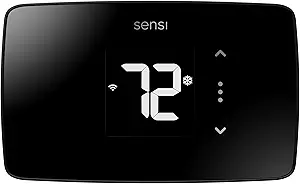 |
| Top Rated A top-rated pick with lots of positive feedback | ecobee Smart Thermostat Enhanced |  |
| Most Popular A crowd favorite that many people choose with confidence | Google Nest Thermostat GA02081-CA |  |
| Best Seller A high-volume bestseller chosen again and again | Amazon Smart Thermostat |  |
Sensi Smart Thermostat ST55

| Connectivity Technology | Wi‑Fi |
|---|---|
| Controller Type | Amazon Alexa, Apple HomeKit, Google Assistant, SmartThings, Vera |
| Power Source | Corded Electric |
| Display Type | LED |
| Number of Batteries | 2 AA batteries required (included) |
The Sensi ST55 is a wall‑mounted smart thermostat that replaces a conventional control and adds Wi‑Fi remote access, scheduling, and energy reports. It is typically used to manage heating and cooling systems including air conditioners, furnaces, boilers, and heat pumps through the Sensi mobile app or voice assistants like Alexa, Google Assistant, and Apple HomeKit. Notable features include ENERGY STAR certification, usage and maintenance alerts, a backlit LED display with button controls, and an easy DIY install workflow that includes a built‑in level and wiring labels. The unit supports 2.4 GHz Wi‑Fi and can operate with or without a C‑wire in most setups, which simplifies retrofit installs. Practical benefits include remote temperature control, simple scheduling for energy savings, and HVAC performance alerts that help with upkeep. Limitations include a basic button interface rather than a large touchscreen and reliance on 2.4 GHz networks only, which may affect users on 5 GHz‑only setups or those wanting a more visual display experience.
Best for: Buyers who want a straightforward, energy‑focused smart thermostat they can install themselves and control from an app or voice assistant across two HVAC systems.
Less Ideal for: Users who prioritize a touchscreen‑first interface or who require native 5 GHz Wi‑Fi support should consider different models.
- Works with Alexa, Google Assistant, Apple HomeKit and SmartThings for flexible voice and smart‑home control.
- ENERGY STAR certified with scheduling and usage reports to help reduce HVAC energy use.
- Designed for DIY installation with a built‑in level, wiring stickers, and app guidance to simplify retrofits.
- Provides remote access, smart alerts, and filter/maintenance reminders to monitor system performance.
- No large touchscreen; uses a smaller LED display and button controls for local adjustments.
- Supports only 2.4 GHz Wi‑Fi which may require network adjustments for some homes.
Verdict: A practical, ENERGY STAR certified smart thermostat that balances easy DIY installation, broad voice and app control, and energy reporting for homeowners managing two HVAC systems.
Google Nest Learning Thermostat (4th Gen)

| Connectivity Technology | Wi-Fi |
|---|---|
| Power Source | Corded Electric |
| Voltage | 24 volts |
| Display Type | Touchscreen |
| Number of Batteries | 1 CR2 batteries required (included) |
The Nest Learning Thermostat (4th gen) is a smart wall thermostat that learns your temperature preferences, suggests schedule tweaks in the Google Home app, and can be controlled by voice or remotely over Wi‑Fi. It is typically installed in place of a 24V residential thermostat and comes with a Nest Temperature Sensor to manage hot and cold spots. Notable features include Adaptive Eco and Natural heating and cooling, Dynamic Farsight on the larger display for easy readout across the room, system health monitoring, and Matter compatibility for smart home integration. In practical use it reduces the need for manual scheduling by suggesting and applying energy-saving changes, pauses HVAC when outdoor conditions make heating or cooling unnecessary, and reports system issues so you can catch faults early. Limitations include reliance on the Google Home ecosystem for full functionality and potential compatibility checks for certain older HVAC setups, and some users may prefer manual control if they do not want automated schedule changes.
Best for: Buyers who want a high-performance smart thermostat that actively learns routines and prioritizes energy savings while integrating tightly with a connected smart‑home setup.
Less Ideal for: People who prefer a simple manual thermostat, avoid cloud‑connected devices, or who need a basic non‑integrated unit for multi‑zone professional HVAC setups.
- Learns schedule and suggests energy-saving adjustments to reduce heating and cooling use
- Includes a Nest Temperature Sensor to address hot and cold spots remotely
- Large, bright Dynamic Farsight display for easy visibility across a room
- System Health Monitor provides alerts about HVAC issues before they become major problems
- Works with major voice assistants and supports Matter for smart home integration
- Full feature set is tied into the Google Home ecosystem and app
- May require a compatibility check on some older or nonstandard 24V HVAC systems
Verdict: Choose the Nest Learning Thermostat (4th gen) if you want a top-tier, learning smart thermostat that maximizes energy savings and gives proactive HVAC insights within a Google-connected smart home.
ecobee Smart Thermostat Essential

| Connectivity Technology | Wi-Fi |
|---|---|
| Controller Type | Amazon Alexa, Android, Apple HomeKit, Google Assistant, iOS |
| Power Source | Battery Powered |
| Display Type | LCD |
The ecobee Smart Thermostat Essential is a compact Wi‑Fi thermostat designed to replace a standard wall thermostat and automate basic heating and cooling. Installation is designed for DIY and the unit mounts on the wall with a simple backplate and screw kit; homes without a C wire may require ecobee's Power Extender Kit. The touchscreen and ecobee mobile app let you set schedules, change temperature remotely, and receive filter and maintenance reminders, while eco+ features like schedule assistant and time-of-use adjustments help reduce energy use. It integrates with Apple HomeKit, Google Assistant, and Alexa for voice control and works with most 24 VAC HVAC systems. Trade-offs are its focused feature set compared with higher-end ecobee models — it lacks built-in air quality monitoring and advanced sensors bundled in premium versions — but for straightforward system control and energy-aware schedules it covers the essentials in a compact package.
Best for: Buyers who want a no-frills smart thermostat that automates schedules and cuts energy use without the complexity of premium models and who prefer a practical, hands-on upgrade.
Less Ideal for: Homes that need built-in air quality monitoring, multi-room sensor bundles, or the most advanced energy reporting and extras found on higher-end smart thermostats.
- Wi‑Fi connectivity with app control for remote scheduling and temperature adjustments
- Works with Apple HomeKit, Google Assistant, and Alexa for voice control
- Built-in eco+ features like schedule assistant and time-of-use adjustments to reduce energy use
- Easy DIY wall-mount installation with included backplate and wire labels
- No built-in air quality monitor or included remote room sensors with this model
Verdict: A compact, energy-conscious smart thermostat that gives dependable app and voice control for straightforward two-system HVAC setups without premium extras.
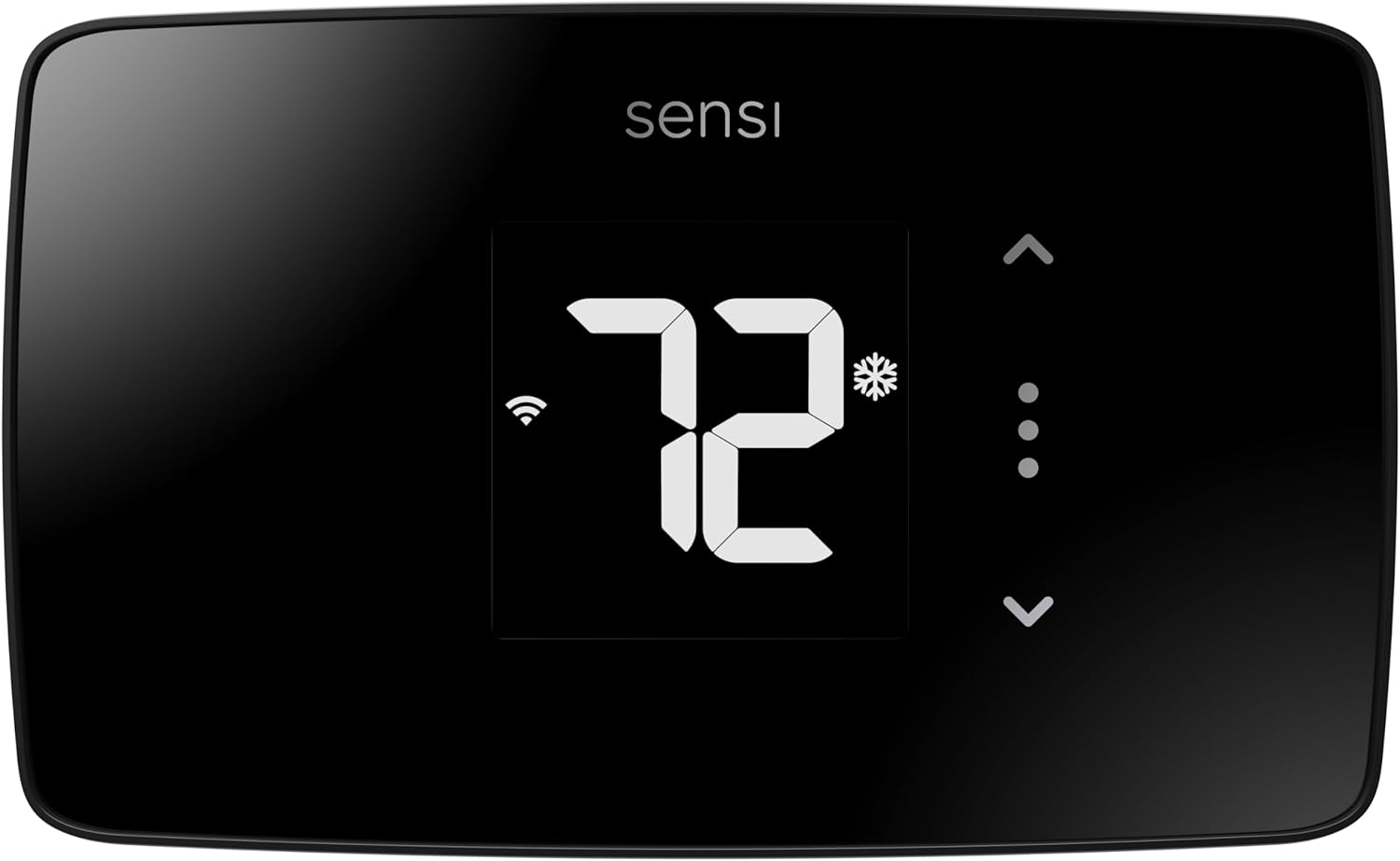
Sensi Lite Smart Thermostat ST25
| Connectivity Technology | Wi‑Fi |
|---|---|
| Control Method | App, Touch, Voice |
| Power Source | Battery or C‑wire |
| Specific Uses For Product | Air Conditioner, Boiler, Furnace, Heat Pump |
| Number of Batteries | 2 AAA batteries required. (included) |
The Sensi Lite is a straightforward smart thermostat aimed at homeowners who want remote control and scheduling without a lot of extras. It connects to 2.4 GHz Wi‑Fi and works with common HVAC equipment including air conditioners, furnaces, boilers, and heat pumps; most systems do not require a C‑wire though some heat‑only or cool‑only setups do. Setup is designed for DIY installation with a built‑in level and step‑by‑step guide, and the included app supports scheduling, geofencing, and usage reports to help reduce energy use. The display is a simple LCD and control is available by app, touch, or voice through Alexa and Google Assistant. Practical limits are its basic feature set: there is no touchscreen color display or advanced learning algorithms, and it runs on two AAA batteries (with optional C‑wire) so power behavior differs from hardwired models. For two‑system homes it covers standard HVAC types but lacks multi‑stage or advanced zoning controls found on higher‑end models.
Best for: Buyers prioritizing an affordable, easy‑to‑install smart thermostat that provides basic remote control and energy‑saving scheduling for standard two‑system HVAC setups.
Less Ideal for: Homes that need multi‑stage control, advanced zoning, or learning adaptive algorithms should choose a higher‑end programmable thermostat.
- Easy DIY installation with built‑in level and step‑by‑step instructions
- Works with common HVAC systems including heat pumps, furnaces, boilers and air conditioners
- Wi‑Fi control plus Alexa and Google Assistant voice support
- Energy Star certification and app features (scheduling, geofencing, usage reports) for energy savings
- Basic LCD interface and limited advanced features compared with premium smart thermostats
- Some system types may still require a C‑wire for reliable power
Verdict: A budget‑friendly, Energy Star smart thermostat that gives reliable remote control and easy DIY installation for standard two‑system HVAC homes.
ecobee Smart Thermostat Enhanced

| Connectivity Technology | Wi‑Fi |
|---|---|
| Power Source | Corded Electric |
| Voltage | 24 volts |
| Display Type | LCD |
| Controller Type | Amazon Alexa, Android, Apple HomeKit, Google Assistant, iOS |
The ecobee Smart Thermostat Enhanced is a hardwired, Wi‑Fi connected thermostat built to manage home heating and cooling automatically and remotely. It uses built‑in radar occupancy sensing and learning software to adjust temperature based on presence and schedules, and includes eco+ features that lower energy use when you are away or asleep. The unit is wall mounted with a 4‑inch LCD and integrates with Apple HomeKit, Siri, Alexa, Google Assistant and other smart home platforms for voice and app control. The box includes a power extender kit and trim plate to simplify DIY installs on systems without a C‑wire, and ecobee supports compatibility checks for a wide range of 24 VAC HVAC systems. Practical benefits are reliable, always‑on operation from hardwiring, remote control from the ecobee app or voice assistants, and room sensing for better comfort in occupied spaces. Important limitations are that it is not compatible with line‑voltage, millivolt, or some low‑voltage control systems, and full feature set depends on integrating sensors and using supported HVAC wiring types.
Best for: Homeowners who prioritize dependable, always‑on climate control and want a smart thermostat that integrates with voice assistants and local HVAC systems for automated energy savings.
Less Ideal for: Homes with line‑voltage heating, millivolt systems, or uncommon low‑voltage control setups should look for a thermostat designed for those specific systems.
- Hardwired power for continuous, reliable operation
- Built‑in radar occupancy sensing for room‑aware temperature control
- Works with major smart home platforms and voice assistants
- Includes Power Extender Kit and necessary mounting hardware for DIY installs
- App control and learning software that can reduce heating and cooling use
- Not compatible with line‑voltage, millivolt, or 0‑10V control systems
Verdict: Choose this ecobee when you want a hardwired, reliable smart thermostat with occupancy sensing and broad smart home integration to keep two HVAC systems running efficiently.
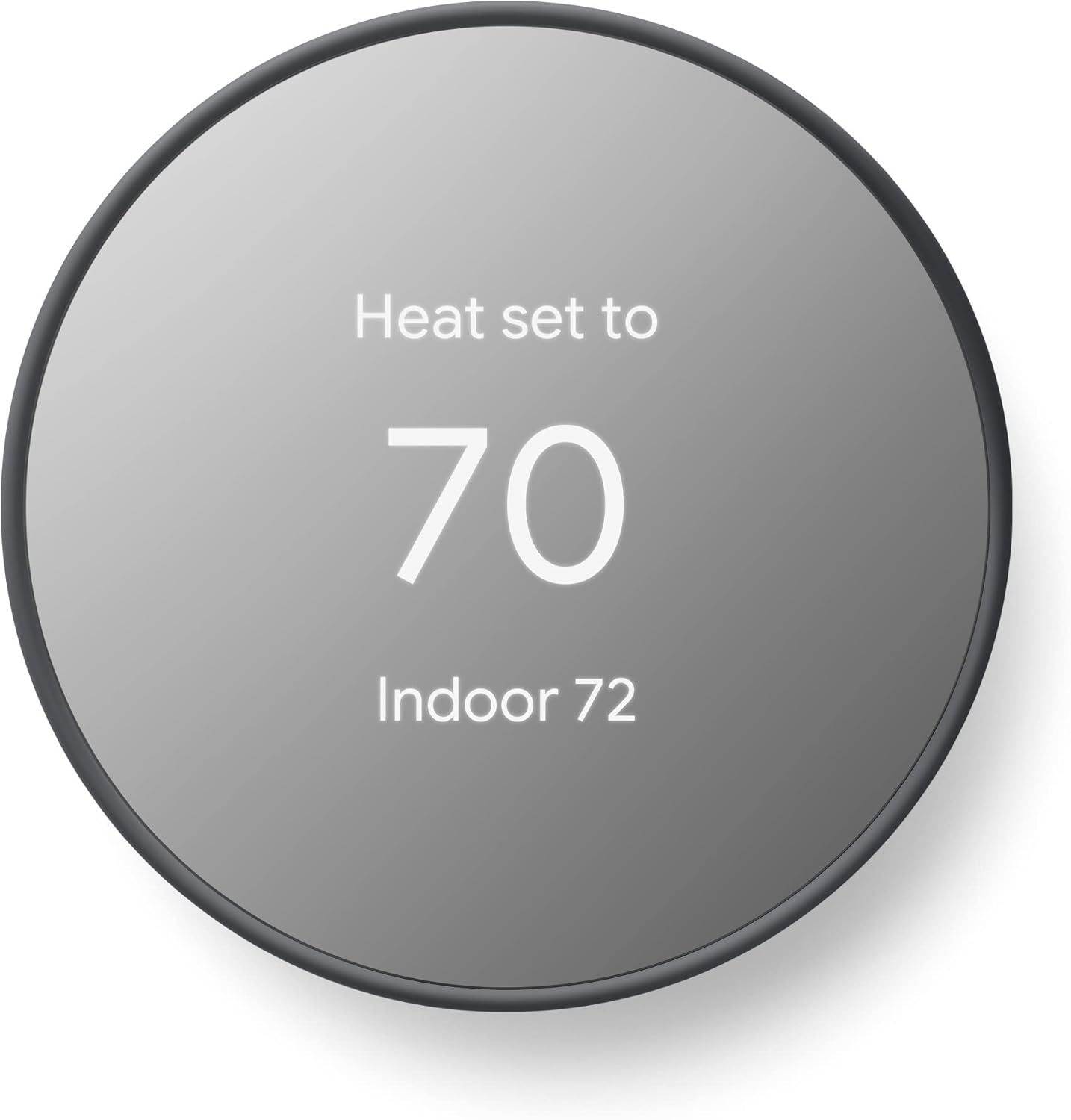
Google Nest Thermostat GA02081-CA
| Connectivity Technology | Bluetooth, Wi-Fi |
|---|---|
| Power Source | Battery Powered |
| Display Type | LCD |
| Screen Size | 2 inches |
| Number of Batteries | 2 A batteries required (included) |
The Google Nest Thermostat is a budget-oriented smart thermostat designed to make temperature control simple for most homes. It connects to 2.4 and 5 GHz Wi‑Fi and Bluetooth, lets you set schedules and change temperatures from the Google Home app, and supports voice control through compatible assistants. Installation is intended to be DIY-friendly and the unit can run without a C‑wire in many systems, though some setups like certain heat pump or zoned systems may need a common wire or power accessory. Features like Savings Finder suggestions, Eco Temperatures when you leave, and basic HVAC monitoring provide practical energy-saving nudges and maintenance alerts. The display is a compact 2‑inch LCD with a side touch control, and two A batteries are included for power. Trade-offs are its simpler feature set compared with premium Nest models and limited advanced diagnostics; users wanting deep scheduling analytics or Nest Renew support should check compatibility and regional availability. For straightforward remote control, energy hints, and easy installation, this model covers the essentials well.
Best for: Buyers who want an affordable, easy-to-install smart thermostat with app and voice control and basic energy-saving features backed by widespread user adoption.
Less Ideal for: Homeowners seeking advanced HVAC diagnostics, extensive energy reporting, or enterprise-grade controls should consider higher-end models or professional solutions.
- Supports 2.4 and 5 GHz Wi‑Fi plus Bluetooth for reliable connectivity
- Remote control and scheduling via Google Home app for on‑the‑go adjustments
- Energy saving features like Eco Temperatures and Savings Finder
- Simple DIY installation designed to work without a C wire in most homes
- Includes batteries and mounting hardware for quick setup
- Not as feature-rich as higher-end Nest thermostats with advanced diagnostics
- Some HVAC systems may still require a C wire or power accessory to function
Verdict: Choose this Nest thermostat if you want a straightforward, app-controlled smart thermostat that is easy to install and delivers practical energy savings.
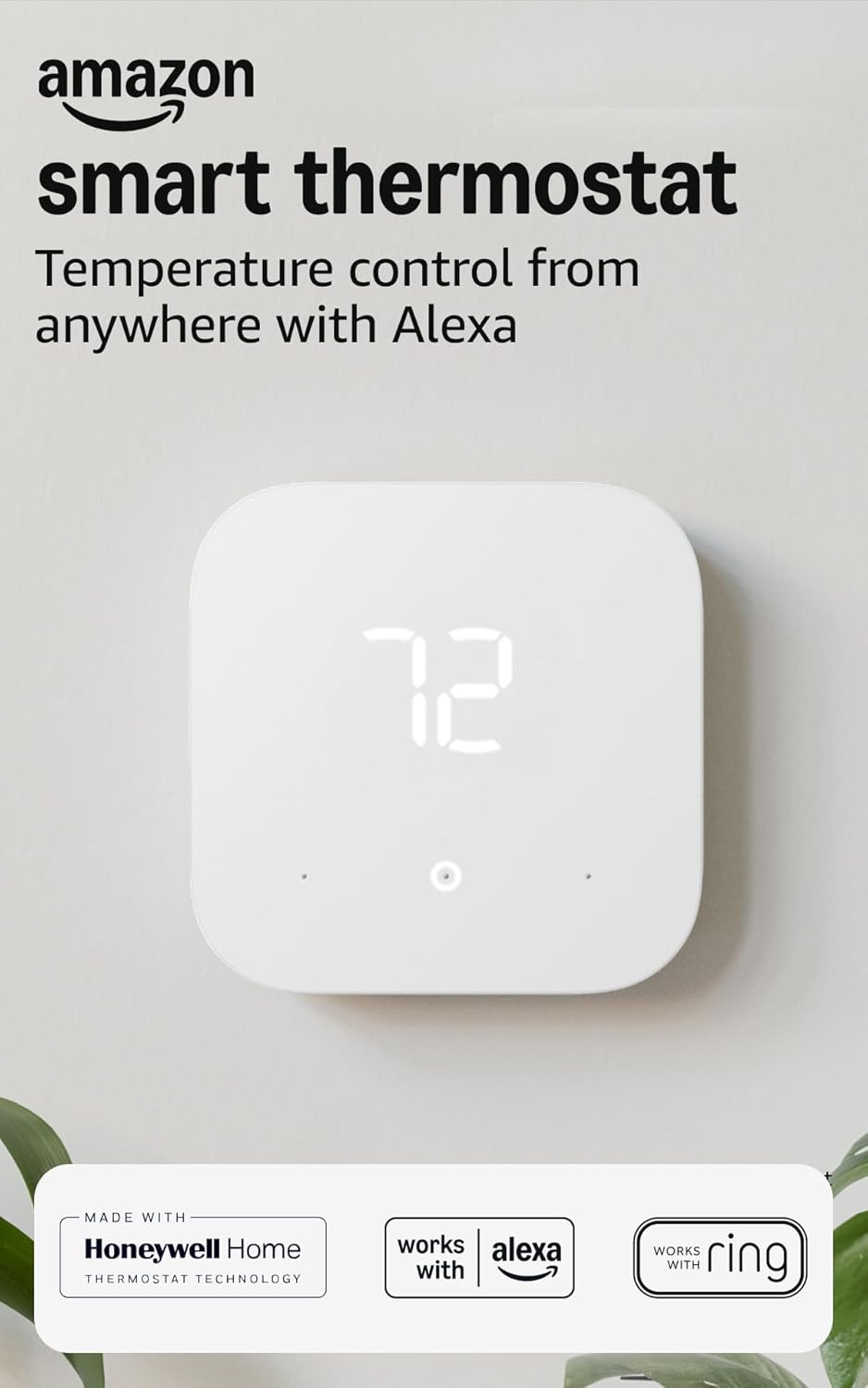
Amazon Smart Thermostat
| Works with | Alexa and Ring |
|---|---|
| Manufacturer tech | Honeywell Home Thermostat Technology |
| Installation | C-wire required |
| Control app | Alexa app |
The Amazon Smart Thermostat is a voice-enabled thermostat built to replace a conventional wall thermostat and give basic smart control through Alexa and the Alexa app. It guides users through do-it-yourself installation (C-wire required) and supports scheduling, home/away modes, and Alexa-based automations including presence-based adjustments when paired with compatible Alexa devices. The unit is built on Honeywell thermostat technology, so it looks and behaves like a standard programmable thermostat while adding remote control, routines, and energy-saving scheduling. Practical benefits include app control when away, integration with Alexa routines and Ring devices, and access to potential local utility rebates documented after purchase. Limitations are that advanced HVAC diagnostics and multi-stage system features are limited compared with high-end smart thermostats, and full Alexa features require an Alexa-enabled ecosystem. For buyers who want straightforward voice and app control with familiar thermostat behavior, this is an easy, low-friction upgrade from a manual thermostat.
Best for: Buyers who prioritize a low-risk, easy upgrade from a conventional thermostat and want reliable Alexa-driven schedules and remote control without a steep learning curve.
Less Ideal for: Users who need advanced multi-stage HVAC diagnostics, professional-level system tuning, or thermostat features that go beyond basic scheduling and Alexa routines.
- Simple DIY installation with guided setup in the Alexa app
- Works with Alexa and Ring for voice control and presence-based automations
- Remote control and scheduling via the Alexa app for on-the-go adjustments
- Built on Honeywell thermostat technology for familiar, reliable operation
- Requires a C-wire for installation
- Does not expose the same advanced HVAC diagnostics and multi-stage support as some premium smart thermostats
Verdict: A straightforward, Alexa-integrated replacement thermostat that gives risk-averse buyers dependable smart scheduling and remote control with minimal setup.
Choosing the Right Smart Thermostat for Two HVAC Systems: Key Factors to Consider
Wiring and Transformer Compatibility
Dual-HVAC configurations often use two separate control transformers and different control circuits. Confirming that a thermostat supports two-transformer setups or offers a clear wiring scheme for two systems matters because improper wiring can leave one system inoperable or damage control boards.
Look for thermostats that document how to wire multiple systems, whether they require an external relay board, and what common-wire requirements exist. Clear labeling and dedicated terminals for each system reduce installation time and troubleshooting. If you or your installer are not comfortable with multi-transformer wiring, plan on professional installation to avoid electrical conflicts.
Independent Scheduling and Modes
When managing separate HVAC systems, you may want different schedules, temperature setbacks, and hold behaviors for each zone. A thermostat that supports independent scheduling for each system makes it easier to preserve occupant comfort while saving energy.
Check whether schedules, away modes, and eco presets can be applied per system or only globally. The ability to set distinct comfort ranges and to tie automations to individual systems prevents unwanted simultaneous runtime and helps tailor operation to different parts of the house.
Sensor and Room-Temperature Inputs
Dual-system setups often rely on multiple temperature sensors or remote probes to measure different parts of the home accurately. The thermostat should support external sensors or multiple inputs so each system can respond to the correct zone conditions.
Consider how sensors are paired, whether averaging or prioritization options exist, and whether wired or wireless sensors are supported. Sensor placement and compatibility influence both comfort and efficiency because a poorly located sensor can cause overcooling or overheating in parts of the home.
Sequencing and Compressor Protection
Running two compressors or multiple major HVAC loads simultaneously can cause electrical strain or short cycling. Thermostats that provide sequencing controls, minimum-off timers, and compressor protection protect equipment and prevent simultaneous starts that stress the electrical system.
Pay attention to how the thermostat handles interlocks between systems, whether it enforces minimum off times, and if it offers delay or staging logic that prevents both systems from starting at once. These features extend equipment life and improve overall reliability.
Installer Tools and Diagnostics
Advanced wiring scenarios demand robust diagnostics to verify correct operation after installation. Thermostats for dual systems should offer in-app or on-device diagnostics that show terminal status, transformer presence, and active calls for heat or cool for each system.
Good diagnostic tools speed commissioning, make troubleshooting easier if there are control conflicts, and reduce callbacks. Look for models with clear error codes, logging or event history, and accessible wiring diagrams to simplify installer workflows.
Connectivity and Automation Ecosystem
Smart features like remote control, occupancy-based automation, and integration with other home systems amplify the benefits of dual-system thermostats. Connectivity options affect how you manage both systems from a single interface and whether you can implement conditional automations across zones.
Evaluate whether the thermostat supports Wi-Fi, local control, voice assistants, or automation hubs, and whether automations can be scoped to one system without affecting the other. Consider privacy and firmware update policies as part of long-term connectivity reliability.
Common Dual-System Wiring Setups
There are a few typical wiring configurations installers encounter when setting up thermostats for two HVAC systems. The most straightforward is two independent thermostats, each connected to its own transformer and control terminals. Many modern smart thermostats are designed to replace a single-thermostat installation, so confirm whether the unit supports two-transformer inputs or requires additional hardware to safely manage both systems.
Another common scenario uses a single control panel with relays to isolate each system. In cases where the thermostat supports multiple stages or outputs, installers must map each stage to the correct equipment and ensure that transformer common leads are handled correctly to avoid backfeeding. Clear labeling, terminal separation, and following the manufacturer wiring diagrams are essential to avoid cross-wiring.
- Independent thermostats remain the simplest path for full separation.
- Single-thermostat controllers require explicit multi-transformer support or a relay board.
- Confirm terminal mappings for heat, cool, fan, and auxiliary outputs per system.
Using Remote Sensors to Improve Zone Control
Remote temperature sensors let each HVAC system respond to the part of the house it actually conditions. When sensor-based control is supported, you can avoid situations where one system runs because a thermostat located near a draft or heat source misreads the zone temperature.
Decide whether you need wired sensors for reliability or wireless sensors for easier placement. Also check how the thermostat aggregates multiple readings. Some interfaces let you choose a primary sensor per schedule while others average inputs; choose the approach that fits your home layout.
- Place sensors in representative locations away from direct sunlight or vents.
- Prefer wired sensors in basements or areas with weak wireless coverage.
- Verify the number of sensors supported without external hardware.
Scheduling Strategies for Two Systems
With two HVAC systems, scheduling becomes a tool for efficiency and comfort. Use staggered schedules to avoid simultaneous full-load operation during peak hours. For example, set one system to bump occupancy temperature slightly later than the other to reduce concurrent compressor starts and smooth electrical load.
Consider occupancy patterns, zone usage, and local climate when creating schedules. If both systems serve adjacent zones, coordinate setback times so rooms that share airflow do not create conflicting calls that trigger short cycles.
- Stagger start times to reduce simultaneous electrical load.
- Apply different setback levels based on room usage and insulation.
- Use temporary holds or vacation modes to reduce runtime during extended absences.
When to Call a Professional
Multi-transformer wiring, control board compatibility, and compressor sequencing can be complex and potentially hazardous. If you encounter unfamiliar wiring, swapped common wires, or unclear terminal labeling, professional HVAC or electrical expertise will ensure safe, code-compliant installation.
A professional can also test sequencing logic, measure transformer voltages, and verify that protections like minimum-off timers are functioning as expected. Hiring a qualified installer reduces risk and helps protect costly HVAC equipment from improper control wiring.
- Hire a pro for two-transformer or multi-stage control wiring.
- Get professional verification if the systems share a single electrical service panel with limited capacity.
- Ask the installer to document wiring and provide a schematic for future reference.
Maintaining Dual-System Thermostat Installations
Once installed, maintain clarity about which thermostat output controls each piece of equipment. Label wiring at the control board and keep a copy of the wiring schematic with the home maintenance records. Periodically check for firmware updates and review diagnostic logs to catch recurring short cycling or communication errors early.
Seasonal checks are especially important. At the start of heating and cooling seasons, run brief system tests to verify sequencing, compressor delays, and sensor operation. Address any anomalies before peak demand to avoid emergency service calls and to keep efficiency consistent.
- Label all wires and keep a wiring schematic accessible.
- Run seasonal diagnostic tests and review event logs.
- Update firmware when recommended and verify settings after updates.
How We Chose the Best Smart Thermostat for Two HVAC Systems
We focused on thermostats that explicitly support managing two separate HVAC systems or dual-transformer configurations. Selection prioritized models with documented multi-system compatibility, flexible wiring support, and clear setup options for two-stage or multi-zone installations. We evaluated thermostats on electrical and wiring flexibility, software scheduling and automation for dual systems, sensor and zone support, user interface and remote control, and long-term reliability factors such as firmware update frequency and diagnostics. Exclusions included single-system-only models, devices that require extensive third-party hardware to function as a dual-system controller, and thermostats lacking clear installation guidance for two-system setups. Concrete evaluation filters included supported control topologies (single transformer, dual transformer, common-wire requirements), the number and type of temperature sensors supported, app and local control features for separate system scheduling, built-in diagnostics and safety interlocks for simultaneous operations, and optional HVAC integration features like compressor protection or sequencing. We also favored products with clear wiring diagrams and accessible technical documentation. The result is a set of thermostats that balance installation practicality with robust dual-system management capabilities.
Our full evaluation process is outlined in our review methodology.
FAQ
Can one smart thermostat actually control two separate HVAC systems?
Sometimes. Some thermostats are designed specifically to manage dual-system setups or multi-transformer configurations. Others are intended for a single system only. Always check the device documentation for explicit two-system support and wiring instructions.
Do I need a common wire for a dual-system smart thermostat?
Often yes. Many smart thermostats need a common wire for each transformer to power electronics reliably. If you have two separate transformers, the common wiring must be handled per the thermostat's instructions to avoid electrical conflicts.
Will coordinating two systems save energy?
It can. Coordinating schedules and avoiding simultaneous full-load starts reduces wasted runtime and electrical strain. Energy savings depend on climate, insulation, and how well schedules match occupancy patterns.
Are wireless sensors reliable for dual-system control?
Wireless sensors can be reliable, but their performance depends on placement and signal strength. In critical zones or areas with poor wireless coverage, wired sensors provide more consistent readings and fewer maintenance concerns.
What safety features should I look for in a dual-system thermostat?
Look for compressor protection such as minimum off timers, sequencing controls to avoid simultaneous starts, and clear fault diagnostics. These protections prevent short cycling and reduce the risk of equipment damage.
Final Verdict
Choosing a smart thermostat for two HVAC systems means balancing wiring practicality with software control features. Prioritize devices that clearly document two-system wiring, support multiple sensors, and offer independent scheduling or sequencing to prevent simultaneous load events. Installer diagnostics and compressor protection are essential for reliable long-term operation. Focus on compatibility with your control wiring and the level of automation you need. If wiring complexity is high, professional installation pays off. With the right priorities, you can achieve comfortable, efficient dual-zone control that protects equipment and simplifies daily management.