
Note: This article contains affiliate links. If you click on these links and make a purchase, we may earn a small commission at no extra cost to you. This helps support our research and content. Read our full affiliate disclosure here.
Choosing the right thermostat for home changes how comfortable your living spaces feel and how much you spend on heating and cooling. A good thermostat delivers accurate temperature control, easy scheduling, and features that match how you live. This guide covers seven shortlisted thermostats for home use, each picked for real-world reliability and useful features. We evaluate setup simplicity, temperature accuracy, connectivity options, and energy-saving capabilities to help you find the right balance of comfort and efficiency. Read on to see how these picks match different priorities and installation situations, then use the factors and FAQ sections to narrow your decision.
Top Picks at a Glance
| Best Overall The best all-around choice for most situations | Amazon Smart Thermostat |  |
| Best Quality Built to a higher standard if you want something more solid | Honeywell Home Smart Color Thermostat |  |
| Best Value The sweet spot between price and what you get | Honeywell Home X2P RTH20B |  |
| Best Budget The cheapest option that still gets the job done reliably | Aowel Non-Programmable Thermostat AW701 |  |
| Top Rated A top-rated pick with lots of positive feedback | ecobee Smart Thermostat Enhanced |  |
| Most Popular A crowd favorite that many people choose with confidence | Google Nest Thermostat |  |
| Best Seller A high-volume bestseller chosen again and again | Sensi Smart Thermostat ST55 |  |
Amazon Smart Thermostat
| Works with | Alexa and Ring |
|---|---|
| C-wire | Required |
| Manufacturer tech | Honeywell Home |
| Remote control | Alexa app |
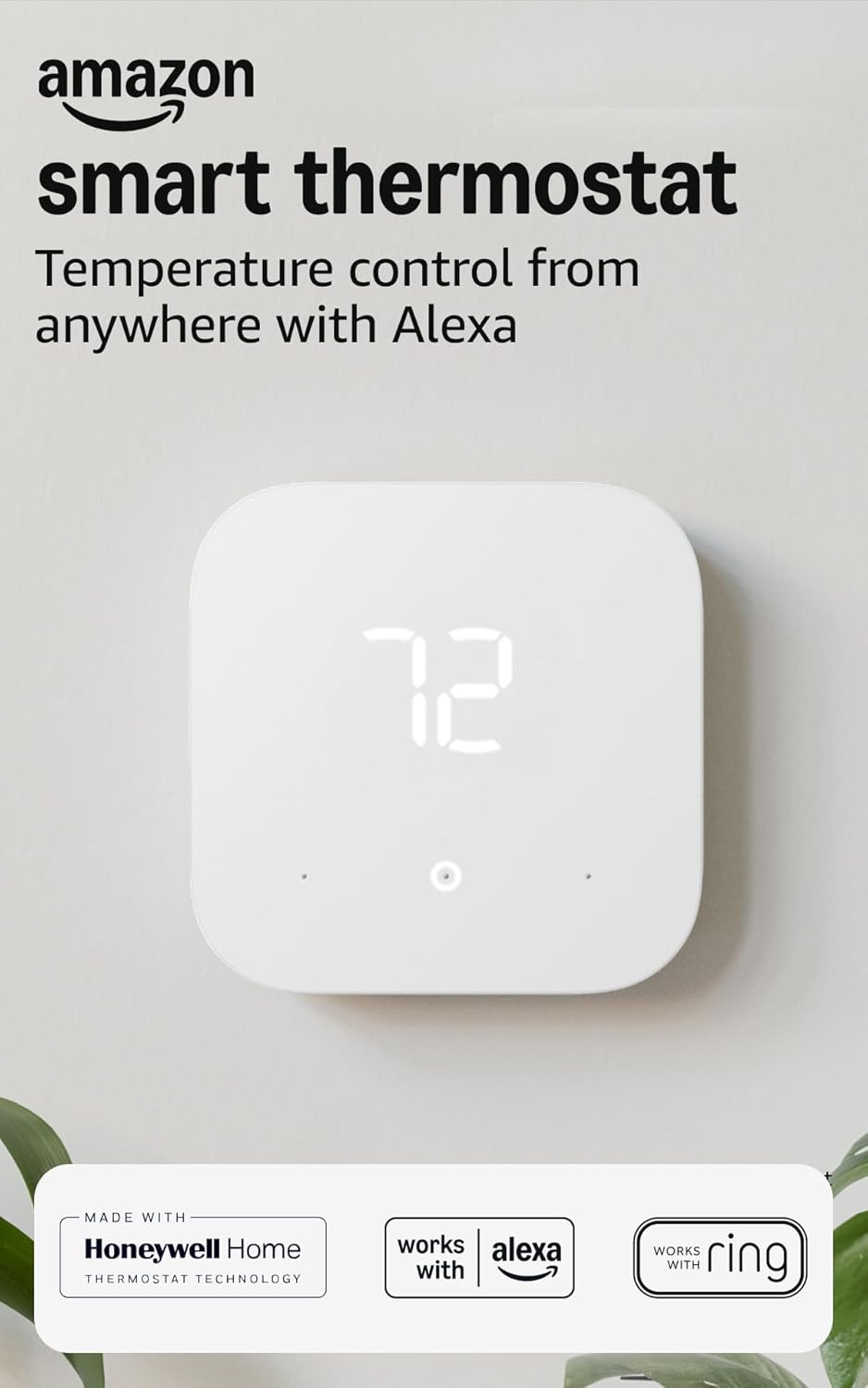
The Amazon Smart Thermostat is a Wi‑Fi thermostat built to work with Alexa and provide simple programmable and automatic control of home heating and cooling. It is intended for DIY installation with C-wire required, and the Alexa app walks you through setup and lets you monitor and adjust temperature remotely. The device supports schedules, home/away modes and Alexa+ automation so compatible Alexa devices can adjust climate based on presence or local temperature readings. Amazon positions the thermostat to help lower energy use by enabling smarter schedules and automated control, and the unit is built on Honeywell Home thermostat technology for proven baseline reliability. Limitations include the need for a C-wire and a focus on the Alexa ecosystem, which means advanced integrations or voice platforms outside Alexa may be limited. For buyers who want straightforward, voice-first control and energy-saving schedules, it is an easy-to-use option, but those needing broad third-party platform support should consider alternatives.
Best for: Buyers who prioritize easy voice control and smart schedules with Alexa and want a simple, app-guided thermostat that focuses on energy savings and everyday convenience.
Less Ideal for: Households that rely on other smart home platforms or need advanced multi-platform integrations should look at models with broader ecosystem support.
- Tight Alexa integration for voice control and Alexa+ automation
- Remote control and scheduling via the Alexa app for on-the-go adjustments
- Built on Honeywell Home thermostat technology for established reliability
- Designed for DIY installation with guided setup in the app
- Requires a C-wire, which may need professional installation in some homes
- Primarily optimized for the Alexa ecosystem, limiting non-Alexa integrations
Verdict: A straightforward, Alexa-first smart thermostat that makes voice control and energy-saving schedules easy for most homes.
Honeywell Home Smart Color Thermostat

| Connectivity Technology | Wi‑Fi |
|---|---|
| Controller Type | Touch Screen, Voice |
| Power Source | AC Power Supply |
| Display Type | LED |
| Specification Met | Energy Star |
The Honeywell Home Smart Color Thermostat is a Wi‑Fi programmable thermostat that combines a customizable full‑color touchscreen with remote app control and smart scheduling. It is typically wall‑mounted to manage heating and cooling systems and is designed for DIY installation when a C‑wire is available. Notable features include Smart Response learning that adapts to your preferred temperatures, weather and humidity readouts on the display, alerts for filter and humidifier pad changes, and Alexa and Google Home compatibility for voice control. The Energy Star certification and utility demand response support make it useful for homeowners focused on energy performance and potential rebates. Limitations to consider are that it only supports low‑voltage systems (does not work with line/120–240V baseboard heaters) and requires a C‑wire in many homes, which can add installation steps or the need for an adapter. The touchscreen and app make daily control straightforward, while the smart features help tune performance over time for a more efficient heating and cooling cycle.
Best for: Buyers who prioritize precise temperature control, energy efficiency, and smart‑home integration and who want a thermostat that learns and adapts to improve system performance.
Less Ideal for: Homes without a C‑wire or those using line‑voltage electric baseboard heating should avoid this model and look for a compatible line‑voltage solution.
- Customizable full‑color touchscreen that can match home decor and improves at‑a‑glance readability
- Wi‑Fi and app control with Alexa and Google Home compatibility for remote and voice operation
- Smart Response Technology learns preferences to help maintain comfort efficiently
- Energy Star certified and compatible with utility demand response programs for potential rebates
- On‑screen weather and humidity information plus maintenance alerts for filters and humidifier pads
- Requires a C‑wire and only supports low‑voltage HVAC systems, excluding line‑voltage baseboard heaters
- May need additional wiring or an adapter for homes without an existing C‑wire
Verdict: Choose this thermostat if you want a programmable, Energy Star certified Wi‑Fi thermostat that learns your preferences and integrates with smart home voice controls to improve comfort and efficiency.
Honeywell Home X2P RTH20B

| Temperature Control Type | Programmable |
|---|---|
| Specific Uses For Product | automate and manage temperature |
| Display Type | LCD |
| Number of Batteries | 2 AA batteries required. |
| Mounting Type | Wall Mount |
The Honeywell Home X2P RTH20B is a straightforward programmable thermostat built for single-stage 1 heat/1 cool systems and typical forced-air setups. It provides 5-2 day scheduling (with options for 7 day, 5-1-1, 1 week, or a non-programmable mode) so you can set weekday and weekend routines and reduce runtime when you are away. The large backlit LCD and clear font make daily adjustments simple, and features like change filter reminders and custom display settings help with ongoing maintenance. Installation is battery powered with two AA cells and works with standard 24 VAC systems; the UWP wall plate simplifies mounting and future swaps. Limitations include no smart-home app control or advanced learning algorithms, and it is optimized for single-stage systems so it will not support multi-stage HVAC setups or electric baseboard heat. For someone who wants a reliable, no-frills programmable thermostat that improves schedule-based comfort and efficiency, this model covers the basics well.
Best for: Buyers who want a reliable, no-nonsense programmable thermostat to set weekday and weekend schedules and simplify everyday temperature management without relying on smart-home features.
Less Ideal for: Users who need Wi-Fi remote control, integration with smart home platforms, or multi-stage/electric baseboard system compatibility should look elsewhere.
- 5-2 day scheduling with multiple program options for weekday/weekend temperature control
- Large backlit LCD with clear font for easy daily use
- Change filter reminder and selectable display settings for simple maintenance
- Battery powered operation with an included easy-install UWP wall plate
- No Wi-Fi or app-based remote control and lacks smart learning features
- Only supports single-stage heating/cooling and is not compatible with electric baseboard heat
Verdict: Choose this thermostat if you want a dependable, easy-to-program wall unit to set weekday and weekend schedules and simplify home temperature control without smart-home bells and whistles.
Aowel Non-Programmable Thermostat AW701

| Specific Uses For Product | Conventional Single-Stage Heating & Air Conditioning |
|---|---|
| Power Source | Battery Powered (2 AAA) or 24VAC |
| Display Type | LCD with Blue Backlight |
| Control Type | Push Button |
The Aowel AW701 is a straightforward non-programmable thermostat designed for single-stage home HVAC systems. It mounts on a wall and runs on two AAA batteries or 24VAC, displaying temperature and humidity on a large blue backlit LCD for easy reading. Typical use is manual temperature control with simple push-button operation, a fan switch with ON/AUTO, and adjustable heating and cooling swing settings for finer cycle control. Practical features include temperature calibration, a selectable 3-minute compressor delay to protect equipment, low-battery indication, and clearly labeled wire terminals to simplify installation. It does not support multi-stage or heat-pump systems and is not suitable for line-voltage baseboard or RV systems, so compatibility is limited to conventional 1 heat/1 cool setups. The interface is intentionally basic, which keeps operation and installation easy but means no scheduling, remote access, or advanced energy-saving automation. For buyers who want a low-cost, easy-to-read replacement that focuses on reliable manual control, the AW701 covers the essentials cleanly.
Best for: Homeowners who need an affordable, no-frills replacement thermostat for a conventional single-stage heating and cooling system and prefer a simple, easy-to-read manual interface.
Less Ideal for: People who want programmable schedules, smart-home integration, or who have multi-stage or heat-pump HVAC systems should look for a different model.
- Large blue backlit LCD with temperature and humidity readout makes information easy to see
- Battery-powered with optional 24VAC allows installation without a C-wire in most systems
- Simple push-button controls and labeled terminals simplify installation and daily use
- Selectable 3-minute compressor delay and temperature calibration provide basic equipment protection and accuracy
- No programmable schedules, Wi‑Fi, or remote control capabilities
- Incompatible with multi-stage systems, heat pumps, line-voltage baseboard heat, and many specialty systems
Verdict: Choose the AW701 when you want a low-cost, easy-to-install manual thermostat that reliably handles basic single-stage heating and cooling needs.
ecobee Smart Thermostat Enhanced

| Connectivity Technology | Wi‑Fi |
|---|---|
| Power Source | Corded Electric |
| Voltage | 24 volts |
| Display Type | LCD |
| Controller Type | Amazon Alexa, Android, Apple HomeKit, Google Assistant, iOS |
The ecobee Smart Thermostat Enhanced is a hardwired Wi‑Fi thermostat designed to reduce heating and cooling waste while keeping rooms comfortable. It installs on a wall and includes a power extender kit for systems without a C‑wire, plus backplate, wire labels, and trim plate for a straightforward DIY setup. The thermostat uses radar and SmartSensor support to detect occupancy and adjust temperature automatically, and eco+ software can suggest schedule changes and lower energy use when you are away or asleep. It connects with Apple HomeKit, Siri, Alexa, Google Assistant, and works from the ecobee app or Apple Watch for remote control. The 4‑inch LCD and app control make daily adjustments easy, and the unit is Energy Star certified for efficiency. Limitations to note are that it requires compatibility with 24 VAC HVAC systems and is not suitable for high‑voltage or millivolt systems, so be sure to run the compatibility checker before buying.
Best for: Buyers who prioritize a reliable, hardwired smart thermostat that automates comfort and energy savings and integrates with mainstream smart home platforms.
Less Ideal for: Homes with nonstandard HVAC wiring types such as line‑voltage or millivolt systems, or buyers who need a battery‑only, non‑hardwired thermostat solution.
- Built‑in radar occupancy sensing for room‑aware temperature control
- Includes Power Extender Kit and installation hardware for easier DIY hardwired installs
- Works with major smart home ecosystems and offers remote app control
- Energy Star certified and software features aimed at lowering heating and cooling costs
- Not compatible with line voltage, millivolt, or 0‑10VDC systems so compatibility check is required
Verdict: A dependable, hardwired smart thermostat with occupancy sensing and broad smart‑home integration that focuses on consistent energy savings.
Google Nest Thermostat
| Connectivity Technology | Bluetooth, Wi-Fi |
|---|---|
| Power Source | Battery Powered |
| Display Type | LCD |
| Screen Size | 2 inches |
| Control Type | Remote Control, Voice Control |
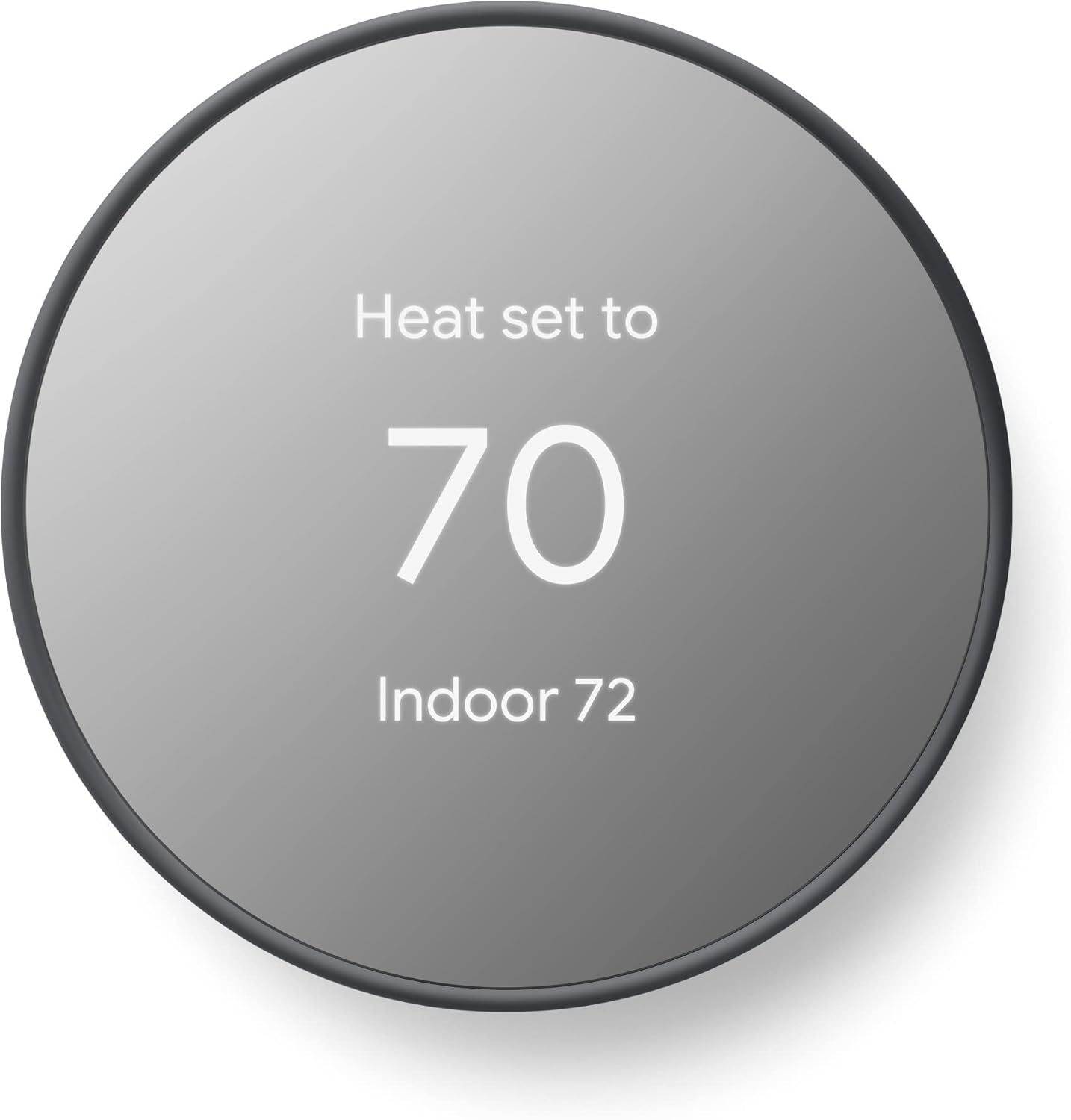
The Google Nest Thermostat is a compact smart thermostat that lets you control home temperature from the Google Home app, by voice, or using the touch bar on the unit. It connects over Wi‑Fi and Bluetooth and supports common voice assistants for hands‑free adjustments, while on‑device controls and a simple setup flow make it feasible for DIY installation. Features like Savings Finder suggestions, Eco Temperatures when the house is empty, and HVAC monitoring aim to reduce energy use and alert you to potential system issues. It runs on two included A batteries and is designed to work without a C‑wire in most homes, although some systems may still require one or a power accessory. The interface and app-based scheduling are straightforward, but advanced users seeking granular learning algorithms or enterprise-level integration may prefer higher‑end Nest models. This thermostat balances ease of use and energy features for typical homes that want remote control and modest automation without a complex installation process.
Best for: Buyers who want an affordable, easy-to-install smart thermostat that provides remote control, basic automation to save energy, and reliable mainstream smart home integration.
Less Ideal for: People who need advanced self-learning schedules, professional HVAC integrations, or enterprise-grade management should consider higher-end models or professional solutions.
- App and voice control via Google Home and compatible assistants for remote adjustments
- Energy-saving features including Eco Temperatures and Savings Finder suggestions
- Simple DIY-friendly installation flow and compact on‑device touch control
- HVAC monitoring that can send alerts about potential system issues
- May require a C‑wire or power accessory for some heating or cooling systems
- Does not include the advanced learning features found in Nest Learning Thermostat models
Verdict: Choose the Nest Thermostat if you want a straightforward, app‑based smart thermostat that makes remote control and basic energy savings simple and accessible.
Sensi Smart Thermostat ST55

| Connectivity Technology | Wi-Fi |
|---|---|
| Controller Type | Amazon Alexa, Apple HomeKit, Google Assistant, SmartThings, Vera |
| Power Source | Corded Electric |
| Temperature Control Type | Programmable, Smart/Remote |
| Energy Certification | Energy Star Certified |
The Sensi Smart Thermostat ST55 is a wall‑mounted programmable thermostat that replaces a conventional unit and adds Wi‑Fi control, scheduling, and simple energy reports. It is typically installed by a homeowner using the step‑by‑step mobile app and built‑in level, and it supports common HVAC types including furnaces, heat pumps, boilers, and air conditioners. Notable features include 2.4 GHz Wi‑Fi remote access, app and voice control through Alexa, Google Assistant, Apple HomeKit and SmartThings, Energy Star certification for measured energy savings, and basic on‑device buttons and LED display. In practice the thermostat makes routine temperature control and scheduling straightforward, surfaces maintenance reminders like filter alerts, and delivers usage reports that help spot inefficiencies. It is designed for DIY installation in most homes and includes batteries and mounting hardware. Limitations to consider are the need to verify compatibility with specific HVAC wiring setups in advance and a fairly simple LED display rather than a large color touchscreen, so users who want advanced on‑device controls or a more premium display will find this a more utilitarian choice.
Best for: Homeowners who prioritize a reliable, easy‑to‑install smart thermostat with solid app control, energy savings, and broad voice/smart‑home integration.
Less Ideal for: Buyers who want a large color touchscreen, highly customizable on‑device controls, or a thermostat tailored to uncommon/professional HVAC setups should consider higher‑end models or professional installations.
- Works with major voice assistants and smart home platforms for convenient remote and voice control
- Energy Star certification and usage reports help reduce HVAC energy use
- Easy DIY install with app guidance, built‑in level, and included mounting hardware
- Includes batteries and basic indicators like filter reminders and smart alerts
- LED screen is small and not a color touchscreen so on‑device interaction is limited
- Some HVAC installations require checking for common wire compatibility before install
Verdict: A straightforward, Energy Star‑rated smart thermostat that gives risk‑averse homeowners reliable app and voice control with easy DIY installation.
Choosing the Right Thermostat for Home: Key Factors to Consider
Wiring and HVAC Compatibility
Thermostat wiring determines whether a unit will work with your furnace, heat pump, or multi-stage system. Many homes use a simple set of low-voltage control wires, but some systems require a common wire, separate heat and cool stages, or specific heat-pump configurations.
Before buying, check your control board and existing thermostat for terminal labels and wire colors. If your chosen thermostat does not support the wiring your system uses, you may need an adapter or professional installation, which increases total cost and complexity. Compatibility affects not only power and control but also whether advanced features like fan control and multi-stage heating will function correctly.
Installation Complexity and Tools Needed
Some thermostats are designed for DIY installation with clear wiring labels and step-by-step apps. Others assume familiarity with wiring and may require a common wire or a separate power module. The physical mounting and whether the wall requires patching or an adapter plate also affect installation time.
Assess whether you are comfortable handling low-voltage wiring and using basic tools like a screwdriver and voltage tester. If your home lacks a common wire, look for units that can operate without one or include a power accessory. Ease of installation reduces the risk of incorrect wiring that can cause performance issues.
Temperature Sensing and Placement
Where a thermostat measures temperature affects how your system responds. Built-in sensors provide a single-room reading which is suitable for many homes, but larger or multi-zone houses can benefit from remote sensors or multi-sensor averaging to avoid hot or cold spots.
Consider whether the thermostat supports additional wired or wireless sensors and how those sensors are configured in the app. Sensor placement matters: avoid direct sunlight, drafts, or locations near heating vents. Good sensor options lead to more consistent comfort and fewer short cycling events.
Scheduling, Automation, and Usability
Programmability determines how precisely you can tailor heating and cooling to your routine. Basic time-of-day schedules can reduce energy use, while adaptive learning and geofencing add convenience by adjusting temperatures automatically when occupants leave or return.
Evaluate how the thermostat's interface handles schedule changes and temporary holds. A well-designed app or on-device controls make everyday adjustments painless. If multiple household members will control the thermostat, look for easy guest or family access and clear permission settings.
Connectivity and Smart-Home Integration
Wi-Fi and smart-home integrations enable remote control, voice commands, and automation routines. Reliable connectivity is crucial because dropped connections frustrate users and can prevent remote adjustments.
Confirm the thermostat's supported networks and whether it works with the smart-home platform you use. Consider the quality of the mobile app and cloud service policies, as these affect long-term usability. Some units offer local control options that work even if internet service is interrupted.
Energy Monitoring and Reporting
Energy-monitoring features provide insight into HVAC runtime and can reveal opportunities to reduce consumption. Detailed reports and historical graphs help quantify the impact of schedule changes and temperature setpoint adjustments.
If saving energy is a priority, pick a thermostat that clearly displays usage trends and supports alerts or recommendations. Automated features such as adaptive setbacks and load-aggregated control can produce savings without manual intervention, but you should still verify how the device estimates savings and what data it collects.
What Type of Thermostat Suits Different Home Layouts
Single-family homes, apartments, and multi-level houses have different heating and cooling dynamics. A centrally located thermostat is sufficient for many single-level dwellings, but multi-story homes often need remote sensors or a zoning strategy to avoid overconditioning one area while neglecting another.
Small apartments usually benefit from a simple, accurate unit with straightforward scheduling. Larger homes should consider thermostats that support multiple sensors or integration with motorized dampers and multi-stage HVAC equipment to maintain even comfort across zones.
- Single-level homes: prioritize sensor accuracy and simple scheduling.
- Multi-level homes: consider remote sensors or multi-zone support.
- Apartments: choose compact units with easy setup and reliable Wi‑Fi.
Balancing Comfort and Energy Savings
Comfort and efficiency can conflict. Lowering the setpoint in winter or raising it in summer saves energy but may reduce immediate comfort. Programmable schedules and adaptive features bridge that gap by reducing conditioning when rooms are unoccupied and restoring comfort before occupants return.
Set realistic deadbands and gradual setpoint changes to avoid frequent cycling. Use reports to see how schedule changes affect run time and tweak settings for the best compromise between comfort and lower bills.
- Use only the features you will maintain: overly complex schedules are often abandoned.
- Enable adaptive or learning modes if you want automated tuning without constant manual edits.
Remote Sensors: When They Matter
Remote temperature sensors are useful when the primary thermostat location does not represent living areas. Bedrooms, upstairs zones, and sunlit rooms can diverge from a hallway reading by several degrees.
Adding sensors helps the thermostat average conditions or prioritize a specific room. This is particularly helpful for households with differing comfort preferences or for ensuring that bedrooms reach setpoints before bedtime.
- Use sensors for accurate control in frequently used rooms.
- Check sensor range and battery life before relying on wireless options.
Mobile Apps and Day-to-Day Management
A responsive app makes routine adjustments, vacation holds, and temporary overrides painless. Look for clear scheduling screens, quick access to setpoints, and concise usage summaries. Push notifications can alert you to extreme indoor temperatures or connectivity issues.
If multiple people will control the thermostat, check how the app handles access and whether it supports multiple accounts or household profiles. Simpler apps are sometimes preferable to feature-rich ones that hide basic functions behind menus.
- Prioritize apps with clear schedule editing and quick-temp controls.
- Look for reliable push alerts and straightforward account management.
Power Options and Backup
Some thermostats rely on a C-wire for continuous power, while others use battery power or power-stealing methods. Continuous power supports consistent wireless connectivity and advanced functions. Battery-only units are simpler to install but require periodic battery changes.
Consider how the unit behaves during power outages and whether settings are retained without mains power. If your home has intermittent power issues, prioritize thermostats that preserve schedules and settings or offer battery backup.
- Verify if your home has a C-wire before choosing a power-hungry model.
- Battery backup preserves schedules and prevents configuration loss during outages.
How We Chose the Best Thermostat for Home
We looked for thermostats that make a measurable difference in daily comfort and utility use while staying straightforward to install and operate. Primary evaluation criteria included installation and compatibility with common home HVAC systems, temperature accuracy and sensor options, programmability and smart features, and energy-saving capabilities such as scheduling and adaptive control. We also weighed connectivity reliability and user interface clarity because these affect daily use. Products were excluded if they lacked essential compatibility information, required uncommon wiring not documented for typical homes, or had persistently poor user feedback about connection stability or inaccurate readings. We prioritized thermostats that support the broadest set of common heating and cooling setups for homes, provide clear setup guidance, and include tangible energy management features. In sum, we favored devices that combine accurate climate control, dependable connectivity, and user-facing features that reduce effort and running costs.
Our full evaluation process is outlined in our review methodology.
FAQ
Do I need a C-wire to install a thermostat for home?
It often depends. Many modern thermostats prefer a C-wire for steady power, but some models can run on batteries or include a power accessory. Check your home wiring and the thermostat's power requirements before purchasing.
Can a smart thermostat save energy in all homes?
Smart thermostats can reduce energy use in many homes by enabling schedules and adaptive setbacks, but actual savings depend on HVAC efficiency, occupant behavior, and how the device is configured.
Are remote temperature sensors worth the extra cost?
Remote sensors help when the main thermostat location does not reflect frequently used rooms. They are especially valuable in multi-level homes or houses with uneven heating and cooling.
Will a thermostat for home work with my heat pump?
Compatibility varies by unit; many thermostats support heat-pump systems but may require specific wiring or settings. Confirm that the thermostat lists heat-pump support and follow installation guidance for that system type.
How reliable are Wi-Fi connections for thermostats?
Wi-Fi reliability depends on network strength and router placement. Most thermostats reconnect automatically after brief outages, but consistent long-term connectivity requires a stable home network.
Final Verdict
Pick a thermostat that matches your home's wiring and HVAC configuration, then prioritize the features you will actually use. If installation simplicity matters, choose a unit with clear compatibility and straightforward setup. If energy savings and remote management are priorities, select a thermostat with robust scheduling, sensors, and reliable connectivity. Weigh the tradeoffs between power requirements, sensor support, and app usability to find the best balance for your home. Focusing on these practical factors will help you choose a thermostat that improves comfort and reduces wasted energy.