
Note: This article contains affiliate links. If you click on these links and make a purchase, we may earn a small commission at no extra cost to you. This helps support our research and content. Read our full affiliate disclosure here.
When you are heading into the backcountry, having a dependable water filter can be the difference between a pleasant trip and avoidable risk. A water filter for camping backpacking must be lightweight, easy to use, and effective at removing pathogens and particulates so you can drink safely from natural sources. This guide spotlights seven shortlisted filters that meet common trail demands and explains the criteria used to evaluate them. We focus on practical decision points like filtration performance, weight and packability, and real-world flow rates so you can pick a filter suited to day hikes or multiday routes. Read on for the features that matter and how each finalist performs against those needs.
Top Picks at a Glance
| Best Overall The best all-around choice for most situations | Katadyn BeFree 1.0L Filter Bottle |  |
| Best Quality Built to a higher standard if you want something more solid | MSR Guardian Purifier |  |
| Best Value The sweet spot between price and what you get | Waterdrop Gravity Water Filter Straw | 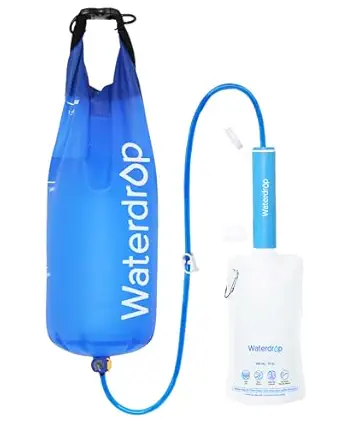 |
| Best Budget The cheapest option that still gets the job done reliably | Waterdrop Water Filter Straw WD-FSBU |  |
| Top Rated A top-rated pick with lots of positive feedback | LifeStraw Personal Water Filter |  |
| Most Popular A crowd favorite that many people choose with confidence | Sawyer MINI Water Filter SP128 |  |
| Best Seller A high-volume bestseller chosen again and again | Sawyer Squeeze Filter SP129 |  |
Katadyn BeFree 1.0L Filter Bottle

| Purification Method | Hollow Fiber Membrane |
|---|---|
| Pore Size | 0.1 micron |
| Maximum Flow Rate | 2 liters per minute |
| Capacity | 1.0 L |
| Supported Water TDS Level Maximum (PPM) | 1000 |
The Katadyn BeFree 1.0L is a lightweight, collapsible water bottle with an integrated 0.1 micron hollow-fiber filter designed for hiking, backpacking and travel. You fill the flask from a stream or lake and drink directly through the stay-clean nozzle, with a claimed flow up to 2 liters per minute so you do not need to pump or wait. The soft Hydrapak bottle collapses for easy packing and stashes in pockets or vest pockets when empty. Maintenance is simple in the field: shake or swish the EZ-Clean membrane to restore flow without backflushing or tools. Practical benefits include very low pack weight, fast flow for quick hydration, and a compact form factor that suits fast-and-light outings. Important limitations are that the filter targets bacteria and protozoa but not viruses, and the membrane lifespan is finite (rated up to about 1,000 liters) so long trips or group use will require replacement or a secondary treatment method. The bottle also relies on being able to source clear-ish water since heavy sediment will need more frequent cleaning.
Best for: Buyers wanting a minimal, fast-flow water filter for day hikes, ultralight backpacking, or travel who prioritize low weight, packability, and quick on-demand drinking.
Less Ideal for: Avoid this if you need virus-level protection or are filtering large volumes for groups on extended trips without a plan for replacement or secondary treatment.
- Very lightweight and packable collapsible bottle that's easy to stash
- Fast gravity/squeeze flow up to 2 L/min for near-immediate drinking
- EZ-Clean membrane that restores flow with simple shaking or swishing
- Stay-clean nozzle designed to reduce contamination when drinking
- Does not remove viruses, so not sufficient alone for some international or emergency water sources
- Filter capacity is finite (up to ~1,000 liters) and will need replacement over time
Verdict: A near-weightless, fast-flow collapsible filter bottle ideal for solo hikers and ultralight backpackers who need quick, on-demand clean water in the field.
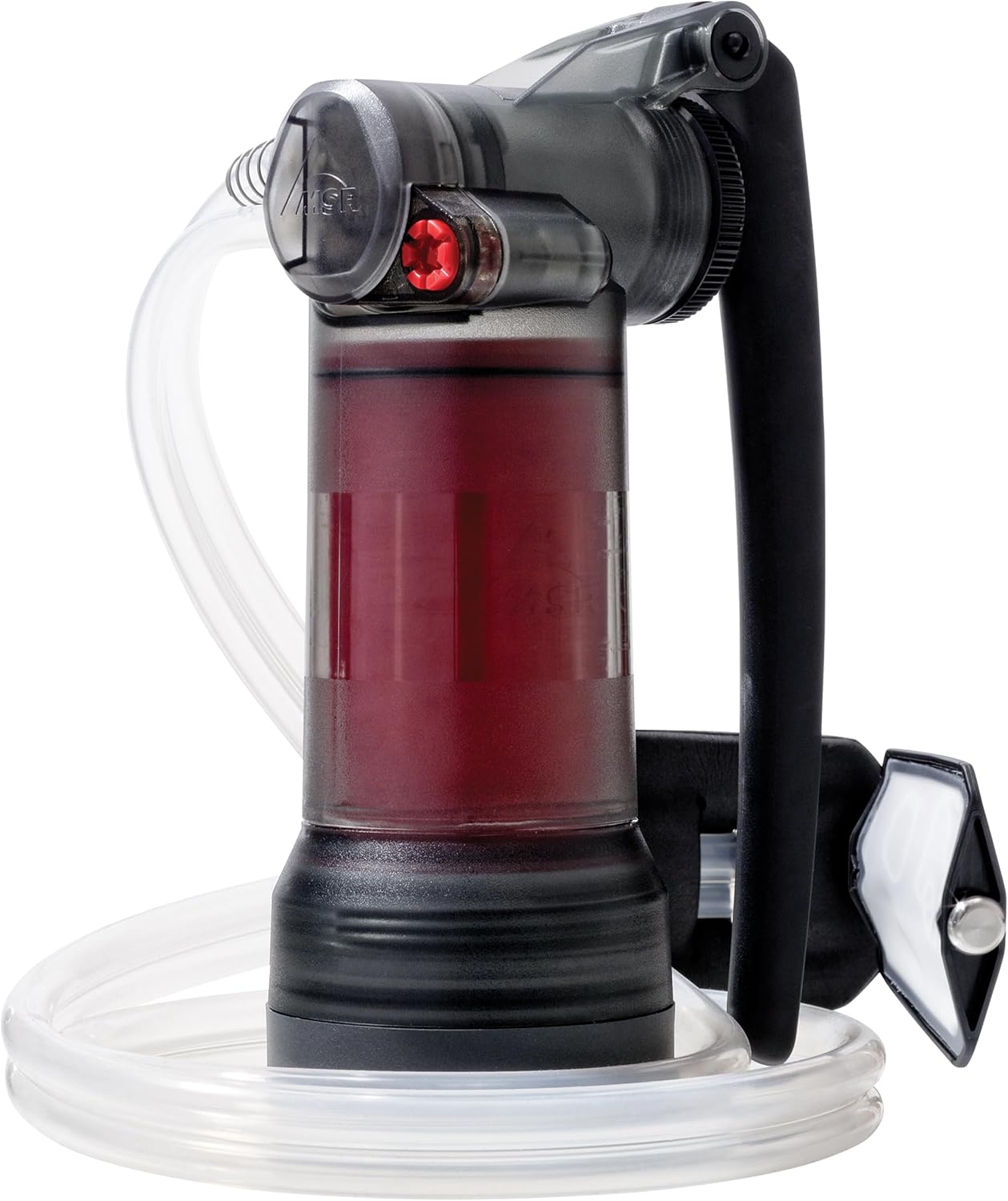
MSR Guardian Purifier
| Purification Method | Activated Carbon, Hollow Fiber Membrane |
|---|---|
| Maximum Flow Rate | 2.5 liters per minute |
| Capacity | 10000 liters |
| Power Source | Manual |
| Supported Water TDS Level Maximum (PPM) | 1000 |
The MSR Guardian Purifier is a heavy-duty manual pump purifier built for demanding backcountry and emergency use. It uses hollow-fiber membrane plus activated carbon and meets NSF P248 military testing to remove viruses, bacteria, protozoa, and particulates, so it is suited to the worst-case water you might encounter. In practice the pump delivers a fast 2.5 liters per minute and its self-cleaning action on each stroke keeps flow rates high without backflushing or scrubbing filters. The unit is robust enough to survive freezing, drops, and extended heavy use, and it includes a PFAS-free DWR storage bag for transport. The purifier treats up to 10,000 liters before replacement, making it a long-lived option for frequent users. Trade-offs are its weight and size compared with ultra-light microfilters and the higher upfront cost typical of military-grade purifiers, but for anyone who prioritizes verified pathogen removal and fast flow the Guardian is a practical, field-ready choice.
Best for: Buyers who put performance and verified pathogen protection first and need a fast, durable purifier for frequent backcountry, travel, or preparedness use.
Less Ideal for: Minimalist or weight‑conscious hikers looking to shave ounces or casual users on short trips who prefer lighter, lower-cost microfilters.
- NSF P248 military-grade testing for virus, bacteria, protozoa, and sediment removal
- High flow rate up to 2.5 liters per minute for fast on-demand water
- Self-cleaning pump that maintains flow without backflushing or manual scrubbing
- Long service life rated to treat up to 10,000 liters
- Rugged construction designed to withstand freezing, drops, and heavy use
- Heavier and bulkier than lightweight microfilters, less suited to ultralight backpacking
- Higher upfront cost compared with simple straw filters or small pump filters
Verdict: Choose the MSR Guardian when you need a fast, military‑tested purifier that reliably removes viruses and other pathogens in tough backcountry or emergency conditions.
Waterdrop Gravity Water Filter Straw

| Purification Method | Hollow Fiber Ultrafiltration Membrane |
|---|---|
| Maximum Flow Rate | 700 milliliters_per_minute |
| Capacity | 1400 gallons |
| Power Source | Non Electric |
| Supported Water TDS Level Maximum (PPM) | 300 |
The Waterdrop Gravity Water Filter Straw is a portable, non-electric gravity filtration kit built for camping, backpacking, and emergency use. You fill the included 1.5 gallon bag or a compatible bottle, hang the bag, and let water flow through the 0.1 micron hollow fiber ultrafiltration membrane into your cup or pouch at up to 700 ml per minute. The system removes particulates, chlorine, bad taste and other contaminants and is rated to produce about 1,400 gallons of filtered water over the filter life. A backwash-friendly design lets you flush the mouthpiece to restore flow after heavy use. Because it is gravity-fed and requires no pumps or power, it is simple to use for groups at camp or during emergencies, and the included 16 oz pouch is handy for short outings. Limitations are that it is intended for natural sources with TDS under 300 ppm and does not claim chemical or virus removal beyond ultrafiltration, so water source awareness and pre-sieving very dirty water help performance.
Best for: Buyers who want a low-effort, high-capacity gravity filter for car camping, group basecamps, or emergency kits where fast, no-power filtration and long service life matter.
Less Ideal for: People who need chemical or virus-level purification, or who plan to rely on the filter for consistently very cloudy or heavily contaminated water sources.
- 0.1 micron hollow fiber membrane reduces particulates, chlorine, and bad taste
- Includes 1.5 gallon gravity bag and 16 oz pouch for group or solo use
- High flow rate up to 700 ml/min for faster filling and drinking
- Backwashable mouthpiece helps maintain flow and extends usable life
- Long rated lifespan of up to 1,400 gallons before replacement
- Not rated to remove viruses or high TDS contaminants beyond its ultrafiltration capability
- Performance depends on pre-filtering very turbid water and proper maintenance
Verdict: A simple, no-power gravity filtration kit that delivers fast, high-volume microfiltration for camping and emergency use.
Waterdrop Water Filter Straw WD-FSBU

| Purification Method | Hollow Fiber Ultrafiltration Membrane |
|---|---|
| Maximum Flow Rate | 700 milliliters_per_minute |
| Supported Water TDS Level Maximum (PPM) | 300 |
| Capacity | 1400 gallons |
| Power Source | Non Electric |
The Waterdrop portable filter straw is a simple, non-electric purifier that uses a 0.1 micron hollow fiber membrane plus activated carbon to remove particulates, chlorine taste and odor for on-the-go drinking. You sip directly from a water source or attach it to standard threaded bottles and water bags, and it delivers up to about 700 ml per minute—fast enough for a thirsty hiker or quick refill. The straw includes a backwashable design so you can flush it when flow slows, and the manufacturer rates its life at roughly 1,400 gallons, which is generous for a low-cost filter. Its lightweight, compact form makes it easy to stash in a pack or emergency kit, and it requires no batteries or pumps. Limits: it is not a purifier for chemically contaminated water or seawater and does not remove viruses, and performance depends on source water quality and routine backwashing. For basic camping and preparedness use this is a practical, low-cost option that balances filtration capacity with portability.
Best for: Buyers wanting an inexpensive, lightweight filter for day hikes, backpacking trips, or emergency kits who prioritize portability and straightforward, tool-free filtration.
Less Ideal for: People needing guaranteed virus removal, chemical decontamination, or multi-person long-term water treatment solutions should choose a different purifier or multi-stage system.
- True 0.1 micron hollow fiber membrane for fine particulate and sediment removal
- Activated carbon layer reduces chlorine, taste and odor
- Backwashable design extends usable life and restores flow
- High claimed lifespan of about 1,400 gallons per straw
- Lightweight and non-electric for easy packability and emergency kits
- Does not remove viruses or guarantee chemical contaminant removal
- Flow and lifespan depend on source water quality and regular backwashing
Verdict: A very affordable, lightweight straw filter that delivers fast, fine-filtration for individual campers and emergency kits without batteries or pumps.
LifeStraw Personal Water Filter

| Material Type | Plastic |
|---|---|
| Model Number | LSPHF038 |
| External Testing Certification | NSF |
| Unit Count | 1 Count |
The LifeStraw Personal Water Filter is an ultralight straw-style purifier designed for drinking directly from streams, lakes, or from a filled container while hiking, camping, or in emergencies. It uses a hollow fiber microfiltration membrane that reliably blocks bacteria, parasites and microplastics and reduces cloudiness so water tastes cleaner without chemicals or batteries. Its slim plastic body is easy to pack and simple to use—sip directly through the mouthpiece and backflush to extend life—and the filter is rated to provide thousands of liters of treated water with proper maintenance. Notable limits are that it does not remove viruses or chemicals, and it only filters as you drink rather than producing stored treated water without additional containers or pumps. For hikers who prioritize proven pathogen protection in a minimal, no-setup form factor, the LifeStraw offers a durable, field-ready option; users needing broad-spectrum contaminant removal or faster group refilling should pair it with a pump filter or gravity system.
Best for: Backpackers and emergency-preparedness buyers who want a simple, proven way to drink safely from natural sources without pumps, power, or complex setup.
Less Ideal for: Groups that need to rapidly treat large volumes, travelers concerned about viruses or chemical pollution, or users who prefer a filter that produces stored filtered water without manual sipping.
- Ultralight, compact design that fits easily in a backpack or survival kit
- Microfiltration membrane removes bacteria, parasites and microplastics to EPA/NSF testing standards
- Long rated lifespan able to treat thousands of liters with proper use
- No batteries or chemicals required, making it reliable in remote situations
- Does not remove viruses, heavy metals, or chemical contaminants
- Only filters on-demand while sipping or using a container; not ideal for quickly treating large volumes
Verdict: If you want a lightweight, maintenance-light filter that reliably removes bacteria and parasites for solo hiking and emergencies, the LifeStraw is an easy, field-proven choice.
Sawyer MINI Water Filter SP128

| Purification Method | Hollow Fiber Membrane |
|---|---|
| Other Special Features | Removes bacteria, protozoa, and microplastics |
| Capacity | 100000 gallons |
| Power Source | Manual Operation |
| Container Type | Pouch |
The Sawyer MINI is a palm‑sized, manual water filtration system built for backpacking and travel. You can use it as a squeeze filter with the included 16‑oz pouch, drink through the straw from a stream, screw it onto standard 28 mm disposable bottles, or connect it inline to hydration packs, which makes it flexible on the trail. The 0.1 micron hollow fiber membrane provides lab‑verified removal of bacteria (7‑log) and protozoa (6‑log) and blocks microplastics, and the manufacturer rates the filter up to 100,000 gallons, so it is intended for long service life with routine cleaning using the included plunger. Its tiny weight and compact shape make it easy to carry in a pack or pocket, and it requires no batteries or replacement cartridges to get started. Limitations are its manual squeeze flow which can be slower than pump systems, and the unit is best for one or two people rather than filtering large groups quickly; regular backflushing is required to restore flow after heavy use or turbid water.
Best for: Buyers who prioritize proven microbial protection and a tiny, easy‑to‑carry filter for solo or small‑party backcountry trips and emergency prep will appreciate this unit.
Less Ideal for: People who need to produce large volumes of potable water fast for groups or who prefer powered or high‑flow pump systems should consider other options.
- Very compact and lightweight for backpacking
- 0.1 micron hollow fiber membrane removes bacteria, protozoa, and microplastics
- Multiple use modes: squeeze pouch, straw, bottle adapter, or inline hookup
- Rated up to 100,000 gallons with included cleaning plunger for long service life
- Manual squeeze flow can be slow compared with pumps or gravity filters
- Not optimized for quickly filtering large volumes for groups
Verdict: Choose the Sawyer MINI if you want a proven, ultralight filter that reliably removes bacteria, protozoa, and microplastics for solo or small‑party camping and backpacking.
Sawyer Squeeze Filter SP129

| Purification Method | Hollow Fiber Membrane |
|---|---|
| Other Special Features | Removes bacteria, protozoa, and microplastics |
| Maximum Flow Rate | 1.7 liters per minute |
| Upper Temperature Rating | 40 °C |
| Capacity | 100000 gallons |
The Sawyer Squeeze is a minimalist portable filtration system that uses a 0.1 micron hollow-fiber membrane to remove bacteria, protozoa, and microplastics from natural water sources. It is supplied with two reusable 32‑oz collapsible pouches, inline adapters for hydration packs, and a pop-up drinking nozzle so you can squeeze water directly into a bottle, bladder, or your mouth. In use it delivers a steady flow (up to about 1.7 L/min) when you squeeze or set up a simple gravity feed, and the filter's small size and low weight make it easy to carry on multi-day trips. The unit is individually tested and rated for a very high lifetime capacity, and the removable cap and included adapters add real versatility. Expect to maintain flow by backflushing or shaking sediment out; very turbid water will require pre-filtering or letting solids settle. This is not an electric purifier so it does not remove dissolved salts or chemicals, and freezing temperatures can damage the cartridge if not protected.
Best for: Buyers who prioritize proven microbial protection and low weight for camping or multi-day backpacking trips and who want a straightforward, field-serviceable filter.
Less Ideal for: People planning to treat chemically contaminated water, rely on filtration in freezing conditions, or who prefer a pump or chemical purifier instead of a squeeze/gravity system.
- Removes bacteria, protozoa, and 100% of microplastics with a 0.1 micron hollow-fiber membrane.
- Very lightweight and compact for backpacking with included collapsible pouches and adapters.
- Delivers usable flow for squeezing or gravity setups and fits standard 28 mm bottles.
- Individually tested and rated for a very high service life (large gallons capacity).
- Performance can drop with very dirty or silty water and needs periodic backflushing to restore flow.
- Does not filter dissolved chemicals, heavy metals, or remove viruses on its own.
Verdict: A proven, ultralight microbial filter that gives risk-averse campers reliable protection from bacteria and protozoa while keeping pack weight and complexity to a minimum.
Choosing the Right Water Filter for Camping Backpacking: Key Factors to Consider
Filtration Capability
Filtration capability determines what the system removes from natural water sources. For backpacking you should understand whether a filter blocks bacteria and protozoa and whether it also reduces viruses or chemical contaminants. Mechanical microfilters typically remove bacteria and protozoa effectively but not viruses, while advanced purifiers or chemical treatments address viruses as well.
Knowing the specific contaminants a product handles affects route planning and water-source choices. If you will visit regions with known viral risks or human-impacted waters, pick a solution rated for those hazards. Filter pore size, independent test claims, and whether the system uses activated carbon for taste and odor control are all part of assessing capability.
Weight and Packability
Every ounce matters on long routes, so choose a system that minimizes weight without compromising necessary protection. Lightweight pump filters, squeeze filters, and gravity setups vary widely in packed volume and carried weight. Consider how the filter integrates with your existing bottles, hydration bladder, or cook kit.
Also account for spare parts you may need to carry, such as replacement O-rings or cleaning syringes. A heavier but more durable or faster filter can be worth the tradeoff on shorter trips, while ultralight systems are preferable for long-distance backpacking where every gram counts.
Flow Rate and Throughput
Flow rate affects how quickly you can refill your bottles or hydration reservoir. Faster throughput reduces downtime at water sources, which matters when you have limited daylight or frequent water stops. Look at both the typical liters-per-minute performance and the practical throughput when filtering turbid water.
High-flow systems are convenient but may be heavier or require more effort to operate. Also check the total service life or liters before the filter element needs replacement or backflushing so you can estimate maintenance needs on extended trips.
Ease of Use and Maintenance
On-trail simplicity matters. A filter that is quick to set up, intuitive to operate, and easy to clean saves time and reduces frustration in adverse conditions. Assess whether the system allows field backflushing, whether cleaning can be done without tools, and how straightforward it is to replace consumable elements.
Consider the learning curve for group members who might share the gear. Systems that require minimal manipulation to produce safe water are preferable on long hikes or when hikers are fatigued.
Durability and Cold-Weather Performance
Durability determines how well a filter withstands knocks, abrasion, and repeated use. For backpacking, materials and construction should resist punctures and cracking. Evaluate whether plastics are BPA-free and if seals and connectors are robust.
Cold-weather performance is also important if you will be filtering near-freezing sources. Some filters are susceptible to damage from freezing water inside the element. Choose a system that can be drained, stored safely, or is rated for low-temperature use if you will be in alpine or winter conditions.
Types of Trail Water Filters
Trail water filters fall into a few broad types, each with strengths and tradeoffs. Squeeze and inline filters are lightweight and simple, ideal for solo hikers and ultralight trips. Pump filters offer robust performance and higher flow rates but are heavier and require manual operation. Gravity systems are very convenient for groups or basecamps, allowing passive filtering while you set up camp. Purifiers and chemical treatments add virus protection but can increase weight, complexity, or taste issues.
Choosing a type depends on trip length, group size, and the expected water conditions. Consider whether you prioritize minimal weight, speed, or the broadest contaminant coverage.
- Squeeze filters: light, low-profile, good for solo hikers.
- Pump filters: higher flow, easier with turbid water, but heavier.
- Gravity filters: best for groups, hands-free filling.
- Purifiers/chemical options: add virus protection when needed.
How Water Source Quality Affects Your Choice
Not all natural sources present the same risks. Clear mountain streams usually have fewer particulate loads but can still contain bacteria and protozoa. Slower, stagnant waters and areas near human activity are more likely to contain higher pathogen loads or chemical runoff, which affects whether a basic microfilter is sufficient.
If you expect to rely on murky or silty sources, prioritize filters with strong clog resistance or easy backflushing. When chemical contamination is a concern, look for systems that include activated carbon or pair your filter with a separate treatment method.
- Fast-flowing alpine streams: filters with smaller pore sizes are often adequate.
- Muddy or silty water: choose clog-resistant or easily cleanable systems.
- Potential chemical contamination: seek carbon-based adsorption or alternative treatments.
Field Maintenance and Troubleshooting
Understanding common field maintenance tasks keeps a filter working throughout a trip. Learn how to backflush the element, clear trapped debris, and replace seals. Carry a small repair kit with spare O-rings, tubing, and a cleaning syringe if the system uses one.
If the flow rate slows, try backflushing first and avoid using dirty water that accelerates clogging. Freezing damage is a common failure mode in cold conditions, so always drain the unit if freezing temperatures are expected. Knowing these simple procedures reduces the chance of a filter failing when you need it most.
- Backflushing restores flow and extends element life.
- Spare seals and tubing prevent field failures.
- Drain and dry before exposure to freezing temperatures.
Integrating Filters with Hydration Systems
Consider how a filter connects to your bottles and hydration bladder. Inline filters that attach to hydration hoses are convenient for continuous sipping, while pump or squeeze filters usually fill bottles directly. Check thread compatibility or adapter needs so you can fill common containers without hassle.
Some filters include universal connectors or require minimal adapters, which speeds filling and reduces the chance of contamination. Planning these details in advance avoids having to improvise at a water source.
- Inline filters suit hands-free hydration bladders.
- Adapters can make filters compatible with various bottle threads.
- Test connections at home before heading out.
Long Trips and Replacement Parts Strategy
On multiday and thru-hikes, estimate how many liters you will filter and whether the element's rated lifespan covers that volume. Some elements are rated by the number of liters before replacement, while others indicate service life in backflush cycles. Pack extra filter elements or plan resupply points if you expect heavy use.
Also consider consumables such as chemical treatment tablets if you plan to use them as a backup. A lightweight replacement plan can keep your system functional across long itineraries without adding excessive weight.
- Compare element service life to expected liters filtered on your route.
- Carry spare parts only if replacement chances are high and weight allows.
- Have a backup treatment method for emergency use.
How We Chose the Best Water Filter for Camping Backpacking
We applied a practical, safety-focused filter for selecting the seven water filters presented here. First, we prioritized verified pathogen removal capabilities with testable claims or standardized filtration ratings for bacteria, protozoa, and, when applicable, viruses. Second, portability mattered: we favored systems with low packed weight and compact form factors suitable for backpacking. Third, usability under trail conditions was essential, including ease of setup, backflushing or cleaning options, and how the filter performs with turbid water. Fourth, flow rate and capacity were evaluated so that users can estimate how long it takes to refill bottles or hydration bladders. Fifth, durability and materials were considered to ensure the filter tolerates repeated drops, freezing temperatures, and routine maintenance. We excluded products lacking clear performance data or those intended primarily for household point-of-use applications. Filters that require frequent expensive replacement parts or that are impractical for backpacking were also filtered out. The final shortlist balances protection, weight, speed, and field serviceability, reflecting the attributes most relevant to hikers and backpackers.
Our full evaluation process is outlined in our review methodology.
FAQ
How often should I backflush a trail water filter?
Backflushing frequency depends on source turbidity and filter type. For clear water you may only need occasional backflushing, while muddy water can require multiple flushes per day. A good rule is to backflush whenever flow noticeably slows or after filtering several liters of visibly particulate water.
Can I rely on a filter alone to make water safe everywhere?
Often a mechanical filter removes bacteria and protozoa, but it may not remove viruses or certain chemicals. In regions with viral risks or potential chemical contamination, use a purifier rated for viruses or add an appropriate chemical treatment or activated carbon stage.
What should I do if my filter freezes on the trail?
Freezing can crack elements and seals. If freezing is possible, drain the system completely and pack it inside your sleeping bag or close to your body while moving. If you suspect freeze damage, inspect seals and run test water at home before relying on it again.
Are gravity filters practical for solo backpacking?
Gravity filters are highly convenient but generally bulkier and heavier than squeeze or inline options. They excel for groups or basecamps, but solo ultralight hikers often prefer squeeze or inline systems for lower weight and smaller packed size.
How long do filter elements typically last on a long trek?
Element lifespan varies by design and water conditions; manufacturers often rate elements in liters. Under heavy use with turbid water, lifespan shortens. Plan using conservative estimates and carry spare elements if your route lacks resupply options.
Final Verdict
Prioritize the protections you need for your route and balance them against weight and ease of use. If you expect clean alpine sources, a lightweight squeeze or inline microfilter may be ideal. For murkier water, frequent group use, or situations where speed matters, consider higher-throughput pumps or gravity systems and make sure backflushing and spare-part plans are in place. Ultimately, select a filter that matches the contaminants you expect to face, that fits your packweight targets, and that you can maintain reliably in the field. That approach will keep your drinking water safe and your trip running smoothly.