
Note: This article contains affiliate links. If you click on these links and make a purchase, we may earn a small commission at no extra cost to you. This helps support our research and content. Read our full affiliate disclosure here.
If you are concerned about lead in your household water supply, choosing the right water filter matters for health and daily use. The wrong filter can leave dangerous levels of lead behind or degrade quickly and clog, creating maintenance headaches. This guide shortlists the top seven water filters designed to reduce lead and explains the tradeoffs you should weigh when picking one for drinking and cooking. We evaluated options based on how well they remove lead, ongoing maintenance needs, and practical factors like flow rate and installation. Read on to see the key criteria and decision points that will help you pick a dependable filter for lead reduction.
Top Picks at a Glance
| Best Overall The best all-around choice for most situations | Brita UltraMax 27-Cup Dispenser |  |
| Best Quality Built to a higher standard if you want something more solid | iSpring RCC7AK-BN Reverse Osmosis |  |
| Best Value The sweet spot between price and what you get | Waterdrop WD-10UA Under Sink Filter | 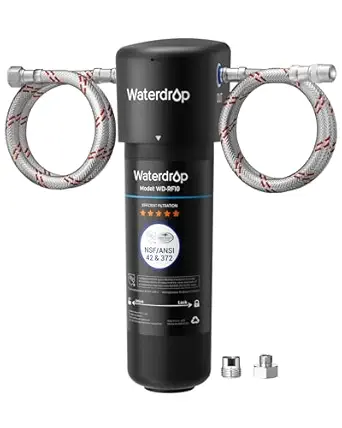 |
| Best Budget The cheapest option that still gets the job done reliably | Waterdrop Lucid Pitcher WD-PT-07B |  |
| Top Rated A top-rated pick with lots of positive feedback | Brita Large Water Filter Pitcher |  |
| Most Popular A crowd favorite that many people choose with confidence | ZeroWater 23-Cup Dispenser ZD018 |  |
| Best Seller A high-volume bestseller chosen again and again | ZeroWater 5-Stage Replacement Filter 2-Pack |  |
Brita UltraMax 27-Cup Dispenser
| Capacity | 27 cups |
|---|---|
| Filter Life Cycle | 6 months |
| Purification Method | Activated Carbon |
| Supported Water TDS Level Maximum (PPM) | 600 |
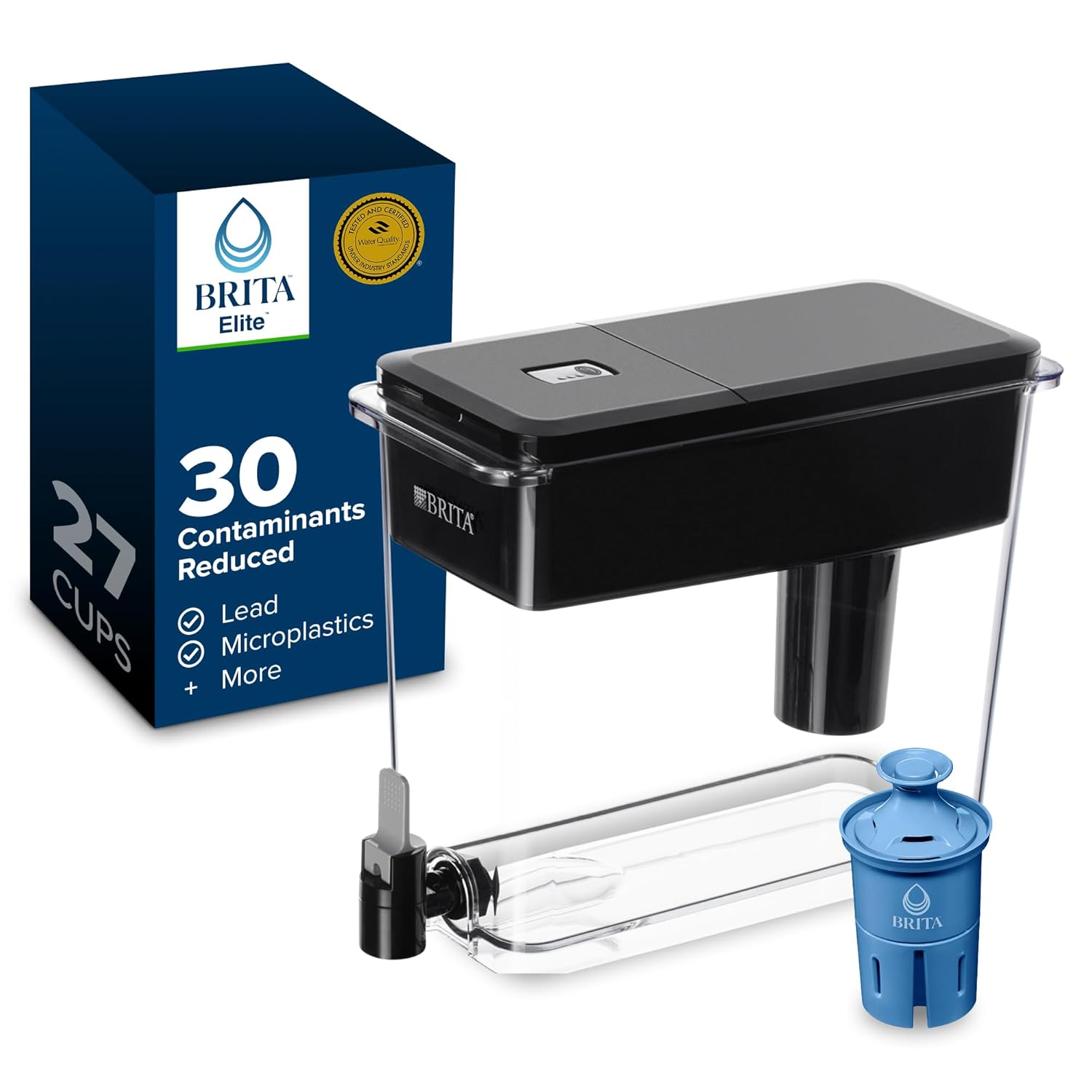
The Brita UltraMax is a 27-cup countertop dispenser that pairs a roomy reservoir with Brita's Elite filter to cut lead, microplastics, chlorine, and a range of other contaminants certified to NSF/ANSI standards. You fill the top, water passes through an activated carbon and ion-exchange core, and clean water is released from the convenient spigot—making it useful for families, parties, or a busy kitchen where you need ready access to filtered water. The Elite filter is rated for about 120 gallons or roughly six months of typical household use, which reduces replacement frequency versus many pitcher filters and lowers ongoing cost and waste. The dispenser is freestanding, BPA-free, and fridge-friendly for cooler storage, but it does require occasional cleaning of the reservoir and regular filter changes to maintain performance. For buyers focused on reducing lead in tap water, the Elite filter's certified reduction performance and long lifespan are the primary practical benefits, while those needing on-demand hot water or inline/plumbed filtration should consider other systems.
Best for: Homebuyers who want a straightforward, certified countertop solution to significantly reduce lead and other contaminants without plumbing changes and who value a large reservoir for family use.
Less Ideal for: People who need a plumbed, whole-house, or instant hot-water filtration solution should look at under-sink or point-of-use systems instead.
- WQA/NSF-certified Elite filter reduces 99% of lead and 30+ contaminants
- Large 27-cup capacity suitable for families and frequent use
- Elite filter lasts about 120 gallons (around 6 months), reducing replacement frequency
- BPA-free freestanding design with an easy spigot for dispensing
- Requires periodic manual cleaning of the reservoir to avoid biofilm or taste issues
- Not a plumbed or hot-water system, so it only provides cold/room-temperature filtered water
Verdict: A large, certified pour-through dispenser that is a practical, low-maintenance way to cut lead and many other contaminants for family use without plumbing changes.
iSpring RCC7AK-BN Reverse Osmosis

| Purification Method | Reverse Osmosis, Alkaline, Activated Carbon, Carbon block |
|---|---|
| Power Source | No Power Needed |
| Maximum Flow Rate | 284 liters_per_day |
| Supported Water TDS Level Maximum (PPM) | 750 |
| Filter Life Cycle | 6 months |
The iSpring RCC7AK-BN is a six-stage RO system that sits under the sink and delivers mineralized drinking water while removing heavy metals and many other contaminants. It uses sediment and carbon prefilters, an RO membrane, and an alkaline remineralization stage to restore balanced pH and add essential minerals after filtration. The system is NSF/ANSI 58 certified for whole-system performance and reports high removal rates for lead, fluoride, chlorine, PFAS, and dozens of other contaminants. Installation is DIY-friendly with push-to-connect fittings, color-coded tubing, and a convertible feed adapter for common plumbing sizes, and the clear first-stage housing makes it easy to inspect the sediment filter. It runs without electricity and includes a brushed-nickel faucet and storage tank, but like all RO units it produces wastewater during purification and requires periodic filter changes on a 6-month to multi-year schedule depending on the cartridge. For buyers focused on contaminant removal and water quality, it delivers thorough filtration and a mineral boost; those wanting zero-waste or no maintenance may prefer different solutions.
Best for: Buyers who prioritize verified contaminant removal and want bottled-water quality at the tap, especially those concerned about lead and other heavy metals, and who are willing to perform periodic maintenance.
Less Ideal for: People seeking a zero-maintenance or zero-waste solution, or households unwilling to allocate space under the sink for a tank and filter housings.
- NSF/ANSI 58 whole-system certification for verified contaminant reduction
- Six-stage filtration including RO membrane plus alkaline remineralization
- No electricity required so it works with standard plumbing
- Transparent first-stage housing for quick visual inspection
- Includes brushed-nickel faucet and storage tank for immediate use
- Produces wastewater as part of the RO process
- Requires regular filter replacements on a defined schedule
Verdict: If you need verified, high-performance removal of lead and other contaminants with the option of mineralized drinking water, this NSF-certified RO system is a strong choice.
Waterdrop WD-10UA Under Sink Filter

| Installation Type | Under Sink |
|---|---|
| Purification Method | Activated Carbon |
| NSF Certification | NSF/ANSI 42 & 372 |
| Maximum Flow Rate | 2.5 gpm |
| Filter Life Cycle | 1 years |
The Waterdrop WD-10UA is an under-sink activated carbon filter system intended for municipal cold water that connects directly to standard 3/8" or 1/2" feed lines. It is used for daily drinking and cooking water and installs with twist-and-lock and push-to-connect fittings so no drilling or complex plumbing is usually required. The cartridge is NSF/ANSI 42 certified and rated to cut chlorine, lead and certain PFAS/PFOA/PFOS compounds while preserving beneficial dissolved minerals, and the manufacturer quotes an 11,000-gallon capacity or about 12 months of service under typical household use. Practical touches include a compact single-canister form, included hoses and fittings, and a relatively fast flow rate compared with many under-sink filters. Limitations: it is designed for municipal cold water only so it is not suitable for hot water or well water without pretreatment, and finer particulate or microbiological risks require a different filter type. Replacement cartridges are a recurring cost but are available separately to maintain performance.
Best for: Buyers who want a practical, low-maintenance under-sink filter to improve drinking water taste and remove lead and common chemical contaminants while keeping installation and upkeep simple.
Less Ideal for: Homes relying on untreated well water, users needing certified microbiological protection, or anyone who requires hot-water filtration should consider other systems or additional pretreatment.
- NSF/ANSI 42 certification for chlorine and aesthetic contaminant reduction
- Reduces lead and certain PFAS/PFOA/PFOS compounds
- Tool-free twist-and-lock and push-to-connect fittings for fast installation and quick cartridge changes
- Compact single-canister design that fits under most sinks and includes necessary hoses and fittings
- Long service life rated at about 11,000 gallons or 12 months per cartridge
- Not intended for well water or hot water use so additional treatment may be required for those sources
- Does not provide ultrafine or microbiological filtration without upgrading to a UF or other compatible filter
Verdict: Choose the WD-10UA if you want an easy-to-install, NSF-certified under-sink filter that targets lead and common chemical contaminants with a year-long cartridge life.
Waterdrop Lucid Pitcher WD-PT-07B

| Capacity | 2.4 liters |
|---|---|
| Filter Life Cycle | 200 gallons / 3 months |
| Purification Method | Activated Carbon |
| Maximum Flow Rate | 0.5 gpm |
The Waterdrop Lucid WD-PT-07B is a countertop 10-cup water filter pitcher designed for everyday drinking water improvement. It uses a multi-stage activated carbon filter that is NSF 42 and 372 certified and is tested to reduce lead-related contaminants such as PFOA/PFOS plus chlorine, odor, and some heavy metals. Typical use is simple: soak and install the PF-01A replacement filter, fill the reservoir and let gravity pull water through the cartridge into the pitcher; an LED indicator tracks filter life. The filter is rated for about 200 gallons or roughly three months of use, which stretches replacement intervals compared with short-life cartridges. The pitcher fits most refrigerators, has a hands-free lid for pour-through dispensing to limit dust, and requires no electricity. Limitations are that it does not lower total dissolved solids and replacement filters are required routinely, so ongoing costs matter for budget shoppers. For someone wanting tested lead-reduction in a low-maintenance, fridge-friendly pitcher, the Lucid is a practical choice.
Best for: Buyers who want a tested, fridge-friendly pitcher that reduces lead-related contaminants affordably and with lower-frequency filter changes.
Less Ideal for: People who need TDS reduction, instant dispensing without wait time, or a filter-free long-term solution for whole-house or high-volume use.
- NSF 42 and 372 certifications for verified contaminant reduction.
- Long filter life rated at ~200 gallons or 3 months, reducing replacement frequency.
- Hands-free lid and slim shape fit most refrigerators and reduce dust exposure.
- Simple, non-electric operation with an LED indicator to monitor filter life.
- Does not reduce total dissolved solids (TDS).
- Requires periodic replacement filters, adding ongoing cost.
- Flow is gravity-fed so filling and wait time are required versus instant systems.
Verdict: Choose the Waterdrop Lucid if you want an NSF-tested, budget-friendly pitcher that reduces lead-related contaminants with longer-than-average filter life.
Brita Large Water Filter Pitcher

| Capacity | 10 cups |
|---|---|
| Purification Method | Granular Activated Carbon |
| Filter Life Cycle | 2 months / 40 gallons |
| Power Source | Manual |
The Brita Large 10-Cup Water Filter Pitcher is a simple countertop pitcher that filters tap water through a Brita Plus cartridge to reduce chlorine taste and certain heavy metals such as copper, cadmium and mercury. You fill the flip-top lid reservoir, water passes through a mesh prefilter and activated carbon with ion-exchange resin, and filtered water collects in the lower chamber for pouring or storing in the fridge. Its manual, freestanding design makes it easy to use for everyday drinking, school lunches and filling reusable bottles, and the included filter is rated for about 40 gallons or roughly two months of typical family use. The pitcher is compact enough for most refrigerator shelves and is BPA-free, and the sticker filter indicator helps remind you when to replace the cartridge. Important limits: this pitcher is not a purification system and is not intended to remove microbiological contaminants or guarantee removal of all lead in every water supply, so users with known serious contamination should consider certified specialized filters or point-of-use systems tested for lead reduction.
Best for: Buyers who prioritize a reliable, easy-to-use pitcher for improving tap water taste and reducing certain metals will appreciate this as a low-maintenance household solution.
Less Ideal for: Homes with confirmed lead contamination or microbiological hazards should choose a certified point-of-use system specifically tested for lead removal or a whole-house treatment solution instead.
- Compact 10-cup capacity fits refrigerator shelves and fills multiple bottles.
- Certified reduction of chlorine taste and some heavy metals like copper, cadmium and mercury.
- Includes one Brita filter rated for about 40 gallons or two months of typical use.
- BPA-free plastic construction and easy-fill flip-top lid for convenient daily use.
- Not designed to purify microbiologically unsafe water and may not remove all lead in every supply.
- Filter life is relatively short compared with longer-life cartridges, requiring replacements about every two months.
Verdict: A straightforward, fridge-friendly pitcher that reliably improves taste and reduces selected metals for everyday household use.
ZeroWater 23-Cup Dispenser ZD018

| Capacity | 5.4 liters |
|---|---|
| Purification Method | Ion Exchange (5-stage) |
| Power Source | Manual/Gravity-fed |
| Included Components | 23-Cup Dispenser, 5-Stage Filter, TDS Meter |
| Material Type | Plastic |
The ZeroWater 23-Cup Dispenser is a gravity-fed countertop system built around a 5-stage ion exchange filter that targets dissolved solids and common heavy metals. You fill the top reservoir and water passes through the multi-stage cartridge into the lower holding tank, and the included TDS meter lets you check total dissolved solids so you can see when the filter needs replacing. It is IAPMO certified to reduce lead, PFOA/PFOS and mercury, and the spigot and Ready-Pour design make dispensing water simple for family or small office use. Practical benefits include a large 5.4 liter capacity that reduces refill frequency, an ergonomic handle for carrying, and a change-filter indicator to help maintain performance. The system is manual so there is no power requirement, but filter life depends on incoming water quality and replacement cartridges are proprietary to the brand, which raises ongoing cost and sourcing considerations.
Best for: Buyers who prioritize measurable contaminant reduction and want a visible way to track water quality with clear third-party certification and frequent social proof of performance.
Less Ideal for: Households that prefer a permanently installed under-sink system or those that want filter cartridges that are widely cross-compatible across brands.
- IAPMO certified to reduce lead, PFOA/PFOS and mercury
- Includes TDS meter for on-the-spot water quality checks
- Large 23-cup (5.4 L) capacity cuts down refill frequency
- Ready-Pour spigot and ergonomic handle make serving and transport easy
- Uses proprietary ZeroWater replacement filters which add recurring cost
- Filter life varies widely with source water TDS, so replacement frequency can be high
Verdict: Choose this dispenser if you want a certified, easy-to-monitor countertop filter that demonstrably reduces lead and other heavy metals.
ZeroWater 5-Stage Replacement Filter 2-Pack

| Unit Count | 2 Count |
|---|---|
| Material Type | Plastic |
| External Testing Certification | IAPMO, ANSI |
| Product Benefits | Removes Odor, Reduces Chlorine, Reduces TDS, Removes Lead, Reduces PFAS |
These ZeroWater replacement filters use a 5-stage ion-exchange system to strip out total dissolved solids and reduce contaminants that affect taste and safety. They install in compatible pitcher-style ZeroWater purifiers and are intended for routine replacement when the included TDS meter reads around 006 or after the estimated 15 gallon life per filter. The filters carry IAPMO certification for reductions in PFOA/PFOS, lead, chromium and mercury, and the pack includes two units so you can swap one in while keeping the other on hand. Practical benefits include noticeably cleaner tasting water, fewer dissolved minerals, and a straightforward replace-and-test maintenance routine. Limitations are that actual filter life depends strongly on incoming water quality, and these are specific to ZeroWater pitcher models so they are not a universal cartridge for other brands or systems.
Best for: Buyers who prioritize verified contaminant reduction and predictable, pitcher-based filtration for everyday drinking water will appreciate these filters.
Less Ideal for: People who need whole-house or under-sink filtration, or who use non-ZeroWater systems, should look for a different solution.
- IAPMO-certified reduction of lead and PFOA/PFOS for verified contaminant removal.
- 5-stage ion exchange design reduces total dissolved solids for improved taste.
- Sold as a two-pack so you can replace filters on schedule without delay.
- Includes compatibility listing for many ZeroWater pitcher models, simplifying fitment choices.
- Filter life varies with water quality and is only estimated at about 15 gallons per filter.
- Only compatible with specified ZeroWater pitcher models and not a universal replacement.
Verdict: Choose these ZeroWater 5-stage replacement filters if you want IAPMO-certified pitcher filtration that targets lead and PFAS with a straightforward swap-and-test maintenance routine.
Choosing the Right Water Filter for Lead: Key Factors to Consider
Lead Reduction Efficacy
This is the single most important factor because the purpose of these filters is to reduce dissolved and particulate lead to safer levels. Look for filters with third-party test data or certifications that quantify lead removal at relevant concentrations and flow conditions. Efficacy varies with media type, contact time, and the chemical form of lead in your water.
A filter that lists percent reduction without specifying test conditions can be misleading. Prefer documentation that includes standardized test protocols and expected effluent concentrations. Consider how efficacy may decline as the cartridge nears the end of its rated capacity, and whether the manufacturer provides conservative capacity estimates to avoid unexpected exposure.
Flow Rate & Delivery
Flow rate matters for usability in the kitchen. A filter that reduces lead effectively but delivers a trickle will be frustrating for filling pots or using filtered water daily. Flow depends on media porosity, cartridge size, and system design, so balance performance with practical delivery.
If you need filtered water for multiple uses at once, choose systems with higher rated flow or dedicated filtered taps. Note that higher flow sometimes reduces contact time, which can affect removal for certain media. Consider whether the system design preserves adequate contact time while maintaining a practical flow.
Filter Capacity & Lifespan
Capacity indicates how much water a cartridge can treat before breakthrough risk increases. Higher capacity means fewer cartridge changes and lower lifetime maintenance needs. Manufacturers often list capacity in gallons or liters under specified test conditions, but real-world factors like sediment load and lead concentration will affect actual lifespan.
Plan for cartridge replacement intervals that match your household consumption and test your water periodically. A lower upfront cost filter with short cartridge life can become more expensive and less convenient over time. Verify whether replacement cartridges are easy to buy and whether the vendor provides clear guidance on end-of-life indicators.
Installation and Compatibility
Consider where you will install the filter: on the countertop, at the faucet, or under the sink. Each location has tradeoffs in visibility, convenience, and plumbing compatibility. Faucet-mounted and countertop units are typically easier to install and remove but may be less robust than under-sink systems.
Check whether the filter fits your faucet type and the space available under your sink. Look for kits that include the necessary adapters and straightforward instructions. If you prefer a discreet solution, under-sink systems with a dedicated tap are common, but ensure you understand any basic tools or minor plumbing work required.
Maintenance Complexity and Ongoing Costs
Maintenance includes cartridge replacement, occasional flushing, and possibly prefilter changes if your water has a lot of sediment. Consider how easy it is to swap cartridges, whether tools are needed, and how clearly the system indicates when servicing is required.
Ongoing costs depend on cartridge price and replacement frequency. Factor in time and waste disposal preferences for used cartridges. Systems with reusable housings and replaceable media can reduce plastic waste and long-term costs, but check that replacing media is a straightforward process.
Types of Filtration Media for Lead
Different filter media remove lead through different mechanisms, and understanding those differences helps match a filter to your water chemistry and use case. Activated carbon adsorbs certain forms of lead and is common in pitcher, faucet, and some under-sink units. Specialized carbon block formats offer tighter pores and better contact time, improving lead capture compared with loose carbon.
Ion-exchange and specialist composite media are designed to bind dissolved lead ions and can offer higher removal rates for soluble lead. Some systems combine multiple media stages to handle particulate lead plus dissolved forms. Consider whether the system lists specific media and explains how each stage contributes to lead reduction.
- Carbon block for particulate and adsorptive removal
- Ion-exchange for dissolved lead ions
- Composite media that targets multiple contaminant forms
Where to Test and How Often
Testing your water is the first step for an informed filter purchase. Start with a certified lab or official municipal testing results when available. For private wells, test at least annually for lead plus other common contaminants. If you have older plumbing or recent construction, test more frequently.
Keep records of test results and compare them to post-installation tests to confirm the filter is performing as expected. Many users test after installation and again after a few months to ensure no early breakthrough has occurred.
- Initial baseline test before purchasing
- Follow-up test after installation
- Periodic testing aligned with cartridge change intervals
Installation Options and Typical Use Cases
Faucet-mounted and countertop filters are ideal for renters or those who want minimal plumbing changes. They provide filtered water at the point of use with simple setup. Under-sink systems with a dedicated spout are more permanent and can support higher flow for cooking and filling containers.
Whole-house systems that advertise lead reduction exist but are outside the scope for buyers focused on drinking and cooking water at a single tap. Think about where you most need lead-reduced water and choose the installation type that aligns with that daily routine.
- Faucet-mounted: quick setup, visible unit
- Countertop: portable and easy to maintain
- Under-sink: higher capacity, discreet
Signs Your Filter Needs Replacing
Common signs include declining flow, change in taste or odor, and visible discoloration in the cartridge or filter housing. Some systems provide an estimated capacity indicator or a built-in flow timer. If your water test shows increasing lead after a period of normal use, replace the cartridge immediately and retest.
Avoid assuming cartridges last their full rated capacity if your water has heavy sediment load or unusually high contaminant concentrations. Regular checks and conservative replacement schedules reduce the risk of breakthrough.
- Slower flow or reduced pressure
- Noticeable changes in taste or odor
- Manufacturer-recommended replacement interval reached
How We Chose the Best Water Filter for Lead
We assembled the shortlist by focusing on measurable lead-removal performance and real-world usability. Primary filters were required to demonstrate certified or documented capability to reduce lead at concentrations relevant to residential tap water. We prioritized media and technologies with a proven mechanism for lead adsorption or reduction, such as certified granular activated carbon, ion-exchange, and composite media designed for heavy metals. Beyond removal efficiency, we evaluated flow rate and plumbing compatibility because a highly effective filter that delivers unacceptably low flow will be impractical for daily kitchen use. We also considered cartridge life and monitored capacity ratings to estimate how often replacements will be needed under typical household consumption. Ease of installation and ongoing maintenance were judged for common faucet and under-sink setups to reflect typical DIY homeowner expectations. We excluded devices that only target aesthetic contaminants like chlorine taste without documented lead reduction. Filters that require specialized plumbing modifications or professional installation were deprioritized unless they offered materially better lead-removal performance that justifies the tradeoff. The final selection balances verified lead-reduction capability, usable flow rates, reasonable replacement intervals, and straightforward maintenance.
Our full evaluation process is outlined in our review methodology.
FAQ
How do I know if a filter will actually reduce lead in my water?
Look for third-party testing data or certifications that quantify lead removal under defined test conditions. Documentation should state the reduction percentage and the test parameters so you can compare performance across systems.
Can a pitcher filter remove lead effectively?
Some pitcher filters with carbon block media can reduce certain forms of lead, but their capacity and contact time are limited. For consistent household needs, higher-capacity faucet or under-sink systems often provide more reliable lead reduction.
How often should I replace the cartridge to avoid lead breakthrough?
Replacement depends on cartridge capacity and your household water use and lead concentration. Follow conservative replacement intervals recommended by the manufacturer and consider testing filtered water periodically to verify performance.
Will reducing chlorine affect lead removal performance?
Removing chlorine is a separate function and usually does not directly change lead removal. However, media that targets chlorine and taste may differ from media optimized for lead, so choose a system that specifies lead-reduction capability in addition to aesthetic improvements.
Is professional installation necessary for under-sink lead filters?
Many under-sink systems are designed for DIY installation and include adapters and instructions. Professional installation is optional if you are uncomfortable with minor plumbing tasks or if your sink configuration is unusual.
Final Verdict
Prioritize verified lead-reduction efficacy and realistic cartridge capacity when choosing a water filter for lead. Balance removal performance with acceptable flow and manageable maintenance to ensure you will use the filter consistently. Conservative replacement schedules and periodic testing give you the best assurance that the system continues to protect your drinking water.