
Note: This article contains affiliate links. If you click on these links and make a purchase, we may earn a small commission at no extra cost to you. This helps support our research and content. Read our full affiliate disclosure here.
When you are heading into the backcountry and relying on natural sources, a reliable well water filter for backpacking is essential for safety and convenience. Choosing the right filter affects pack weight, how quickly you can refill, and whether the system removes the pathogens or particulates commonly found in rural wells. This guide covers seven shortlisted options that are appropriate for backpacking, with attention to flow rate, contaminant removal, durability, and ease of use. Below you will find concise product summaries and a clear set of criteria we used to evaluate each option so you can match a filter to the length and remoteness of your trip.
Top Picks at a Glance
| Best Overall The best all-around choice for most situations | Katadyn BeFree 1.0L |  |
| Best Quality Built to a higher standard if you want something more solid | MSR Guardian Purifier |  |
| Best Value The sweet spot between price and what you get | Sawyer Squeeze SP129 |  |
| Best Budget The cheapest option that still gets the job done reliably | Waterdrop Filter Straw 2-Pack |  |
| Top Rated A top-rated pick with lots of positive feedback | LifeStraw Personal Water Filter |  |
| Most Popular A crowd favorite that many people choose with confidence | Sawyer MINI Water Filter SP128 |  |
| Best Seller A high-volume bestseller chosen again and again | Aquatabs Water Purification Tablets 397mg |  |
Katadyn BeFree 1.0L

| Purification Method | Hollow Fiber Membrane |
|---|---|
| Micron Rating | 0.1 micron |
| Maximum Flow Rate | 2 liters per minute |
| Capacity | 1.0 L |
| Supported Water TDS Level Maximum (PPM) | 1000 |
The Katadyn BeFree 1.0L is a lightweight, collapsible water bottle with an integrated 0.1 micron hollow-fiber filter that lets you fill from streams, lakes, or springs and drink immediately without pumping or chemicals. You use it like a soft flask: fill the Hydrapak-style bladder, squeeze or drink through the Stay Clean nozzle, and the EZ-Clean membrane handles most debris by shaking or swishing to restore flow. The free-flow channels deliver high throughput for a filter — up to about 2 liters per minute — so it keeps up with active users while backpacking or paddling. Practical benefits include very low pack weight, compact stowage when empty, and simple field maintenance with no tools. Limitations are predictable for a microfilter: it removes bacteria and protozoa but not viruses, and the membrane will clog in very silty water faster than a larger pump or gravity system, so very turbid sources may require pre-filtering or intermittent cleaning. The BeFree is best when you need fast, lightweight hydration from reasonably clear natural sources and want minimal fuss on the trail.
Best for: Hikers and backpackers who prioritize low weight, compact gear, and fast on-demand hydration from streams or lakes while covering ground or traveling light.
Less Ideal for: People needing certified virus removal, or those who frequently source very turbid, silty water where a pump or larger gravity filter with prefiltering would perform better.
- Very light and packable collapsible bottle saves space and weight
- Fast flow rate up to 2 L/min keeps hydration convenient on the move
- 0.1 micron hollow-fiber membrane removes bacteria and protozoa without chemicals
- EZ-Clean membrane restores flow quickly by shaking or swishing, no backflushing or tools
- Stay Clean nozzle reduces dirt entering the mouth when drinking from natural sources
- Does not remove viruses so not suitable for viral-contaminated water sources
- Membrane can clog with very turbid or silty water and may need frequent cleaning
Verdict: Choose the BeFree 1.0L when you want an ultralight, fast-flow water filter bottle that keeps you hydrated on the move with minimal fuss.
MSR Guardian Purifier
| Purification Method | Activated Carbon, Hollow Fiber Membrane |
|---|---|
| Maximum Flow Rate | 2.5 liters per minute |
| Capacity | 10000 liters |
| Power Source | Manual |
| Supported Water TDS Level Maximum (PPM) | 1000 |
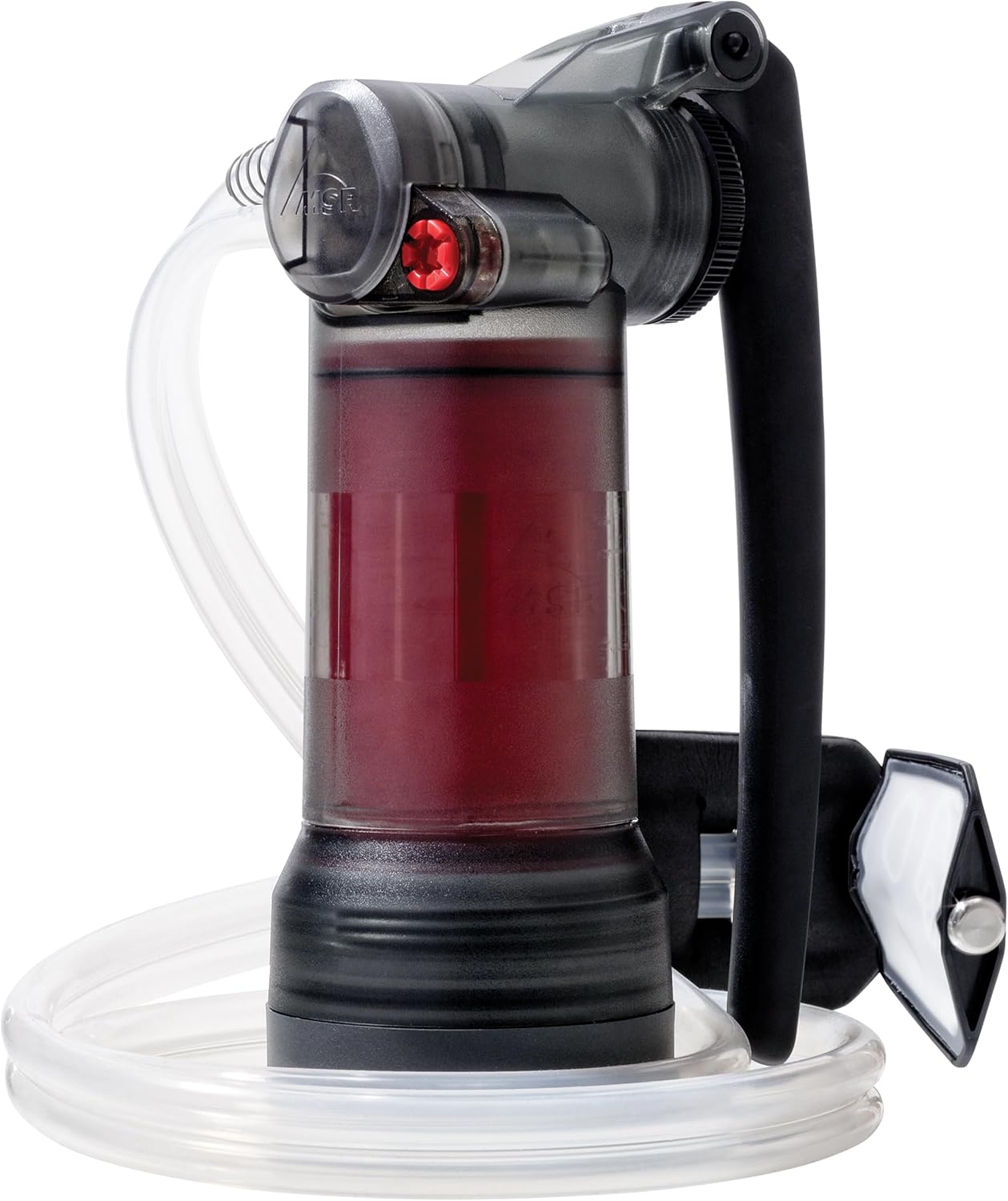
The MSR Guardian is a heavy‑duty, hand‑pump water purifier built for high‑risk sources and frequent use. It uses hollow fiber membrane plus activated carbon and meets the NSF P248 military testing standard, so it treats viruses, bacteria, protozoa, and particulates that simpler filters might miss. In practice it pumps quickly at up to 2.5 liters per minute, self‑cleans on every stroke to maintain flow without backflushing, and is rated to treat about 10,000 liters before replacement. The unit is manual and rugged—able to withstand freezing, drops, and sustained field use—and ships with a storage bag with a PFAS‑free DWR coating. Tradeoffs are weight and price compared with lightweight microfilters: it is heavier and aimed at people who need virus protection or long cartridge life rather than minimalist ultralight setups. For trips where you expect high‑risk source water or want a reliable, fast purifier for a group, the Guardian delivers consistent, tested performance.
Best for: Backpackers and small groups who prioritize verified protection against viruses and long filter life over absolute weight savings and who expect to treat challenging water sources.
Less Ideal for: Solo ultralight hikers or daypackers who prioritize minimal weight and lowest possible pack bulk should consider lighter microfilters or gravity filters instead.
- Meets NSF P248 military testing for virus, bacteria, protozoa, and sediment removal
- High flow rate up to 2.5 L/min for fast filling and group use
- Long rated service life of about 10,000 liters
- Self‑cleaning pump action maintains consistent flow with no backflushing
- Built rugged to withstand freezing, drops, and heavy field use
- Heavier and bulkier than ultralight microfilters for minimalist backpacking
- Manual pumping requires physical effort during extended use
- Higher upfront cost compared with basic water filters
Verdict: Choose the Guardian when you need a fast, rugged purifier with military‑grade virus and bacterial protection and very long cartridge life for backcountry well water.
Sawyer Squeeze SP129

| Purification Method | Hollow Fiber Membrane |
|---|---|
| Other Special Features | Blocks bacteria, protozoa, cysts and microplastics |
| Maximum Flow Rate | 1.7 liters per minute |
| Supported Water TDS Level Maximum (PPM) | 1000 |
| Capacity | 100000 gallons |
The Sawyer Squeeze SP129 is a compact filtration kit that uses a 0.1 micron hollow-fiber membrane to remove bacteria, protozoa, cysts and microplastics from untreated water sources. It ships with two 32‑oz collapsible pouches, a drinking straw, inline hydration pack adapters and a mesh storage bag, and it can also thread onto standard 28 mm bottles or be used in a gravity set up. In use you fill a pouch from a stream, squeeze through the filter into a bottle or directly to mouth and backflush periodically to maintain flow. The unit's high claimed capacity and small 2 ounce weight make it practical for multi‑day trips, and the 1.7 L/min maximum flow rate means you can get water reasonably quickly compared with straw filters. Limitations include the manual squeezing or gravity setup required for larger volumes and the need to backflush to restore flow after heavy sediment exposure; it is not a chemical purifier and does not remove dissolved salts or very high TDS water above the specified limit.
Best for: Practical backpackers and preparedness-minded campers who prioritize low weight, long-lived filtration, and flexible use with bottles or hydration reservoirs.
Less Ideal for: People traveling where water has high dissolved contaminants, heavy industrial pollution, or where hands-free, pump-style filtration is preferred.
- Very small and lightweight for backpacking carry
- 0.1 micron hollow-fiber filter rated to block bacteria, protozoa and microplastics
- Includes reusable pouches and adapters for bottles and hydration packs
- High rated service life capacity for long-term use
- Reasonably fast maximum flow rate for a squeeze/inline filter
- Requires manual squeezing or gravity setup for filtering larger quantities
- Flow slows with sediment buildup and requires regular backflushing
Verdict: Choose the Sawyer Squeeze SP129 if you want an ultralight, long‑lasting backpacking filter that fits bottles, pouches, and hydration packs for versatile field use.
Waterdrop Filter Straw 2-Pack

| Purification Method | Hollow Fiber Ultrafiltration Membrane |
|---|---|
| Filtration Rating | 0.1 micron |
| Maximum Flow Rate | 700 milliliters_per_minute |
| Capacity | 1400 gallons |
| Power Source | Non Electric |
The Waterdrop Filter Straw 2-Pack is a simple, non-electric personal water purifier meant for on-the-go drinking from streams, lakes or treated taps while backpacking or in emergencies. Each straw uses a hollow fiber ultrafiltration membrane rated to 0.1 micron to remove particulates, chlorine taste and odor, and other visible contaminants while delivering up to 700 ml per minute flow when new. The straws attach to standard bottles or water bags, and they include a backwashable mouthpiece so you can flush the membrane to clear reduced flow and extend service life. Waterdrop claims each straw filters up to 1,400 gallons, which makes these well suited for repeated short trips or group use over time. Practical limits: the filter does not remove dissolved salts or heavy metals and is sized for drinking rather than cooking large volumes, and performance will fall as the membrane clogs so occasional backflushing is required. For lightweight backpacking the plastic construction keeps weight low but you should store them clean and primed to avoid fouling.
Best for: Backpackers and campers on a tight budget who want a lightweight, reusable straw filter for treating surface water and standard bottled sources on day hikes or multiday trips.
Less Ideal for: People whose primary concern is untreated deep well water with high dissolved mineral or heavy metal content or those who need a single device to purify large volumes for cooking or groups.
- True ultrafiltration membrane down to 0.1 micron that reduces particulates and bacteria-sized organisms
- High claimed capacity of 1,400 gallons per straw for long usable life
- Non-electric, bottle- and water-bag-compatible design for flexible field use
- Backwashable mouthpiece to flush the membrane and restore flow
- Compact two-pack gives a spare or shared option for group trips
- Does not remove dissolved salts, heavy metals or viruses so not a complete purifier for all well water issues
- Flow and effectiveness decline as the membrane becomes clogged and require manual backflushing
Verdict: If you need an inexpensive, ultralight reusable straw filter for surface water while backpacking, this two-pack delivers strong filtration performance and handy backwashability at a budget price.
LifeStraw Personal Water Filter

| Model Number | LSPHF038 |
|---|---|
| Material Type | Plastic |
| External Testing Certification | NSF |
| Item Weight | 0.04 kg |
The LifeStraw Personal Water Filter is a straw-style, ultralight filter designed for drinking directly from lakes, streams or treated containers while backpacking or traveling. It uses a microfiltration membrane that the manufacturer says blocks bacteria, parasites and microplastics down to about 0.2–1 micron and is NSF tested, so you can sip straight from a water source without carrying heavy filtration hardware. Its simple tube form is easy to use on the trail and requires no batteries, hoses, or replacement cartridges in the short term; with proper care it is rated to provide thousands of liters of water, making it a long-lasting emergency or solo-hike tool. The filter is low-maintenance but does not remove viruses or chemical contaminants and works best with visibly cloudy water only after prefiltering larger sediment. For hikers who prioritize weight and proven biological protection, it is a reliable, grab-and-go solution, but groups needing broad contaminant removal or high flow for filling large containers may want a pump or gravity system instead.
Best for: Hikers and solo backpackers who want a proven, ultralight way to drink safely from natural water sources and prioritize reliability and low upkeep on the trail.
Less Ideal for: Large groups, basecamp use, or trips where removal of viruses or chemical contaminants is required; those users should choose a higher-flow pump, gravity filter, or chemical treatment.
- Extremely lightweight and packable for backpacking
- Microfiltration membrane tested to remove bacteria, parasites, and microplastics
- No power or replacement parts required for immediate use
- Long usable life when maintained, rated for thousands of liters
- Does not filter viruses or chemical pollutants
- Low flow rate compared with pumps or gravity filters
Verdict: A proven, ultralight personal filter that reliably protects against bacteria and parasites for backpacking and emergency use.
Sawyer MINI Water Filter SP128

| Purification Method | Hollow Fiber Membrane |
|---|---|
| Other Special Features | Removes bacteria, protozoa, and microplastics |
| Power Source | Manual Operation |
| Capacity | 100000 gallons |
The Sawyer MINI is a palm-sized, manual hollow-fiber filter made for backpacking and travel where water safety is uncertain. You can drink directly through the included straw, squeeze clean water into the 16-ounce pouch, or screw the filter onto standard 28mm disposable bottles and hydration pack tubing, which makes it flexible on the trail. The 0.1 micron absolute rating blocks bacteria and protozoa to lab-verified removal levels and also captures microplastics, and the manufacturer rates each unit to 100,000 gallons, making it a long-lived option for solo or small-group trips. It is extremely lightweight and simple to use and maintain with the included cleaning plunger, but because it is a manual squeeze/straw system it does not deliver high flow without effort and needs occasional backflushing to sustain performance. For multi-person basecamps or very fast fill needs you will likely want a larger pump or gravity filter instead.
Best for: Backpackers and travelers who prioritize verified microbial protection and a proven, lightweight filter they can trust for solo or small-group trips.
Less Ideal for: Large groups, basecamp cooks, or anyone who needs fast high-volume water delivery where a pump or gravity filter is more practical.
- 0.1 micron hollow-fiber filtration that removes bacteria, protozoa, and 100% of microplastics
- Extremely lightweight and compact for backpacking and travel
- Multiple use modes: straw, squeeze pouch, bottle or hydration pack connection
- Rated up to 100,000 gallons with each unit individually tested for performance
- Low manual flow rate requiring squeezing or long drink sessions compared with pump or gravity systems
- Requires regular backflushing/cleaning to maintain flow over time
Verdict: Choose the Sawyer MINI when you want a field-proven, ultralight personal filter that delivers laboratory-level microbial protection for backpacking and travel.
Aquatabs Water Purification Tablets 397mg

| Tablet strength | 397mg |
|---|---|
| Pack quantity | 100 Count |
| Treatment volume per tablet | ~4 gallons |
| Treatment time | 30 Minutes |
Aquatabs 397mg tablets are chlorine‑based water disinfection tablets sold in a 100‑count pack for treating untreated water in the outdoors or emergency kits. Each tablet is formulated to disinfect larger volumes—manufacturer data cite treatment of up to about 4 gallons per tablet with a 30‑minute contact time—so you drop a tablet into a container or water bag, wait the recommended time, then drink. The formula claims to remove bacteria, viruses, and cysts and is described as having no strong iodine taste, which makes it more pleasant than iodine alternatives. They are lightweight and compact, so they fit easily in a backpack or stored kit and the 100‑count supply covers many trips or long‑term preparedness. Limitations: these tablets do not filter out sediment or improve turbidity, so very cloudy water should be pre‑filtered, and treated water still requires proper dosing and contact time to be effective. They are a disinfection solution rather than a mechanical filter, so they do not remove particulates or chemicals.
Best for: A safety‑focused backpacker or prepper who prioritizes reliable chemical disinfection and low weight for multi‑day trips or emergency kits.
Less Ideal for: People who need a single solution to remove sediment, particulates, or chemical pollutants should choose a mechanical or activated‑carbon filter instead.
- High claimed pathogen reduction including bacteria, viruses, and cysts.
- Large 100‑tablet pack provides many treatments for extended trips or preparedness kits.
- Lightweight, compact, and easy to carry in a backpack or emergency bag.
- Relatively fast 30‑minute treatment time and reported lack of strong iodine taste.
- Does not remove sediment, turbidity, or chemical contaminants; pre‑filtering murky water is required.
- Single‑use chemical treatment requires correct dosing and wait time to be effective.
Verdict: Choose Aquatabs 397mg when you need a lightweight, high‑capacity chemical disinfectant for safe drinking water on backpacking trips or in emergency kits.
Choosing the Right Well Water Filter for Backpacking: Key Factors to Consider
Filtration Targets
Know what you need the filter to remove. Rural well water can contain bacteria, protozoa, and sometimes chemical contaminants or high sediment loads. For backpacking, the most common concerns are bacteria and protozoa because those cause acute gastrointestinal illness.
A filter that targets microbes will usually specify log reductions for bacteria and protozoa. Some systems also include charcoal or specialized media to reduce taste, odor, and volatile organic compounds. Matching the filter media to anticipated contaminants helps ensure safety without adding unnecessary weight or complexity.
Flow Rate and Ease of Use
A fast flow rate matters on the trail because it reduces time spent filtering and lets you top off bottles quickly. Pump-based systems often deliver higher flow but add weight and moving parts, while gravity and squeeze filters can be slower but lighter and simpler to operate.
Consider how the system fits into your routine: can you filter directly into a bottle, or does the setup require holding a pump for several minutes? Ease of cleaning and clearing clogs also affects day-to-day convenience when you are relying on a single system for multiple people.
Weight, Size, and Packability
Every ounce matters when you are carrying all your gear. Backpacking filters are designed to balance protection with minimal bulk. Ultralight filters may be ideal for solo hikers prioritizing miles, while slightly heavier units with broader contaminant coverage can suit small groups or longer trips.
Look at packed dimensions as well as operational size. Some filters collapse or fit inside a water bottle when not in use, saving space. Also factor in the weight of replacement cartridges and any accessories you will need to carry.
Maintenance and Filter Life
Filter lifespan determines how often you will need replacement cartridges on extended trips. Manufacturers often rate filters by volume treated before replacement is required or by expected field use in days. In practice, sediment-heavy wells shorten service life and increase maintenance.
Assess how easy it is to clean or backflush the unit in the field. Tools, spare parts, or elaborate cleaning procedures add complexity. A longer-lived cartridge reduces the need to carry extras and lowers the total weight impact over a multi-day outing.
Durability and Field Repairability
Backpacking gear is exposed to drops, mud, and freezing temperatures. A durable filter body and well-sealed connections prevent leaks and failures during a trip. Materials that resist cracking and simple mechanical designs are preferable for long-term reliability.
Also consider how easy it is to repair or jury-rig a temporary fix. Systems with common-thread fittings or replaceable O-rings are more forgiving on the trail than sealed, proprietary designs that cannot be serviced.
Compatibility With Backpacking Water Containers
Your filter must integrate with the bottles, hydration reservoirs, or bladders you carry. Some units attach directly to common bottle threads or have adapters for hydration reservoirs, while others require their own bags or bottles.
Planning for compatibility avoids awkward transfers and cross-contamination. Also factor in how the filter performs when drawing from shallow or turbulent sources, since some attachments are easier to use in small pools or flowing streams than others.
Types of Backpacking Well Water Filters
There are several common architectures for portable well water filters used on backpacking trips. Squeeze and straw-style filters are lightweight and simple, often favored for solo hikers. Pump filters add flow speed and can handle higher sediment loads but require more effort to operate. Gravity filters are convenient for groups because they work hands-free once set up.
Choosing the right type depends on trip length, group size, and the likely condition of the water source. If you expect murky water with lots of sediment, prioritize systems designed to handle particulate without frequent clogging.
- Squeeze filters: minimal weight, filter while you squeeze water into a bottle.
- Pump filters: higher flow, better for clearing sediments, more moving parts.
- Gravity filters: hands-free and good for groups, require a suspension point.
- Straw filters: instant drinking but not suitable for treating large volumes.
Preparing Well Water at Trailside
Before filtering, let heavily turbid water settle or pre-filter with a cloth to remove large particulates. This simple step prolongs filter life and maintains flow rate. Collect from the clearest spot near the middle of the pool or downstream of obvious disturbance.
Set up your chosen filter on stable ground and follow the manufacturer-specified priming procedure. For pump systems, avoid sucking water through the input; use a short hose or hand-siphon method if needed. For gravity setups, hang the reservoir at least a few feet above the receiving container to maximize flow.
- Allow sediment to settle when possible before filtering.
- Use a bandana or coffee filter as a pre-filter for turbid water.
- Keep filter inlet above muddy banks to reduce drawn sediment.
Field Cleaning and Troubleshooting
Carrying a basic cleaning kit makes a big difference. A soft brush, spare O-rings, and a small syringe for backflushing can restore flow in the field. Follow recommended backflush intervals to avoid permanent clogging.
If flow slows dramatically, first try backflushing or rinsing the exterior with clear water. For freeze-damaged or cracked components, temporary sealing with waterproof tape can get you to the next repair point, but plan to replace compromised parts promptly.
- Backflush regularly on sediment-heavy water.
- Carry spare small parts that are user-replaceable.
- Inspect seals and connections before each trip.
Weight-Saving Tips Without Compromising Safety
To save weight while maintaining protection, prefer compact filter cartridges with proven microbe removal and choose refillable lightweight reservoirs rather than heavy bottles. Share a single higher-capacity filter among group members to reduce aggregate carried weight.
Trim unnecessary accessories from your kit and carry only essential adapters. Plan water resupply points to reduce the number of days' worth of water you must treat and therefore the number of spare cartridges you need to bring.
- Use a shared filter for groups to cut per-person weight.
- Select collapsible reservoirs that pack flat when empty.
- Bring only field-essential spare parts and tools.
Special Considerations for Remote or Multi-Day Trips
On extended trips, cartridge life and the availability of replacement parts become critical. Estimate the total water volume you will need and compare it to rated filter capacity. When traversing regions with known agricultural runoff or industrial contaminants, a filter alone may not address chemical pollutants.
Plan contingencies for failed equipment. Carry a compact means of boiling water or chemical disinfectant tablets as a backup for systems that cannot remove chemical contaminants. Train group members in basic maintenance to avoid a single point of failure.
- Calculate total expected water use and match to filter capacity.
- Bring chemical disinfectants as a lightweight backup for chemical hazards.
- Distribute maintenance responsibilities among group members.
How We Chose the Best Well Water Filter for Backpacking
We focused on practical, field-oriented criteria that matter when you depend on a well water filter for backpacking. Primary evaluation metrics included filtration effectiveness against bacteria and protozoa, flow rate and real-world output, weight and packability, durability and materials suited for outdoor use, and service life or cartridge capacity. We prioritized systems that reliably reduce common well contaminants while remaining compact enough for multi-day hikes. Products were excluded if they were clearly designed only for basecamp use, required heavy pumps not suitable for pack travel, or lacked independent verification of pathogen removal. We also filtered out solutions that need complex power sources or abundant replacement parts that are impractical in remote settings. The final list emphasizes units that strike a balance between protection, speed, and carry weight so hikers can make confident, informed choices.
Our full evaluation process is outlined in our review methodology.
FAQ
Can a backpacking filter remove bacteria and protozoa from well water?
Yes. Many backpacking filters are designed to remove bacteria and protozoa through microfiltration or ultrafiltration. Check product specs for log reduction claims to confirm effectiveness against specific pathogens.
How often will I need to replace the filter cartridge on a multi-day trip?
Replacement frequency depends on water quality and daily volume filtered. In clear water, a cartridge may last the entire trip. In high-sediment wells, you may need to backflush frequently or carry a spare cartridge for longer outings.
Is boiling water a better option than carrying a filter?
Boiling reliably inactivates pathogens but requires fuel, time, and a cooking setup. Filters offer faster, on-demand water with less fuel use, which is often preferable on long hikes. Boiling is a good backup if your filter fails.
Can filters remove chemical contamination from wells?
Most backpacking filters focus on microbes and particulates and do not remove dissolved chemicals or heavy metals. Activated-carbon elements can reduce taste and some organics but will not reliably remove all chemical contaminants.
How do I prevent my filter from freezing on cold trips?
Protect the filter by keeping it inside your pack next to insulating layers and avoid leaving water in the unit overnight. If possible, store spare cartridges in insulated pockets and perform maintenance during warmer parts of the day.
Final Verdict
Prioritize the filtration attributes that match your trip profile. For short solo hikes, lightweight squeeze or straw-style well water filters for backpacking offer speed and minimal carry weight. For longer trips or group travel, choose systems with higher flow, longer cartridge life, and easier field maintenance. Weigh tradeoffs among flow rate, contaminant removal, and packability. With those priorities clear, you can select a filter that keeps water safe without adding undue weight or complexity to your backcountry kit.