
Note: This article contains affiliate links. If you click on these links and make a purchase, we may earn a small commission at no extra cost to you. This helps support our research and content. Read our full affiliate disclosure here.
When you depend on well water while planning hiking trips, a reliable whole-house filter protects both your outdoor gear and the water you carry. A Well Whole-House Water Filter for Hiking is designed to reduce particulate, sediment, and common well contaminants so you can fill containers and hydrate without doubt. Choosing the right system affects water taste, flow at spigots and taps, and how often you need to replace cartridges. This guide covers seven shortlisted whole-house filter options selected for hikers and outdoor households. We evaluate each on filtration effectiveness, flow rate and pressure impact, ease of installation and maintenance, and durability. Read on to find a system that matches your water quality needs and trail-ready routines.
Top Picks at a Glance
| Best Overall The best all-around choice for most situations | Aquasana Rhino Well Water WH-WELL-CT-UVS |  |
| Best Quality Built to a higher standard if you want something more solid | iSpring WGB32BM 3-Stage Whole House Filter |  |
| Best Value The sweet spot between price and what you get | Culligan WH-HD200-C Whole House Filter |  |
| Best Budget The cheapest option that still gets the job done reliably | Whirlpool 10" Whole House Sediment Filter |  |
| Top Rated A top-rated pick with lots of positive feedback | iSpring WGB21B 2-Stage Whole House Filter |  |
| Most Popular A crowd favorite that many people choose with confidence | Membrane Solutions String Wound 10" Filter |  |
| Best Seller A high-volume bestseller chosen again and again | SimPure DB10P Filter Housing |  |
Aquasana Rhino Well Water WH-WELL-CT-UVS

| Maximum Flow Rate | 14.7 gpm |
|---|---|
| Operating Pressure Range | 20-100 psi |
| Supported Water TDS Level Maximum (PPM) | 1000 |
| Filter Life Cycle | 5 years |
| Capacity | 500000 gallons |
This Aquasana Rhino Well Water system is a multi-stage whole-house solution built for well water. It pairs a 20" pre-filter and 10" post-filter with carbon and copper-zinc (KDF) media, a salt-free scale control conditioner, and an inline UV purifier to reduce chlorine, bacteria, viruses, and scale while preserving healthy minerals. Typical use is point-of-entry installation on a 3/4" or 1" main line so every tap, shower, and appliance sees treated water; Aquasana includes an installation kit and an integrated drain valve for flushing. The unit supports up to 14.7 gpm and is rated for water up to 1000 ppm TDS, making it suitable for moderate well conditions and families. The five-year filter life (500,000 gallons) and included components lower ongoing maintenance frequency, but the system is large and requires a dedicated installation location and electrical connection for the UV lamp. It conditionally reduces scale without salt but does not soften water or remove very high iron or extreme hardness without additional pretreatment.
Best for: Buyers who want an all-in-one, low-maintenance whole-house system to improve drinking water, bathing, and appliance protection from moderate well water contaminants.
Less Ideal for: Homes with very high iron, extreme hardness, or owners who need a simple under-sink or portable solution should consider targeted or additional pretreatment instead.
- Multi-stage filtration with carbon and KDF for broad contaminant reduction
- Integrated UV purifier targets bacteria and viruses for well water safety
- Salt-free scale control reduces buildup without salt or backwashing
- Long service life rated for 500,000 gallons or five years lowers filter change frequency
- Installation kit and drain valve simplify point-of-entry setup and maintenance
- Large tank and UV module require permanent space and an electrical hookup
- Does not soften water or remove very high iron/hardness without extra pretreatment
Verdict: Choose this system if you want a robust, long-life whole-house filter with UV protection and salt-free scale control to treat moderate well water for the entire home.
iSpring WGB32BM 3-Stage Whole House Filter
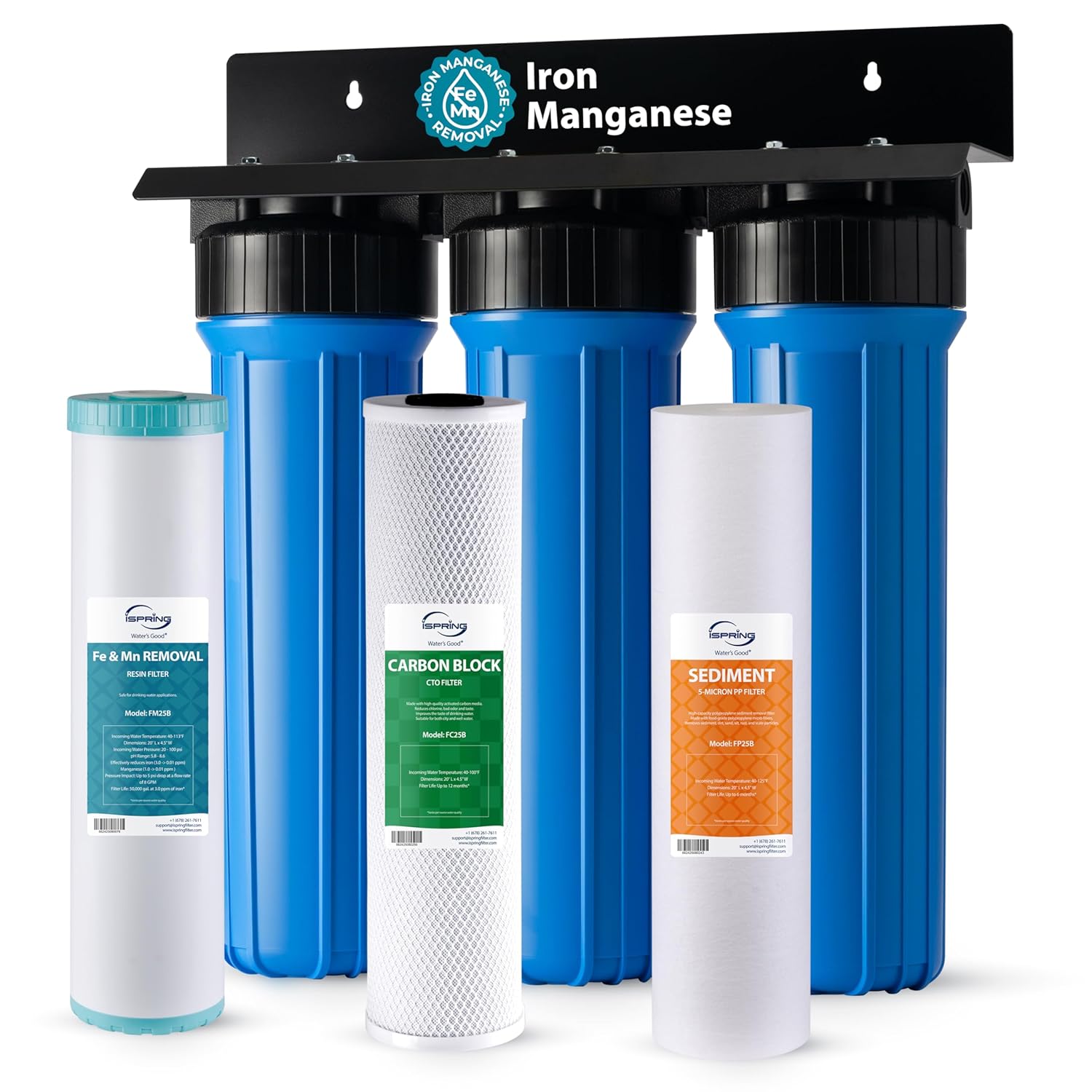
| Maximum Flow Rate | 15 gpm |
|---|---|
| Operating Pressure Range | 25 – 80 psi |
| Operating Temperature | 40 – 100 °F |
| Inlet / Outlet | 1 inch NPT |
| Capacity | 100000 gallons |
The iSpring WGB32BM is a high-capacity, tankless 3-stage whole house filter that pairs a PP sediment cartridge, a coconut-shell carbon block, and an iron/manganese catalytic media to treat incoming well or municipal water. It is installed on the main supply line and is sized for continuous household flow up to 15 gallons per minute, so it handles simultaneous taps and typical appliance demand without noticeable pressure loss. The sediment stage captures sand, rust, and large particulates while the carbon block reduces chlorine, taste and odor and the third stage targets iron (up to 3.0 ppm) and manganese (up to 1.0 ppm). Cartridges are 20-inch Big Blue style and rated for long life — the carbon and primary filter list capacity up to 100,000 gallons or about 12 months, with the iron stage specified to 50,000 gallons at 3 ppm. Installation is intended as a permanent, DIY-friendly job with 1-inch NPT plumbing and clear manufacturer guidance; indoor mounting and weather protection are recommended. This system does not soften water or remove dissolved solids, so homes with hard water should add a softener upstream for best performance.
Best for: Buyers who prioritize high throughput and robust contaminant reduction for a whole-house setup and want a durable, long-life system that handles simultaneous household demand.
Less Ideal for: If your main goal is water softening, TDS reduction, or treating iron/manganese above the specified limits, look at dedicated softeners or higher-capacity iron-removal systems instead.
- High peak flow capacity up to 15 gpm suitable for whole-house supply
- Three-stage filtration that reduces sediment, chlorine/taste/odor, and iron/manganese
- Long-life cartridges with up to 100,000-gallon capacity for carbon and sediment stages
- Tankless design and Big Blue 20-inch cartridges minimize pressure drop during use
- DIY-friendly installation with 1-inch NPT connections and included wrench
- Does not reduce water hardness or total dissolved solids
- Iron/manganese reduction limited to specified maximum feed levels (iron ≤ 3.0 ppm, manganese ≤ 1.0 ppm)
Verdict: Choose the WGB32BM when you need a high-flow, long-life whole-house filter that reliably removes sediment, chlorine, and modest levels of iron and manganese.
Culligan WH-HD200-C Whole House Filter

| Maximum Flow Rate | 10 gpm |
|---|---|
| Supported Water TDS Level Maximum (PPM) | 600 |
| Capacity | 16000 gallons |
| Material Type | Stainless Steel |
The Culligan WH-HD200-C is a stainless-steel whole-house filter housing built to protect plumbing and appliances from sediment and scale when paired with the correct cartridge (sold separately). Installed inline at a 1-inch point of entry, it supplies filtered water to the entire home and includes a mounting bracket, built-in shut-off and bypass, pressure relief valve, and a wrench for servicing. The clear sump lets you visually inspect the cartridge so you can spot heavy sediment before replacing the filter, and the valve and bypass simplify cartridge changes without shutting off mains. It handles flow up to 10 gpm and is rated for water up to 600 ppm TDS, making it suitable for many well water situations that need heavy sediment removal. Major limitations are that you must buy compatible filter cartridges separately and its effectiveness depends entirely on the cartridge chosen; it does not reduce dissolved contaminants on its own. The unit is a robust, serviceable housing for anyone who wants durable whole-home sediment protection and easy maintenance.
Best for: Buyers who prioritize durable, serviceable whole-house sediment protection and want a housing that makes cartridge swaps and visual inspections straightforward.
Less Ideal for: Those seeking an all-in-one cartridge that handles dissolved chemical contaminants without selecting a specific filter element should consider a different system.
- Heavy-duty stainless-steel cap and durable construction for long service life.
- Clear sump for visual monitoring of cartridge condition.
- Built-in shut-off, bypass and pressure relief valve for easier servicing.
- Universal 1-inch inlet/outlet design compatible with common whole-house cartridges.
- Supports up to 10 gpm flow suitable for typical residential supply.
- Filter cartridges are sold separately so ongoing cost and compatibility must be managed.
- Does not itself remove dissolved contaminants; filtration performance depends on chosen cartridge.
Verdict: A robust, easy-to-service whole-house filter housing that delivers dependable sediment protection when paired with the right cartridge.
Whirlpool 10" Whole House Sediment Filter

| Material Type | string wound |
|---|---|
| Compatible Models | Whirlpool WHKF-DWH, WHKF-DWHV |
| Micron Rating | 35 |
| Unit Count | 2 Count |
| Certification | NSF 42 Certified |
The Whirlpool WHKF-WHSW is a 10" x 2.5" string-wound whole-house sediment filter sold as a 2-pack and designed to trap sand, soil, silt, rust and other particulates before they reach plumbing and appliances. It installs in standard 10-inch housings including Whirlpool WHKF-DWH and WHKF-DWHV, and is NSF 42 certified for material safety. In everyday use it serves as a first-stage sediment cartridge to protect downstream carbon and fine filters, which helps extend the life of those more expensive elements and household equipment. Whirlpool recommends replacing it roughly every three months under typical conditions, so keeping a spare on hand is sensible. The string-wound construction gives extra sediment holding capacity compared with thin pleated cartridges, but it does not reduce chlorine taste or fine contaminants on its own. For well water or heavily silted supplies this filter is an economical, reliable choice for basic sediment removal, though users who need chemical or microbial treatment will need additional cartridges or systems.
Best for: Buyers who want a low-cost, reliable sediment pre-filter to protect whole-house systems and appliances and who prioritize basic particle removal over chemical filtration.
Less Ideal for: People seeking full drinking-water treatment from a single cartridge or those needing chlorine, VOC or microbial removal should choose carbon, CTO, or certified specialty filters instead.
- NSF/ANSI 42 certified for material safety
- String-wound design holds more sediment between changes
- Fits standard 10" x 2.5" housings including Whirlpool WHKF-DWH/DWHV
- Sold as a 2-pack so you have a spare for scheduled replacements
- Only reduces sediment and particulates, not chlorine taste or dissolved contaminants
- Recommended replacement interval of about three months requires regular upkeep
Verdict: A budget-friendly, NSF-certified sediment filter that reliably protects whole-house systems by removing sand and silt before they reach downstream filters.
iSpring WGB21B 2-Stage Whole House Filter
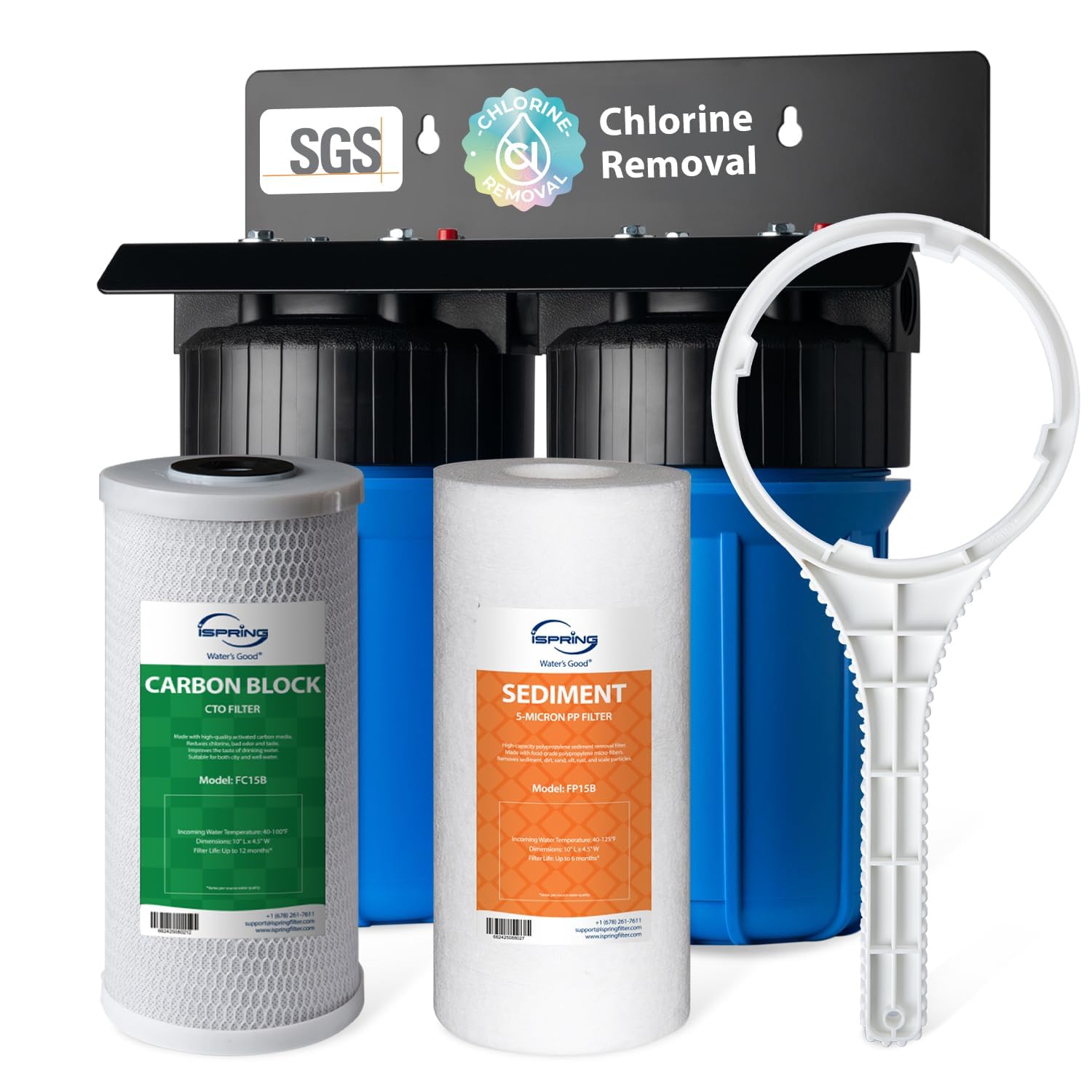
| Inlet / Outlet | 1 inch Female NPT |
|---|---|
| Filter Life Cycle | 12 months |
| Capacity | 50000 gallons |
| Maximum Flow Rate | 15 gpm |
| Operating Temperature | 40-100 ºF |
The iSpring WGB21B is a preassembled two-stage point-of-entry filter designed to protect plumbing and deliver cleaner tasting water at every faucet. It pairs a 5-micron polypropylene sediment cartridge with a coconut-shell carbon CTO block to capture sand, rust and other particulates in the first stage and reduce chlorine, VOCs and bad tastes in the second. Installation is DIY-friendly with a mounting bracket, included installation kit, 1-inch female NPT ports, a filter wrench and a pressure release valve for easier cartridge swaps. The system is sized for high flow with a maximum flow rate listed up to 15 gpm and a service life claim up to 50,000 gallons or about 12 months for a typical family. Because it does not remove dissolved solids, it preserves beneficial minerals and is best used where the goal is sediment and chlorine reduction rather than demineralization. The housings are built from polyethylene and steel and are rated for normal household pressures and temperatures, but outdoor installs require weatherproofing. For buyers who prioritize a robust, low-maintenance house-level filter that is simple to service, this unit is a practical choice.
Best for: Buyers who value a reliable, low-maintenance point-of-entry filter to reduce sediment and chlorine across a household and prefer a straightforward DIY install with easy cartridge changes.
Less Ideal for: People whose primary need is TDS reduction, water softening, or complete contaminant removal should choose a reverse osmosis or specialized treatment instead.
- Two-stage setup removes sediment and reduces chlorine, taste, and many VOCs
- Preassembled with mounting bracket and installation kit for easier DIY installation
- 1-inch inlet/outlet and up to 15 gpm flow capacity suitable for whole-house use
- Filter life up to 50,000 gallons or roughly 12 months under typical use
- Includes pressure relief valve and filter wrench to simplify cartridge changes
- Does not reduce total dissolved solids so it will not soften or demineralize water
- Housings need protection and insulation for reliable outdoor installation
Verdict: A dependable two-stage whole-house filter for hikers and well users who want robust sediment removal and chlorine/taste improvement with simple DIY installation and servicing.
Membrane Solutions String Wound 10" Filter

| Micron Rating | 5 Micron |
|---|---|
| Material Type | Polypropylene (PP) |
| Set Name | 6-Pack |
| Compatible Water Purifier Models | GE GNSV70R, Whirlpool WHKF-GD05 |
| External Testing Certification | NSF |
This 6-pack of 5-micron string-wound polypropylene cartridges is a straightforward sediment prefilter for whole-house or under-sink systems that use 10"x2.5" cartridges. Install them as the first stage ahead of carbon or RO stages to capture rust, sand, silt, and other larger particulates and thereby protect downstream filters and plumbing. The graded string-wound construction traps larger particles near the outside and finer ones toward the core, which increases dirt-holding capacity and extends life relative to simple spun cartridges. The filters are NSF-tested for material safety and are made from food-grade polypropylene, so they do not add odors or leach contaminants. Practical limits: they only address physical sediment and do not reduce chlorine, taste, or dissolved contaminants, and service life depends heavily on incoming well-water quality so expect to monitor pressure drop and replace as needed. Packaging a six-count makes it easy to schedule regular changes for a household with heavy sediment loads.
Best for: Buyers who want a reliable sediment prefilter to protect downstream filters and plumbing and who prefer evidence-backed products with many user reviews to confirm real-world performance.
Less Ideal for: If your primary concern is chemical, taste, or microbiological contaminants, choose a carbon, RO, or certified bacterial treatment instead; this product only handles particulate sediment.
- Fits most standard 10"x2.5" filter housings for easy replacement.
- String-wound depth design increases dirt-holding capacity and extends service life versus simple spun filters.
- Made from food-grade polypropylene and NSF-tested for material safety.
- Sold as a 6-pack so you can replace cartridges on a regular schedule without frequent reordering.
- Only removes sediment; does not reduce chlorine, taste, odor, or dissolved contaminants.
- Service life varies with well-water sediment levels so replacement frequency can be frequent in very dirty feed water.
Verdict: A practical, NSF-tested 5-micron sediment prefilter sold in a six-pack for reliably protecting whole-house and under-sink systems from well-water particulates.
SimPure DB10P Filter Housing

| Maximum Flow Rate | 20 gpm |
|---|---|
| Installation Type | Mounted/Fixed |
| Purification Method | Granular Activated Carbon, Sedimentation |
| Upper Temperature Rating | 40 °C |
| Supported Water TDS Level Maximum (PPM) | 500 |
The SimPure DB10P is a single-stage 10" x 4.5" whole-house filter housing intended as a pre-filter for municipal or well water. It accepts standard 10" cartridges (sediment, granular activated carbon, pleated) and connects via 1" NPT brass inlet and outlet for high flow whole-home use. Installation is mounted and manual, and the housing ships with a mounting bracket, wrench, screws, and a built-in red pressure-relief button to make cartridge changes easier. The polypropylene body is reinforced for strength and is rated for typical household temperatures and a working pressure range suited to most systems. Practical benefits include removing sand and sediment before water reaches appliances and point-of-use filters, and the brass threads improve sealing compared with plastic fittings. Important limitations are that cartridges are sold separately and the housing requires enough clearance for filter replacement, so planning the installation location is important for maintenance access.
Best for: Homeowners who want a simple, factory-quality pre-filter to protect plumbing and appliances from sediment and chlorine without complex installs or custom cartridges.
Less Ideal for: People seeking a multi-stage or fully integrated treatment system with included cartridges and filtration media should look at complete systems instead.
- Fits standard 10" x 4.5" cartridges so you can choose sediment or carbon media
- 1" NPT brass inlet/outlet supports high flow and reliable sealing
- Reinforced food-grade polypropylene body resists corrosion and is durable
- Includes mounting bracket, wrench, screws and a pressure-relief button for easier maintenance
- Filter cartridges are not included so ongoing cost and selection are needed
- Requires sufficient clearance for cartridge removal which may limit installation locations
Verdict: Choose the DB10P when you need a durable, high-flow factory-quality housing for standard 10" pre-filters to protect well or municipal plumbing.
Choosing the Right Well Whole-House Water Filter for Hiking: Key Factors to Consider
Filtration Type and Targeted Contaminants
Different whole-house systems use sediment cartridges, carbon media, KDF, greensand, or catalytic media to address specific problems. Knowing which contaminants are present in your well water determines which media will help. Sediment stages protect subsequent media from clogging, carbon reduces taste and odor problems, and specialty media target iron, hydrogen sulfide, or chlorine if present.
For hikers using outdoor fill points, prioritize systems that reduce particulates and improve taste and odor so bottled water tastes acceptable. If testing reveals iron or sulfur, select media designed for those issues to avoid staining and smell that will carry into portable containers.
Flow Rate and Pressure Impact
Whole-house filters sit upstream of all faucets and must deliver enough flow for filling bottles, outdoor showers, and garden hoses without significant pressure drop. Look for systems rated for higher gallons per minute and minimal head loss at the flow you expect to use. Higher-capacity housings and larger filter surface areas generally maintain better flow during heavy use.
If you often fill large containers for hikes, ensure the chosen system sustains at least the flow you need at outdoor spigots so you do not wait for long fills. Consider parallel or staged filter designs if you need both fine filtration and high flow.
Installation Complexity and Plumbing Compatibility
Installation can range from simple inline cartridge swaps to full plumbing changes. Assess whether the system requires soldering, specialized fittings, or can work with standard threaded plumbing. Easy-to-install units reduce the time between purchase and use and simplify seasonal setup for hikers who winterize systems.
Also check inlet and outlet sizes and whether adapters are needed. A system that integrates with common pipe sizes and offers clear mounting guides will be faster to set up and less likely to need professional help.
Maintenance Frequency and Cartridge Cost
Routine maintenance affects ongoing convenience and cost. Cartridge life varies with sediment load and contaminant levels; heavily loaded wells require more frequent changes. Consider the expected lifespan of filter elements, ease of accessing housings, and whether tools are needed for replacement.
For hikers, pick systems with longer service intervals or easily swapped cartridges so you can maintain reliable filtration without frequent trips to a service provider. Factor in the availability and price of replacement media when estimating total ownership effort.
Durability, Materials, and Outdoor Exposure
Filters installed near outdoor fill points or in unconditioned spaces should resist corrosion and UV degradation. Choose housings and fittings made from corrosion-resistant metals or UV-stable plastics. Durable seals and pressure-rated housings reduce the risk of leaks under varying temperatures.
Consider whether the installation location is sheltered from freezing or sunlight. Systems with replaceable O-rings and widely available seals make repairs easier if exposure causes wear.
Testing and Certification Relevance
Look for systems with independent testing results or relevant certifications for the contaminants you care about. While full third-party certification is not always available for every filter configuration, documented lab results for specific media are useful when making choices.
Testing helps set expectations about what a system will remove and how often elements will need replacement. For hikers who fill drinking containers from outdoor taps, prioritize filters with documented reductions in taste- and odor-causing compounds and common well contaminants.
Preparing Your Well Water for Hiking Use
Start by testing your well water to establish baseline issues such as sediment level, iron content, sulfur odors, and bacterial indicators. Simple test kits identify common parameters, but lab testing provides a fuller picture if you suspect serious contamination.
Once you know what is present, you can choose prefiltration and main media that match those problems. For example, heavy sediment calls for a robust sediment stage to protect downstream media and extend cartridge life. Removing tastes and odors improves acceptability when filling bottles for hikes.
- Collect samples from the outdoor faucet you will use for filling to get representative results.
- Test for turbidity, iron, manganese, hydrogen sulfide, and coliform bacteria where relevant.
- Use results to prioritize sediment removal first, then address chemical or biological concerns.
Placement and Protection of Outdoor Fill Points
Locate your outdoor fill spigot where it is convenient for packing and where plumbing from the whole-house filter delivers consistent flow. If the spigot is exposed, protect the connection with insulated enclosures or frost-proof fittings to avoid freeze damage in cold months.
Consider adding a pressure regulator or shutoff valve near the fill point to control flow during fills and to isolate the outlet for maintenance without shutting down the entire house supply.
- Use short, direct runs of pipe from filter to spigot to maintain pressure.
- Install a sediment prefilter near outdoor taps if your well is prone to seasonal particulates.
Seasonal Maintenance and Winterization
Plan maintenance around seasons when you use outdoor taps most. Replace cartridges before peak hiking season if you expect heavy use. For systems in unheated spaces, drain housings and insulate exposed lines before freezing weather arrives.
Keep spare O-rings and a basic tool kit on hand so you can perform cartridge changes quickly between trips. Label cartridges with install dates to track service intervals and avoid accidental overuse.
- Flush new cartridges thoroughly before first use to avoid initial media dust in bottles.
- Store replacement cartridges indoors in a dry place to prevent moisture damage.
Portable Options for Trailhead Refills
If you sometimes refill directly from natural sources near trailheads, a whole-house system does not substitute for a portable purifier. Carry a lightweight purifier or personal filter certified for microbial removal when refilling from streams or lakes. Whole-house filtration ensures safe tap water at home but is not a replacement for on-trail treatment.
When planning long hikes, fill multiple containers at home using the outdoor spigot to minimize on-trail treatment needs. Properly cleaned and filtered home fills reduce the chance of needing heavy treatment while out on the trail.
- Use leakproof, food-grade containers for transport.
- Label containers with fill dates and source to manage shelf life.
Common Installation Pitfalls to Avoid
Avoid undersizing the filter housing for your household flow needs. Small housings with fine cartridges clog quickly and reduce flow. Match housing size and cartridge surface area to expected peak flow for filling bottles and outdoor hoses.
Do not skip a proper sediment prefilter if your well has visible particulates. Skipping prefiltration shortens the life of specialized media and increases service frequency.
- Confirm pipe size and flow direction before tightening fittings.
- Use thread sealant rated for potable water on all threaded joints.
How We Chose the Best Well Whole-House Water Filter for Hiking
We prioritized systems that address common concerns for well water used in hiking and outdoor activities. First, filtration effectiveness was key: we looked for filters and media types that target sediment, iron staining, and common microbial or chemical impurities that affect taste and safety. Second, flow rate and pressure retention matter for filling large water bottles and using outdoor faucets without long waits, so we favored systems with minimal head loss at typical household flow rates. Third, installation and maintenance requirements were weighed heavily because hikers often need straightforward setup, minimal tools, and easy cartridge changes. Durability and corrosion resistance were included to ensure systems stand up to seasonal use and outdoor exposure. Lastly, serviceability and parts availability were considered so ongoing upkeep is practical. We excluded point-of-use pitchers and single-tap filters because this roundup focuses on whole-house solutions suitable for reliably supplying outdoor fill points. Systems lacking clear filtration specs or with uncommon replacement media were also filtered out to keep recommendations practical and maintainable.
Our full evaluation process is outlined in our review methodology.
FAQ
Will a whole-house filter make well water safe for drinking on hikes?
A properly selected and maintained whole-house filter can reduce sediment, taste, and certain chemical contaminants that affect drinking water. However, whole-house filtration may not address all microbiological risks. If bacterial contamination is a concern, additional disinfection or point-of-use treatment may be needed for safe drinking water on the trail.
How often will I need to change filter cartridges?
Cartridge life depends on sediment load and contaminant levels. In low-sediment wells, cartridges may last many months, while heavily sedimented water can require changes every few weeks. Monitoring flow rates and pressure loss is the best way to judge when replacement is necessary.
Can I install a whole-house filter myself?
Many systems are designed for homeowner installation and use standard fittings, but some require modifications to existing plumbing or soldering. If you are comfortable with basic plumbing and shutoff procedures, you can often install a system yourself. Otherwise, plan for professional installation to ensure correct sealing and pressure handling.
Will filtration reduce water pressure at my outdoor spigot?
All filters introduce some pressure drop, but systems sized properly for your household flow should maintain acceptable pressure. Choosing larger housings and lower restriction media helps preserve flow for filling containers and using hoses.
Do whole-house filters remove iron and sulfur odors?
Some media types and specialty stages are effective at reducing iron and hydrogen sulfide odors, but not all systems address these contaminants. Select media specifically formulated for iron or sulfur removal if your water tests positive for those issues.
Final Verdict
Choose a whole-house filter that matches the contaminants and flow requirements typical for your well, focusing on filtration stages that remove sediment first and address taste, iron, or odor as needed. Prioritize systems that maintain adequate flow at outdoor spigots, are simple to install and service, and use durable materials suited to your installation location. Balance maintenance frequency against filtration performance to find a solution that keeps your trail fills tasting good and your preparation time minimal. With the right system in place, you can reliably fill bottles and gear for hiking without compromising water quality or convenience.