
Note: This article contains affiliate links. If you click on these links and make a purchase, we may earn a small commission at no extra cost to you. This helps support our research and content. Read our full affiliate disclosure here.
Hard water packed with calcium leads to scale buildup that shortens the life of plumbing, appliances, and fixtures. Choosing the right whole-house water filter for calcium removal helps you control mineral content before it reaches every faucet and appliance, reducing maintenance and preserving efficiency. This guide covers seven shortlisted whole-house systems designed for calcium reduction, explaining the technical tradeoffs and user considerations that matter most for household plumbing. Below you will find our top picks, followed by clear guidance on flow capacity, media type, installation needs, and ongoing upkeep to help you pick the best system for your home.
Top Picks at a Glance
| Best Overall The best all-around choice for most situations | A. O. Smith AO-WH-Filter |  |
| Best Quality Built to a higher standard if you want something more solid | iSpring WGB32B-KDS Whole House Filter |  |
| Best Value The sweet spot between price and what you get | PUREPLUS 2-Stage Whole House Filter |  |
| Best Budget The cheapest option that still gets the job done reliably | PUREPLUS Whole House Filter 10×4.5 |  |
| Top Rated A top-rated pick with lots of positive feedback | iSpring WGB32BM 3-Stage Whole House Filter |  |
| Most Popular A crowd favorite that many people choose with confidence | Waterdrop WHF21-PG Whole House Filter |  |
| Best Seller A high-volume bestseller chosen again and again | Waterdrop WHF21-FG Whole House Filter |  |
A. O. Smith AO-WH-Filter

| Purification Method | Activated Carbon |
|---|---|
| Other Special Features | Chlorine Reduction, NSF/ANSI 42 Certified |
| Maximum Flow Rate | 7 gpm |
| Operating Pressure Range | 20-100 psi |
| Filter Life Cycle | 6 years |
The AO-WH-Filter is a tank-style whole-house activated carbon system that removes chlorine taste and odor for water at every tap. It installs inline on the main supply and ships with a shut-off valve, flush nipple and hose adapter for a mostly DIY setup; recommended tools include channel locks and thread seal tape. The unit is certified to NSF/ANSI 42 and is sized to treat up to 600,000 gallons or about six years of typical use, with a maximum flow of 7 gpm and operating pressure range of 20–100 psi. Because it is carbon-based, the filter improves drinking, cooking and shower water by reducing chlorine and some smells without producing wastewater or needing backflushing. Important limits: it will not soften hard water or remove dissolved minerals like calcium, iron, sulfur long-term, so hard‑water concerns require a separate softener or conditioner. The fiberglass tank and long service life make it a low-maintenance option for households focused on chlorine reduction rather than mineral removal.
Best for: Buyers who want a low-maintenance, long‑lasting whole‑house solution to remove chlorine taste and odor across all faucets and showers without frequent filter changes.
Less Ideal for: Households seeking to remove hard‑water minerals or address sulfur/iron problems should choose a dedicated water softener, conditioner, or specialized treatment instead.
- NSF/ANSI 42 certified for chlorine taste and odor reduction
- Long service life rated for 600,000 gallons or about six years
- Includes shut-off valve and flushing nipple for simpler DIY installation
- No backwash or wastewater during normal operation
- Fiberglass tank construction for durable, corrosion-resistant housing
- Does not remove hardness or dissolved minerals such as calcium
- Not designed to treat sulfur or heavy iron issues long term
Verdict: Choose this AO Smith carbon whole‑house filter if your primary goal is durable, low‑maintenance chlorine taste and odor removal for the entire home.
iSpring WGB32B-KDS Whole House Filter

| Capacity | 250000 gallons |
|---|---|
| Maximum Flow Rate | 15 gpm |
| Inlet / Outlet | 1 inch Female NPT |
| Operating Temperature | 40-100 ºF |
| Supported Water TDS Level Maximum (PPM) | 300 |
The iSpring WGB32B-KDS+WSP50ARB is a DIY whole-house filtration system that pairs a reusable spin-down sediment pre-filter with two cartridge stages to tackle sediment, chlorine, lead, mercury, hydrogen sulfide, and scale protection across the home. It is typically installed at the main supply line and is sized to support high flow applications up to 15 gallons per minute, so it will not noticeably reduce household water pressure. Notable features include the touchscreen auto-flush spin-down pre-filter that removes large particles before they reach the cartridges, a high-capacity carbon/KDF stage for chemical and heavy metal reduction, and a Siliphos anti-scale cartridge containing substantially more siliphos media than many competitors to inhibit scale and protect plumbing and appliances. Practical benefits are long service life (up to about 250,000 gallons or roughly 12 months between major servicing), reduced taste and odor, and lowered risk of scale-related corrosion. Important limitations: this system does not soften water by removing calcium and magnesium, so total hardness remains; the scale cartridge prevents scale formation rather than removing dissolved hardness minerals, and installation requires indoor space and basic plumbing skills for the 1-inch NPT connections.
Best for: Buyers who prioritize high-flow whole-house contaminant reduction and scale protection and want a durable, DIY-install system that minimizes cartridge replacements and protects plumbing and appliances.
Less Ideal for: Homes seeking true water softening or removal of total dissolved solids should choose a dedicated water softener or RO-based solution instead.
- Reusable spin-down pre-filter with touchscreen auto-flush reduces large sediment and extends cartridge life
- High-capacity Siliphos anti-scale cartridge provides strong scale inhibition to protect pipes and appliances
- Three-stage filtration (sediment + KDF/GAC + carbon block) reduces chlorine, heavy metals, H2S, taste, and odor
- Supports up to 15 gpm flow so household water pressure is maintained during normal use
- Does not remove dissolved calcium and magnesium so it will not produce softened water
Verdict: Choose this system if you want a high-flow whole-house filter that cuts chlorine, heavy metals, and sediment while preventing scale buildup without changing water hardness.
PUREPLUS 2-Stage Whole House Filter

| Purification Method | Polypropylene, Natural Activated Carbon Block |
|---|---|
| Installation Type | Whole-House System |
| Capacity | 30000 gallons |
| Included Components | Filtration System, Cartridges, Wrench, Pressure Gauges |
The PUREPLUS 2-stage whole-house filter pairs a 5-micron sediment pre-filter with a coconut shell activated carbon block to reduce chlorine, taste, odor, and fine particulates for municipal water supplies. It is installed inline at the main supply and is intended to protect every faucet and downstream appliance; the included pressure gauges make it easy to monitor when cartridges are reaching their service life. The clear universal 10"x4.5" housings accept standard replacement cartridges and the manufacturer offers matching refill sets, which simplifies maintenance. This setup is well suited for homeowners wanting straightforward whole-home polishing and chemical reduction rather than heavy-duty mineral or scale control, and the carbon block preserves beneficial minerals while removing chlorine and organic contaminants. Expect regular cartridge changes based on usage and incoming water quality, and note that this system does not advertise specific calcium or hardness removal since its focus is sediment and carbon adsorption rather than ion exchange or scale prevention.
Best for: Homeowners who want a practical, easy-to-maintain whole-house filter to improve municipal tap water taste and protect appliances from sediment and chlorine exposure.
Less Ideal for: Households specifically seeking to reduce water hardness or calcium scale should choose a dedicated water softener or ion-exchange system instead.
- Two-stage filtration targets both sediment and chlorine/bad tastes
- Uses coconut shell carbon block for strong chlorine and organic contaminant reduction
- Includes pressure gauges to monitor flow and cartridge life
- Standard 10"x4.5" housings for easy cartridge replacement and wide compatibility
- Comes with necessary components including cartridges and wrench for installation
- Not designed to remove dissolved hardness (calcium) or perform softening
- Inline system requires plumbing installation and occasional cartridge replacement
- Capacity and service life depend on municipal water conditions and usage
Verdict: Buy this if you need a simple, replaceable two-stage system to remove sediment and chlorine and improve municipal water quality across the whole house.
PUREPLUS Whole House Filter 10×4.5
| Installation Type | Whole-House System |
|---|---|
| Purification Method | Sedimentation, Iron Removal |
| Upper Temperature Rating | 100 °F |
| Supported Water TDS Level Maximum (PPM) | 500 |
| Material Type | Food-grade Polypropylene, Iron Removal Media |
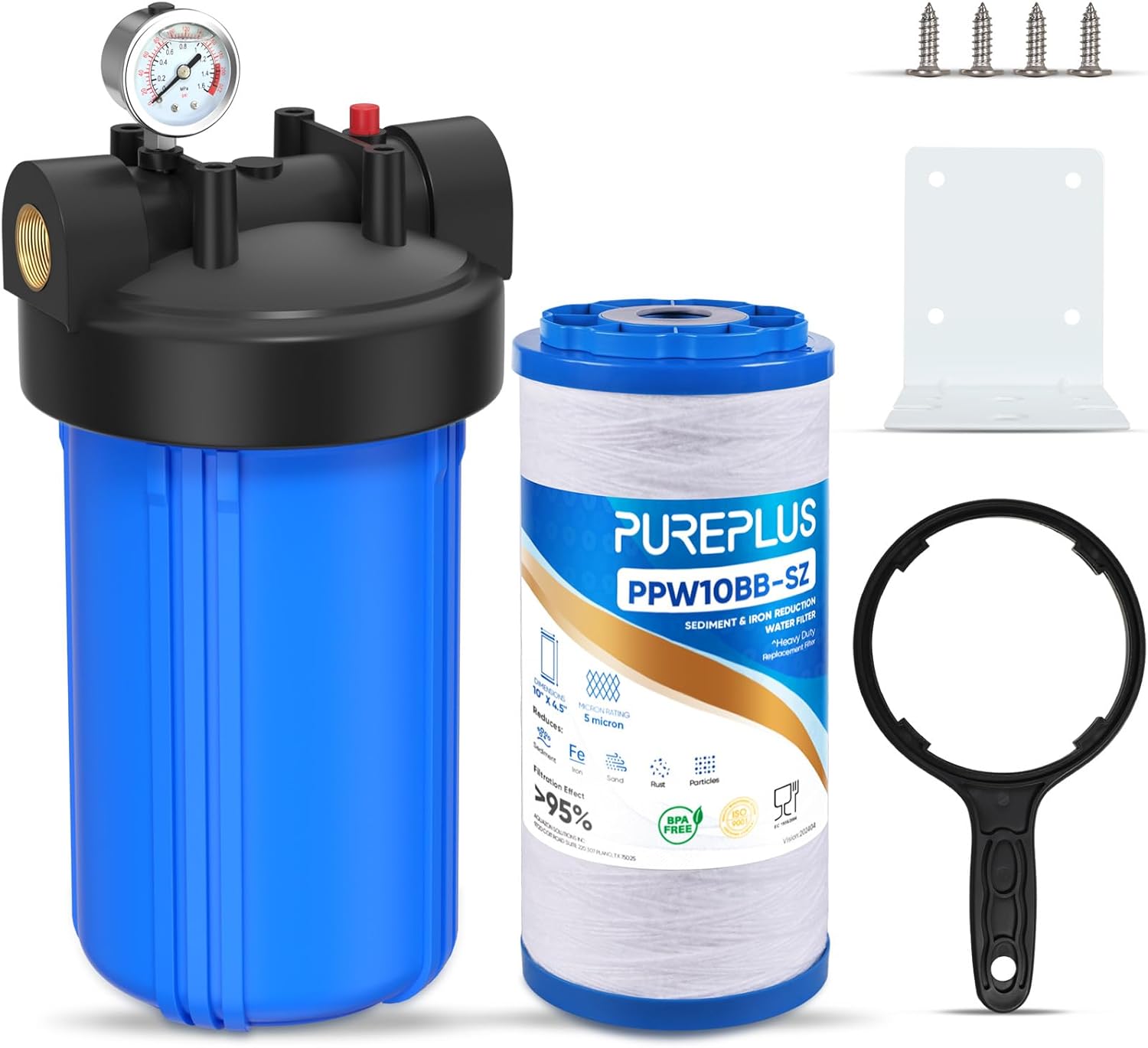
The PUREPLUS 1-stage whole-house filter is a universal 10"x4.5" housing intended as a pre-filter for well water systems, pairing a composite cartridge that targets sediment and iron/manganese reduction. It installs inline at the incoming water supply and comes with the mounting bracket, wrench, pressure relief valve and a cartridge preinstalled, so most homeowners can fit it with a single tool. The housing accepts a range of standard cartridges (sediment, pleated, carbon, or iron-reducing types), which makes it easy to tailor filtration to specific well issues and swap media when needs change. Its molded polypropylene housing and claimed high flow design help maintain water pressure while protecting downstream appliances. Expect straightforward maintenance — release the red pressure valve, unscrew the housing and change cartridges regularly. It does not include multi-stage media or specialized calcium-removal media, so for hard water scale control you will still need a dedicated water softener or a targeted calcium-removal filter stage downstream.
Best for: Budget-conscious homeowners with well water who need an affordable, easy-to-install whole-house pre-filter to reduce sediment and iron before appliances and fixtures.
Less Ideal for: Homes seeking turnkey scale or calcium removal solutions or those that require certified multi-stage softening should choose a system with dedicated softener or calcium-specific media instead.
- Fits standard 10"x4.5" cartridges so you can choose sediment, carbon, pleated or iron-reducing media
- Includes installation hardware and a wrench for DIY setup
- Durable food-grade polypropylene housing designed for whole-house use
- Pressure relief valve and mounting bracket simplify cartridge changes and maintenance
- Single-stage system does not include a dedicated calcium-removal or softening stage
- Not NSF-certified listing provided in product details
Verdict: A no-frills, budget-friendly 10"x4.5" whole-house housing that makes it easy to add sediment or iron-reducing cartridges as an affordable pre-filter solution.
iSpring WGB32BM 3-Stage Whole House Filter
| Maximum Flow Rate | 15 gpm |
|---|---|
| Operating Pressure Range | 25 – 80 psi |
| Operating Temperature | 40 – 100 °F |
| Inlet / Outlet | 1 inch NPT |
| Filter Life Cycle | 1 years |
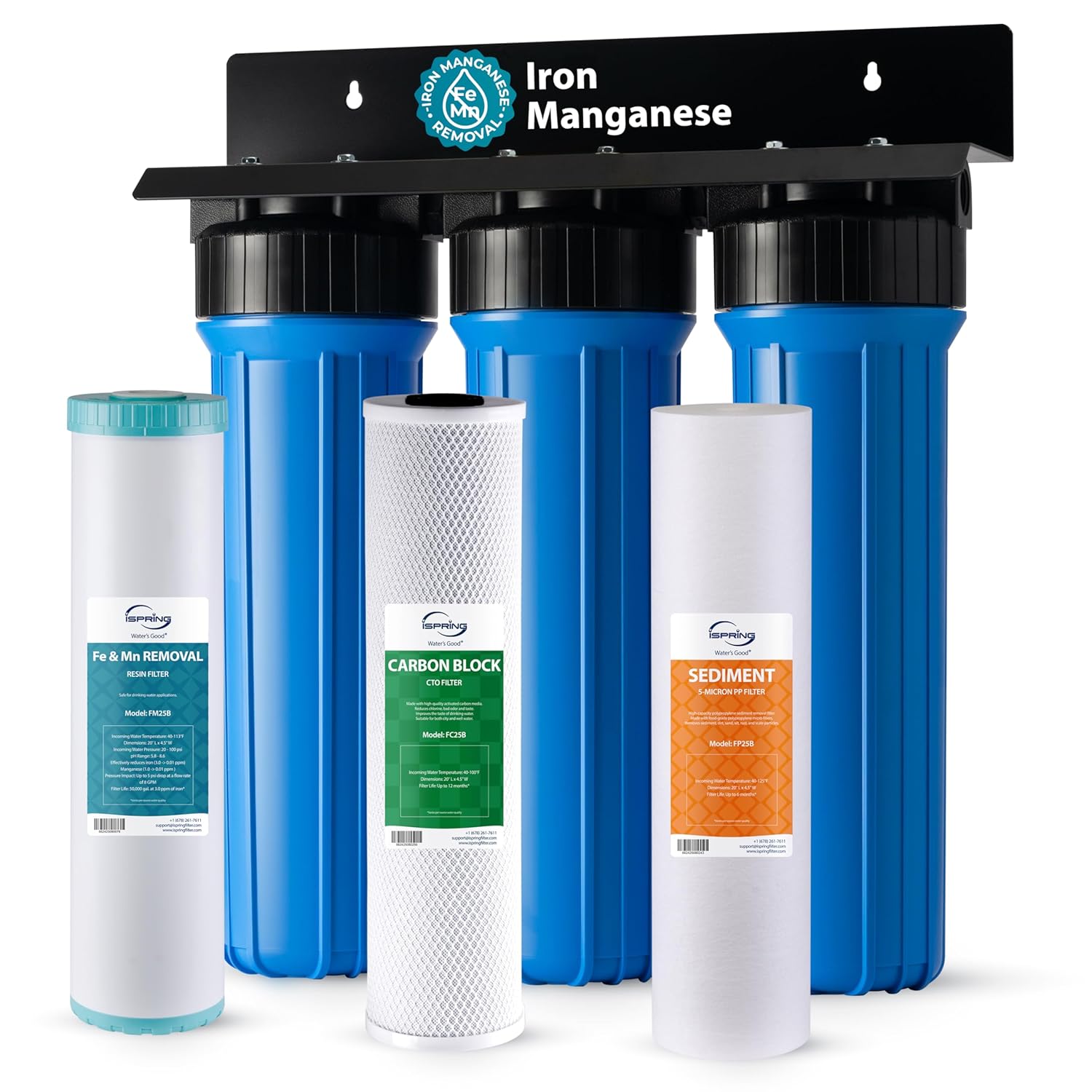
The iSpring WGB32BM is a tankless, permanent whole-house filter built around three 20-inch cartridges: a polypropylene sediment stage, a coconut-shell carbon block, and a catalytic iron and manganese stage. It is installed on the main supply line to treat water for the whole home and is sized to preserve flow rates up to 15 gallons per minute. In everyday use it removes visible particulates, chlorine, bad tastes and odors, and can sharply reduce iron and manganese within the stated concentration limits, which protects plumbing and appliances and improves laundry and bathing. The system is designed for DIY installation with 1-inch NPT plumbing and comes with replacement cartridges and a wrench. Limitations: it does not soften water or remove total dissolved solids, and it is not intended for iron or manganese levels above the specified thresholds, so homes with heavy scaling or very hard water will need a dedicated water softener or a different iron-removal system. The unit requires periodic cartridge replacement roughly every 6 to 12 months depending on usage and contaminant levels.
Best for: Homeowners who prioritize a reliable, factory-quality whole-house filter that reduces iron, manganese, chlorine and sediment while preserving flow for everyday household supply.
Less Ideal for: Homes that need water softening, TDS reduction, or treatment for iron/manganese levels higher than the system's specified limits should choose a dedicated softener or higher-capacity iron removal system.
- Three-stage filtration targets sediment, chlorine/taste/odor, and iron/manganese for broad whole-house coverage.
- High capacity cartridges rated up to 100,000 gallons or about 12 months for typical household use.
- Maintains high flow with up to 15 GPM peak rate, minimizing pressure loss for multi-fixture homes.
- Includes wrench and replacement filters for easier DIY installation and maintenance.
- Does not reduce water hardness or remove dissolved solids, so it will not prevent calcium scaling.
- Not designed for iron above 3.0 ppm or manganese above 1.0 ppm, limiting use on very contaminated supplies.
Verdict: Choose the iSpring WGB32BM when you want a dependable, high-capacity whole-house filter that removes sediment, chlorine, and moderate iron and manganese while keeping household water flow strong.
Waterdrop WHF21-PG Whole House Filter

| Purification Method | Granular Activated Carbon, Sedimentation |
|---|---|
| Maximum Flow Rate | 15 gpm |
| Operating Pressure Range | 25 psi |
| Upper Temperature Rating | 100 °F |
| Filter Life Cycle | 6 months |
The Waterdrop WHF21-PG is a compact two-stage whole-house filter built around a 10" x 4.5" PP sediment cartridge paired with a granular activated carbon (GAC) stage. It is installed on the main line to trap particles larger than 5 microns, reduce chlorine, lead and common tastes and odors, and help protect plumbing and downstream appliances. Typical use is inline at the service entry where steady flow and basic contaminant reduction are the goal; the unit supports up to 15 gallons per minute and is designed for municipal water pressures. Cartridge life is marketed in months rather than gallons (GAC about six months; PP three to six months depending on use), and the housing and included wrench aim to make DIY replacement straightforward. Practical benefits include improved water taste, reduced sediment in fixtures, and lower chlorine exposure without electrical power. Important limitations: this model is not designed to remove hardness minerals like calcium or perform heavy iron removal, and filter longevity and performance depend strongly on incoming water quality and correct installation.
Best for: Buyers who want a no-power, straightforward whole-house pre-filter to improve taste, remove sediment and chlorine, and protect fixtures, and who prioritize reliable third-party safety components and social-proofed performance.
Less Ideal for: Homes needing substantial calcium or hardness removal, dedicated softening, or treatment for heavy iron or well-water-specific contaminants should consider alternative systems designed for those issues.
- Two-stage design with PP sediment and GAC for effective chlorine, taste, odor, and sediment reduction.
- Supports up to 15 gpm for whole-house flow without added power.
- NSF/ANSI approved components and food-grade housing for safety.
- Includes cartridges, wrench, and mounting hardware for DIY installation.
- Not intended to reduce hardness minerals such as calcium or to act as a water softener.
- Filter replacement intervals vary with water quality and may require frequent cartridge changes in dirty supplies.
Verdict: Choose this Waterdrop unit if you want a simple, factory-quality two-stage whole-house filter to improve taste and cut chlorine and sediment without electricity.
Waterdrop WHF21-FG Whole House Filter

| Purification Method | Granular Activated Carbon |
|---|---|
| Maximum Flow Rate | 15 gpm |
| Filter Life Cycle | 6 months |
| Supported Water TDS Level Maximum (PPM) | 1000 |
| Capacity | 50000 gallons |
The Waterdrop WHF21-FG is a compact 2-stage whole-house filter designed to cut iron, manganese, chlorine, heavy metals and particles down to 5 microns while keeping household water pressure steady. It pairs an iron/manganese reduction cartridge with a coconut-shell GAC carbon stage, so it improves taste and odor and captures rust and sediment without the large footprint of multi-canister systems. Installation is aimed at DIYers: the unit ships with mounting hardware, a wrench, and preinstalled parts that simplify hookup to 1" NPT piping. Waterdrop claims up to 50,000 gallons or about six months of service life for the cartridges, and reinforced brass threads plus dual O-rings are intended to reduce leak risk. Important limits: the design targets iron, manganese and chlorine reduction rather than specialized water softening, so it will not remove dissolved calcium hardness the way a salt-based softener or dedicated ion-exchange system does. For homes with well water that has iron or sediment concerns this unit reduces visible staining and appliance wear, but buyers seeking significant calcium removal should pair it with a softener or look for a dedicated descaling solution.
Best for: Careful buyers who want a reliable, factory-quality sediment and heavy-metal reduction stage to protect plumbing and improve water taste, and who prefer a straightforward DIY installation and conservative performance claims.
Less Ideal for: Households primarily seeking to remove calcium hardness or replace a water softener should avoid this product and consider a dedicated ion-exchange softener or descaler instead.
- Targets iron and manganese with a dedicated reduction cartridge for visible stain and rust reduction.
- Coconut-shell GAC carbon improves taste, odor, and reduces chlorine and some heavy metals.
- Supports up to 15 gallons per minute to maintain household water pressure under normal use.
- Includes mounting hardware, wrench, and preinstalled parts for easier DIY installation.
- Reinforced brass threads and dual O-rings plus pressure testing aim to reduce leak and corrosion risks.
- Not a water softener and does not substantially remove dissolved calcium hardness.
- Filter replacement interval is relatively short at about six months under stated conditions.
- Capacity and contaminant removal percentages are based on manufacturer testing and may vary with water chemistry.
Verdict: Buy this if you want a compact, tested whole-house filter that cuts iron, manganese and chlorine and preserves water pressure, but not if your main goal is calcium removal.
Choosing the Right Whole-House Water Filter for Calcium Removal: Key Factors to Consider
Calcium Reduction Method
Different whole-house systems reduce calcium through physical filtration, ion exchange, template-assisted crystallization, magnetic or electronic descaling, or a combination of approaches. The method matters because it determines whether calcium is removed from the water or simply converted into a less adherent form. Systems that remove calcium entirely require periodic media regeneration or replacement and often provide laboratory-rated reductions. Methods that convert scale-forming ions generally require less maintenance but may not lower total dissolved solids. Consider which outcome you want: true reduction of dissolved calcium or mitigation of scale buildup on surfaces.
Flow Rate and Household Demand
A whole-house system must support your peak household flow without causing significant pressure drop. Flow rate is typically specified in gallons per minute and should match the combined demand of showers, appliances, and fixtures used simultaneously. Undersized systems can restrict water flow and create frustrating performance issues, while oversized systems can add unnecessary cost and complexity. Verify the system's continuous flow rating and compare it with your typical peak usage to ensure comfortable water delivery throughout the home.
Media Capacity and Lifespan
Media capacity defines how much hardness a system can process before regeneration, replacement, or service is required. Higher-capacity media reduce the frequency of maintenance but typically come with higher upfront cost and larger tanks. Lifespan also depends on incoming water hardness, household water use, and the chosen treatment method. Evaluate media replacement intervals and whether the system uses disposable cartridges, rechargeable media, or requires professional service. Knowing realistic maintenance intervals helps you budget time and recurring costs.
Installation Requirements
Whole-house systems are installed at the main water entry point and may require shutoff valves, bypass loops, additional fittings, or electrical connections for control heads. Some systems are do-it-yourself friendly with PVC or NPT fittings, while others require soldered copper, specialized mounting, or professional plumbing. Consider space constraints near the water meter, whether you need a bypass for continuous service during maintenance, and whether the system needs a drain for backwash cycles. Installation complexity influences total project cost and the ease of long-term upkeep.
Maintenance Frequency and Ease
Maintenance ranges from simple cartridge swaps to scheduled salt or brine regeneration and occasional media replacement. Frequency is driven by water hardness and household usage. Systems that require frequent manual intervention can be an annoyance, while automated regeneration systems can run on timers or meter-based cycles but may need a drain and salt supply. Check how easy it is to access service ports, whether you can buy replacement media locally, and whether routine tasks can be completed without specialized tools.
Impact on Water Chemistry
Calcium removal changes water chemistry in ways that matter for plumbing and household uses. Ion-exchange softening replaces calcium with sodium or potassium ions, which lowers water hardness but raises sodium content slightly. Other methods alter calcium crystallization to reduce scale without changing mineral concentrations. If you have specific concerns like high sodium diets, irrigation, or aquarium use, choose a method that aligns with those needs. Also consider effects on pH and compatibility with downstream treatment such as carbon filtration or UV disinfection.
Sizing Your Whole-House System
Calculate peak flow by listing simultaneous fixture use during the busiest times, such as multiple showers and laundry. Add typical fixture flow rates to estimate required continuous gallons per minute.
Account for future changes like added bathrooms or high-flow appliances. Choosing a slightly higher flow capacity can avoid premature replacement if household demand increases.
- Estimate peak GPM from showerheads, faucets, and appliances
- Match system continuous flow rating to peak demand
- Factor in future household growth or high-flow upgrades
Do-It-Yourself Versus Professional Installation
Simple systems with threaded or push-fit connections and no electrical components can often be installed by an experienced DIYer. If the project requires new shutoff valves, soldering, or electrical work for control heads, professional installation is safer and ensures code compliance.
A bypass loop is a valuable addition that lets you service the unit without interrupting household water. Confirm the physical footprint and clearance requirements before purchasing so the installer can plan accordingly.
- Check whether incoming plumbing uses standard fittings
- Confirm need for a drain or electrical outlet for regeneration cycles
- Plan for a bypass valve to maintain water during service
Maintenance Tasks and Cost Drivers
Routine tasks include media regeneration, cartridge swaps, and periodic inspections of seals and valves. Automatic regeneration systems reduce hands-on maintenance but require replenishing consumables when applicable.
Consider both time and recurring supply costs. Systems with long-lived media but higher upfront cost can be cheaper over time than low-cost cartridges that must be replaced frequently.
- Identify consumables and approximate replacement intervals
- Look for systems with easy access to serviceable parts
- Evaluate whether the system needs a dedicated drain or salt storage
Measuring Performance at Home
Confirm baseline hardness with a test kit before installation so you can compare post-install results. After installation, test at fixtures and near appliances to ensure the system performs across the whole house.
Monitor pressure drop and flow during typical use. A significant reduction in flow or persistent scale indicates either undersizing, exhausted media, or a need for servicing.
- Use a hardness test kit to record baseline and post-treatment levels
- Check multiple points in the house for consistent performance
- Track pressure and flow to catch early signs of media exhaustion
Compatibility with Other Home Water Treatments
Consider how a calcium-focused whole-house system will interact with any existing carbon, sediment, or UV units. Pre-filtration can protect more sensitive media from particulates, and post-filtration might be appropriate if you remove taste or odor concerns after hardness treatment.
Plan the installation sequence so that particle filters precede media that is susceptible to clogging, and disinfection systems are positioned after mechanical or chemical treatment steps when required.
- Install sediment filters ahead of media that could clog
- Place carbon filters after hardness treatment if taste removal is needed
- Ensure UV disinfection is downstream of any effective calcium-removal step
How We Chose the Best Whole-House Water Filter for Calcium Removal
We selected systems that focus on calcium and hardness reduction using proven filtration or treatment media and that are sized for residential plumbing. Our editorial filters prioritized measurable performance characteristics such as maximum continuous flow rate, treated water capacity before media regeneration or replacement, and documented media lifespan. We also evaluated installation complexity and compatibility with standard residential service lines, plus maintenance demands like frequency of backwash, media recharge, or cartridge changes. Products were excluded if their published specifications lacked clear hardness reduction metrics or if they were intended only for point-of-use treatment rather than whole-house installation. We favored systems that provide manufacturer or lab-rated reduction data and that support common household flow rates without excessive pressure drop. The final list balances upfront installation practicality with long-term operating considerations so you can choose a system that fits both your plumbing and lifestyle.
Our full evaluation process is outlined in our review methodology.
FAQ
Will a whole-house calcium removal system make water safe to drink?
Many whole-house calcium treatments reduce hardness but do not disinfect water or remove microbial contaminants. For drinking water safety, pair hardness treatment with certified filtration or disinfection designed to address microbes and chemical contaminants.
How often will I need to service a calcium reduction system?
Service intervals vary widely by incoming hardness and household use. Some media need regeneration every few weeks, while high-capacity systems may go months or longer. Expect more frequent attention in very hard water areas.
Can calcium removal systems harm plumbing or appliances?
Properly selected systems typically protect plumbing by reducing scale. However, methods that lower mineral content can slightly change water chemistry, which may affect corrosion in some situations. Regular monitoring and corrosion control measures help prevent issues.
Do calcium removal systems require a drain or electricity?
Some systems, especially those that perform backwash or automated regeneration, need a drain and may require electrical power for control valves. Simpler passive media or cartridge systems often do not need electricity or a continuous drain.
Will removing calcium affect water taste or health?
Removing or reducing calcium has minimal impact on taste for most people. Ion-exchange systems exchange calcium for sodium or potassium, which can slightly alter mineral content. For most households, these changes are not a health concern, but consult a professional if you have specific dietary restrictions.
Final Verdict
When choosing a whole-house water filter for calcium removal, prioritize the treatment method that matches your goal: true removal versus scale control. Size the system to handle your peak flow and check media capacity so regeneration or replacements fit your maintenance preferences. Factor in installation complexity and how the system integrates with any existing water treatment. Balance upfront convenience against ongoing services and consumables to find the right long-term solution. With accurate hardness testing and attention to flow ratings and media lifespan, you can select a system that reduces scale, protects plumbing, and suits your household routines.