
Note: This article contains affiliate links. If you click on these links and make a purchase, we may earn a small commission at no extra cost to you. This helps support our research and content. Read our full affiliate disclosure here.
Picking the right whole-house water filter for kitchen sink use matters because kitchen taps handle food prep, drinking water, and cleanup. The wrong system can leave you with poor taste, residual sediment, or sagging water pressure at the sink. This guide presents seven shortlisted whole-house water filters selected for their balance of filtration efficiency, flow capacity, and ease of maintenance. We evaluate systems based on how well they remove common contaminants, how they affect household water pressure, and how simple they are to service. Read on to find the filter features that match your kitchen needs and plumbing layout.
Top Picks at a Glance
| Best Overall The best all-around choice for most situations | Express Water Whole House 3-Stage |  |
| Best Quality Built to a higher standard if you want something more solid | 3M Aqua-Pure AP904 Whole House Filter | 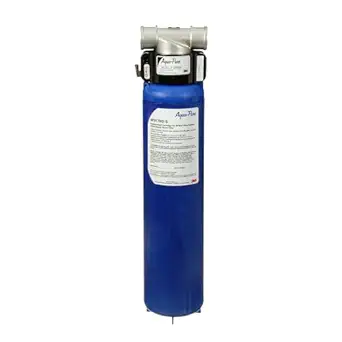 |
| Best Value The sweet spot between price and what you get | Reverse Osmosis Revolution WHF-34F5 |  |
| Best Budget The cheapest option that still gets the job done reliably | Culligan WH-HD200-C Whole House Filter |  |
| Top Rated A top-rated pick with lots of positive feedback | iSpring WGB32B 3-Stage Whole House Filter |  |
| Most Popular A crowd favorite that many people choose with confidence | iSpring WGB21B 2-Stage Whole House Filter |  |
| Best Seller A high-volume bestseller chosen again and again | SimPure DB10P Filter Housing |  |
Express Water Whole House 3-Stage

| Purification Method | Activated Carbon, KDF, Polyphosphate |
|---|---|
| Maximum Flow Rate | 17 gpm |
| Operating Pressure Range | 20-80 psi |
| Filter Life Cycle | 6 months |
| Capacity | 100000 gallons |
The Express Water 3-stage whole-house system installs at the main water inlet to treat all faucets and appliances downstream, delivering cleaner tasting water and protecting plumbing from scale and sediment. It pairs an activated carbon stage for chlorine, a heavy-metal reducing stage using KDF-style media, and a polyphosphate anti-scale stage, plus a stainless steel stand with pressure gauges and relief buttons for easier filter swaps. The system is manual and requires no power, supports up to 17 gpm flow and is rated for typical household pressures between 20 and 80 psi, so it can supply whole-house demand without noticeable pressure loss. Filters are expected to last roughly 6 to 12 months or about 100,000 gallons depending on water quality, and the system does not reduce total dissolved solids so it is not a substitute for reverse osmosis at a drinking-water point of use. Installation will require a 1-inch connection and basic plumbing work or a pro if you are not comfortable with pipe hookups.
Best for: Buyers who want a robust whole-house system that improves water taste and protects pipes and appliances across the home while keeping installation and maintenance straightforward.
Less Ideal for: Homes that require removal of dissolved solids or bottled-water level purity at the kitchen sink should choose a point-of-use reverse osmosis system instead.
- Three-stage filtration targeting chlorine, sediment, heavy metals and scale at the point of entry
- Stainless steel freestanding frame with pressure gauges and relief buttons for easier maintenance
- High flow capacity (up to 17 gpm) designed to avoid noticeable pressure loss in typical homes
- Manual, no-electric design that works during power outages and is simple to operate
- Does not reduce total dissolved solids (TDS) or provide reverse osmosis level purification
- Filter life varies with water quality and may require annual replacements for heavier usage
Verdict: A practical whole-house 3-stage system that delivers broad chlorine, heavy-metal and scale protection while keeping high household flow and simple maintenance top priorities.
3M Aqua-Pure AP904 Whole House Filter

| Included components | Head/mounting bracket, AP917HD-S cartridge, and user manual |
|---|---|
| Material Type | Polypropylene (PP) |
| External Testing Certification | NSF |
| Flow rate | Up to 20 gpm |
| Cartridge life | Replace every 12 months or 100,000 gallons |
The 3M Aqua-Pure AP904 is a point-of-entry whole-house filter designed to protect plumbing and improve water taste across every tap in the home. It uses an activated carbon block and pleated media to cut sediment and chlorine taste and odor while a polyphosphate-based scale inhibitor helps reduce lime buildup on appliances. The system is built around a 304 stainless steel head with 1-inch inlet and outlet connections for professional installation and supports peak flows up to 20 gpm, so it can meet higher-demand household needs. The Sanitary Quick Change (SQC) cartridge makes service easy: cartridge swaps require only a quarter turn and avoid direct contact with the filter media. The cartridge life is rated up to 100,000 gallons or about 12 months under typical use, which reduces frequent maintenance. This is a durable, performance-focused option for homeowners who want whole-house protection and high flow capacity, though installation is geared toward plumbers and replacement cartridges are required on a yearly schedule.
Best for: Homeowners wanting a high-flow, whole-house solution that improves water taste and protects plumbing and appliances while minimizing frequent service.
Less Ideal for: People seeking a simple under-sink point-of-use filter or a DIY install option should consider smaller, consumer-oriented systems instead.
- Reduces sediment, chlorine taste and odor through activated carbon block and pleated media
- Scale inhibition with polyphosphates helps protect water heaters and appliances
- Sanitary Quick Change cartridge enables tool-free, no-touch replacements
- 1" stainless steel head and 20 gpm peak flow support higher household water demand
- Designed for professional installation rather than DIY hookups
- Cartridge replacement is required roughly every 12 months or 100,000 gallons
Verdict: Choose the AP904 when you need a durable, high-flow whole-house filter that improves taste and protects appliances with easy sanitary cartridge changes.
Reverse Osmosis Revolution WHF-34F5

| Connection | 3/4" thread |
|---|---|
| Filter life cycle | 5 months |
| Capacity | 10000 gallons |
| Purification method | Carbon Block, Granular Activated Carbon |
| Supported Water TDS Level Maximum (PPM) | 300 |
This three-stage system attaches to 3/4" house plumbing and is designed to remove sediment, chlorine, VOCs and many common chemical tastes and odors before water reaches fixtures. It uses a 5-micron sediment cartridge as the first stage to trap sand, rust and large particles, a 10" granular activated carbon (GAC) second stage to reduce chlorine and odors, and a 10" CTO carbon block third stage to polish taste and remove additional VOCs. The unit includes two extra filter sets (six cartridges total) so you have replacements on hand, and the manufacturer reports filter life of roughly 4–6 months or up to 10,000 gallons. Installation is typical for whole-house inline housings and the 3/4" threaded connections mean it ties into standard plumbing; there are no powered components to worry about. Limitations are the need for regular cartridge changes and that this system targets chlorine and particulates rather than fine dissolved solids or heavy metals, so buyers needing advanced contaminant removal should consider additional treatment stages.
Best for: Buyers who want a straightforward, maintenance-oriented whole-house filter to improve tap water taste and remove sediment and common chemicals before the kitchen sink.
Less Ideal for: Homes needing removal of dissolved solids, hard water minerals, or contaminants like lead should look at systems with RO, ion exchange, or targeted heavy-metal filtration instead.
- Three-stage design addresses sediment, chlorine, odors and VOCs for improved taste
- Includes two extra sets of replacement filters so you can swap cartridges without delay
- Standard 3/4" threaded connections integrate with typical household plumbing
- No power required so operation is passive and reliable
- Quoted capacity and filter life provide a clear maintenance cadence (up to 10,000 gallons, 4–6 months per filter)
- Not engineered to remove dissolved minerals, salts, or most heavy metals
- Filters require periodic replacement and ongoing cost for cartridges
Verdict: A no-power, three-stage whole-house filter that reliably improves taste and removes sediment and common chemicals while including extra replacement cartridges for quick maintenance.
Culligan WH-HD200-C Whole House Filter

| Installation Type | In Line |
|---|---|
| Maximum Flow Rate | 10 gpm |
| Supported Water TDS Level Maximum (PPM) | 600 |
| Material Type | Stainless Steel |
| Capacity | 16000 gallons |
The Culligan WH-HD200-C is a stainless steel-capped whole-house filter housing meant to sit at the point of entry on a 1-inch water main and protect plumbing and appliances from sediment, rust and scale when fitted with the correct cartridge (sold separately). Installation is inline and aimed at residential use; the unit includes a mounting bracket, built-in shut-off/bypass, pressure relief valve and a wrench to simplify service. The clear sump makes it easy to visually inspect the cartridge and the housing is WQA-tested for durability. Because the filter element is not included, buyers choose the cartridge type and performance level they need, which keeps upfront cost lower but adds the ongoing expense of a compatible cartridge. The unit supports up to 10 gpm flow and is rated for water TDS up to 600 ppm, so it handles typical household supply flows and heavier-duty sediment loads. This housing is practical for homeowners who want a durable, serviceable whole-house mounting point and visual monitoring without paying for bundled cartridges.
Best for: Buyers who want a budget-conscious way to add a durable, serviceable whole-house filter housing and pick their own cartridge performance rather than paying for a bundled system.
Less Ideal for: Those looking for an all-in-one system that includes a cartridge and immediate chemical or fine-particle removal should consider complete units that include matched filters and cartridges.
- Durable stainless steel cap and WQA-tested housing for long-term use
- Clear sump lets you visually check cartridge condition without disassembly
- Includes mounting bracket, built-in shut-off, bypass and pressure relief for easier service
- Supports up to 10 gpm flow suitable for typical household demand
- Filter cartridge sold separately so initial purchase does not include filtration media
- Requires a 1-inch water main at point of entry, limiting fitment to compatible plumbing
Verdict: Choose the Culligan WH-HD200-C if you want a sturdy, serviceable whole-house filter housing that keeps upfront costs low by letting you buy the cartridge you need.
iSpring WGB32B 3-Stage Whole House Filter

| Maximum Flow Rate | 15 gpm |
|---|---|
| Operating Pressure Range | 25 – 80 psi |
| Operating Temperature | 40 – 100 °F |
| Supported Water TDS Level Maximum (PPM) | 300 |
| Filter Life Cycle | 1 years |
The iSpring WGB32B is a tankless, 3-stage whole-house filter built around a 20×4.5-inch Big Blue sediment cartridge plus two coconut-shell carbon block stages to cut chlorine, taste, odor, and visible particulates. It installs inline at the main supply (1-inch female NPT) and is intended for DIY fitting with the supplied wrench and online video guide. In everyday use it preserves household water pressure—rated to 15 gpm—while protecting faucets, appliances, and fixtures from chlorine and rust, and it leaves beneficial minerals intact since it is not an RO system. Filters are rated to handle up to 100,000 gallons or about 12 months depending on water quality, and the system is engineered for 25 to 80 psi operating pressure and 40 to 100°F temperatures. The system does not soften water or reduce TDS, so very hard-water households should plan a softener ahead of this unit. Overall it is a practical, serviceable whole-house carbon filtration option for buyers who want reliable chlorine and sediment removal with straightforward maintenance and strong flow capacity.
Best for: Homeowners who prioritize dependable chlorine and sediment removal and want a high-flow, low-maintenance whole-house filter that is simple to install and service.
Less Ideal for: Homes seeking a single system to address hard water or significant TDS reduction should consider adding a softener or an RO system instead.
- Three-stage filtration combining 5-micron sediment and two carbon block stages for effective chlorine, taste, and odor reduction.
- Tankless, industrial-style housings with 1" inlet/outlet preserve high flow rates up to 15 gpm for whole-house use.
- Filters rated to about 100,000 gallons or roughly 12 months under typical conditions, reducing replacement frequency.
- DIY-friendly installation with included wrench, manual, and online video support for straightforward setup and service.
- Does not reduce water hardness or lower TDS, so a separate softener is required for hard-water issues.
- Requires indoor, protected installation unless additional weatherproofing and insulation are added for outdoor use.
Verdict: Choose the iSpring WGB32B when you need a reliable, high-flow whole-house filter that effectively removes chlorine and sediment with annual cartridge changes.
iSpring WGB21B 2-Stage Whole House Filter
| Capacity | 50,000 gallons |
|---|---|
| Filter Life Cycle | 12 months |
| Maximum Flow Rate | 15 gpm |
| Inlet / Outlet | 1 inch Female NPT |
| Operating Temperature | 40-100 °F |
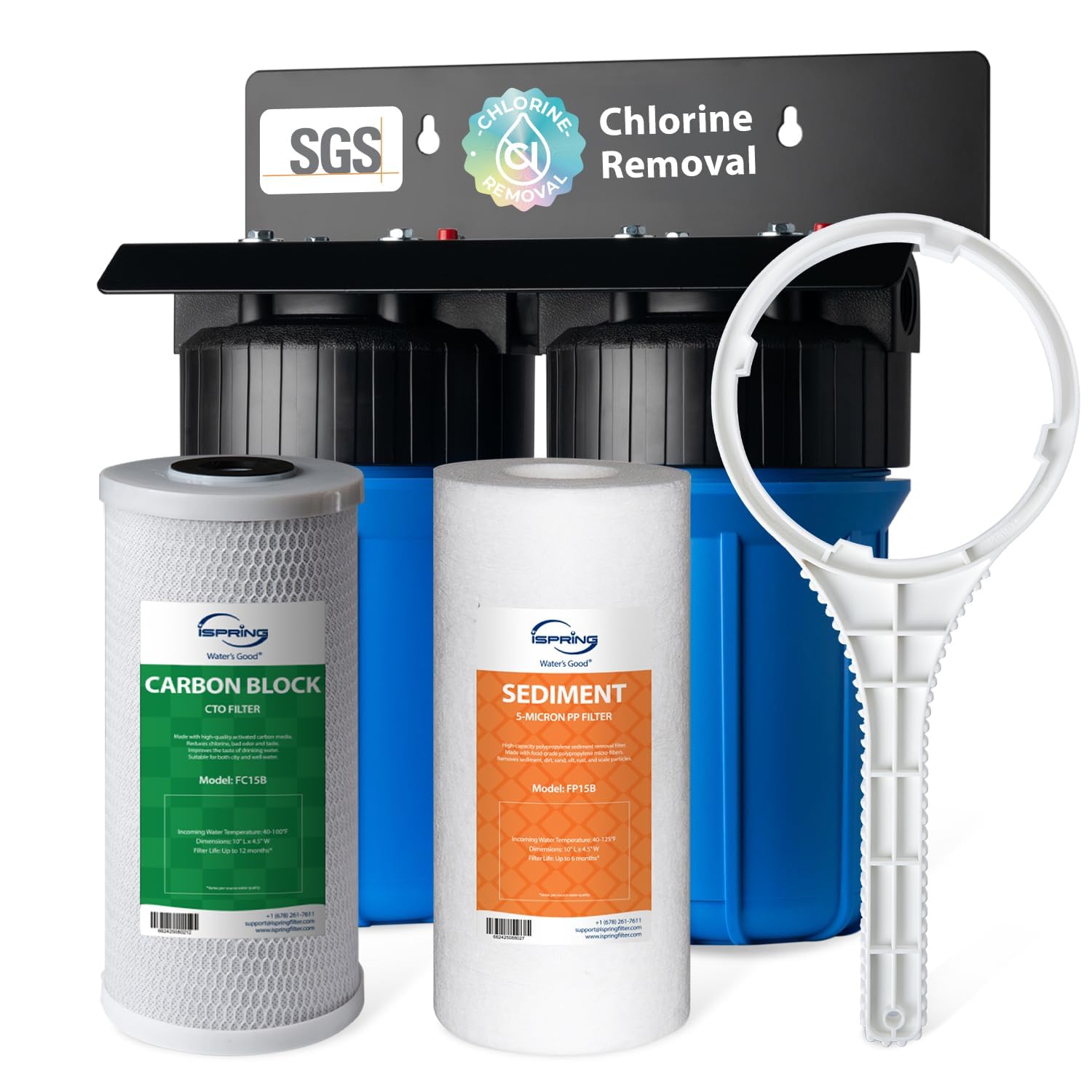
The iSpring WGB21B is a point-of-entry two-stage filter designed to deliver cleaner water to every faucet in a home. It installs at the main supply with 1-inch inlet/outlet ports for high flow and includes a 5-micron polypropylene sediment cartridge followed by a coconut-shell carbon CTO cartridge that removes chlorine, taste, odor, and many volatile organic compounds. The housings mount to a bracket and the kit ships with an installation set, filter wrench, and a pressure release valve to simplify routine changes. Rated for up to 50,000 gallons or roughly 12 months under typical use, the replaceable cartridges both protect downstream appliances and improve tap water flavor while retaining beneficial minerals because it is not an RO unit. Limitations include no TDS reduction and an upper operating temperature and pressure envelope you should respect during installation, and professional help may still be preferable if you are uncomfortable with DIY plumbing connections.
Best for: Buyers who prioritize proven, whole-house chlorine and sediment removal with visible social proof and clear installation guidance, and who want a system that improves tap taste and protects appliances without removing healthy minerals.
Less Ideal for: Homes that need mineral-free water or heavy TDS reduction, or users who require advanced contaminant removal like fluoride or dissolved salts should consider other technologies.
- Two-stage setup combines 5-micron sediment and CTO carbon block for broad chlorine, taste, odor, and sediment removal
- 1-inch inlet/outlet and up to 15 gpm max flow for minimal pressure loss to fixtures
- Replaceable 10"x4.5" cartridges rated up to 50,000 gallons simplify yearly maintenance
- Pre-assembled bracket, included installation kit, filter wrench, and pressure relief valve make DIY installation and filter changes easier
- Does not reduce total dissolved solids (TDS) or perform the same removal as an RO system
- Operating pressure and temperature limits require checking home supply conditions before install
Verdict: Choose the iSpring WGB21B when you want a reliable, easy-to-install two-stage whole-house filter that removes sediment and chlorine to improve taste and protect plumbing without stripping minerals.
SimPure DB10P Filter Housing

| Compatible Filter Dimensions | 10" x 4.5" |
|---|---|
| Inlet/Outlet | 1" NPT Brass Port |
| Maximum Flow Rate | 20 gpm |
| Working Water Pressure Range | 15-90 PSI |
| Applicable Water Temperature | 5-38 °C (41-100 °F) |
The SimPure DB10P is a universal-style 10" x 4.5" whole-house filter housing meant to act as a pre-filter for municipal or well water. It mounts inline using 1" NPT brass inlet and outlet ports and accepts common sediment, carbon, or pleated cartridges to remove sand, dirt, chlorine taste and odors before water reaches downstream appliances. The housing is molded from reinforced food-grade polypropylene with a brass-threaded head for a tighter seal and includes a wall-mount bracket, wrench, screws, and a built-in red pressure-relief button to simplify cartridge changes. It is rated for up to 20 gallons per minute flow and works across a typical residential pressure range, making it suitable for feeding kitchen sinks and whole-home lines. Important limitations are that cartridges are sold separately and the unit requires enough installation space for the 10" cartridge and periodic service; buyers should also observe the recommended temperature and TDS limits. For buyers wanting a durable, easy-to-service pre-filter that reduces sediment and chlorine before the kitchen sink, this housing covers the basics reliably.
Best for: Buyers who prioritize a straightforward, proven pre-filter to protect kitchen plumbing and appliances and want a durable, easy-to-service housing that accepts widely available cartridges.
Less Ideal for: People who need an all-in-one drinking water purifier or specialty multi-stage systems with included cartridges and advanced contaminant removal should look elsewhere.
- Accepts standard 10" x 4.5" cartridges for easy cartridge sourcing and replacement
- 1" NPT brass inlet/outlet for sturdy, leak-resistant connections
- Reinforced food-grade polypropylene construction resists corrosion and impact
- Includes mounting bracket, wrench, screws and a pressure-relief button for easier servicing
- Rated up to 20 gpm so it can handle typical whole-house flow demands
- Filter cartridges and push fittings are not included so additional purchase is required
- Requires sufficient clearance for removing and replacing 10" cartridges during maintenance
Verdict: A sturdy, serviceable 10" whole-house housing that reliably provides upstream protection for kitchen lines using standard cartridges.
Choosing the Right Whole-House Water Filter for Kitchen Sink: Key Factors to Consider
Filtration Media and Contaminants Removed
Different whole-house filters use sediment pre-filters, activated carbon, catalytic carbon, KDF, or specialized media to target distinct contaminants. For kitchen sink use, look for systems that reduce chlorine, volatile organic compounds, taste and odor, and suspended solids so drinking water and food prep are noticeably improved.
Understanding the media matters because some cartridges are better at chemical adsorption while others trap particulates. If your water report shows specific contaminants like chloramine, iron, or hydrogen sulfide, select media rated for those substances to avoid continued taste or staining issues.
Flow Rate and Pressure Retention
Whole-house systems must supply adequate gallons per minute to the kitchen sink without causing an annoying pressure drop. Flow capacity is commonly stated in gallons per minute and should match or exceed the combined demand of fixtures served by the same main line.
If the system is undersized, you will notice slower faucet flow and weaker spray from dishwashers or sinks. Confirm rated flow at the intended operating pressure and consider systems with bypass or parallel housing options if you expect higher instantaneous demand.
Installation Complexity and Plumbing Requirements
Installation can range from straightforward inline connections to systems that require shutoff relocation, additional fittings, or space for large housings. Measure the available space near the main supply line and assess whether you need professional plumbing to meet local codes.
Ease of installation affects overall cost and downtime. Choose systems with standard connection sizes and clear installation instructions if you plan a DIY install. If your kitchen sink is on a branch line away from the main, ensure the chosen configuration still supplies treated water to that fixture.
Maintenance Frequency and Cartridge Availability
Cartridge life and replacement cost are ongoing considerations. Some filters need frequent sediment cartridge changes, while others offer longer-life specialty cartridges. Check the expected service interval in gallons or months and whether replacement cartridges are commonly stocked.
Simple, tool-free access to housings reduces service time and mess. Also consider whether the system design allows partial servicing—replacing only a pre-filter rather than the whole multi-stage assembly—to save on routine upkeep.
Materials, Certifications, and Longevity
Housing materials, gasket quality, and internal fittings influence how a system performs over time. Look for corrosion-resistant metals or robust plastics and high-quality seals to avoid leaks and premature failures.
Third-party testing or certifications for contaminant reduction provide additional confidence, especially for health-sensitive uses like drinking water. While certifications are not the only measure, they indicate the manufacturer submitted data for independent verification.
Space and Footprint in Utility Areas
Whole-house filters can be bulky and may need clearance for cartridge removal and servicing. Consider the physical footprint, mounting options, and how housing orientation affects access to the kitchen supply.
If your install point is in a cramped utility closet or basement, prefer compact or wall-mounted designs. Allow extra room around the unit for maintenance tasks and potential future upgrades.
How Whole-House Systems Affect Kitchen Water Quality
Whole-house filters condition water at the point it enters your home so every faucet, including the kitchen sink, receives treated water. This reduces sediment that can cloud drinkable water, removes chlorine that causes poor taste and smell, and can cut back on particulates that stain dishes and cookware.
- Treated water improves flavor and odor at the kitchen tap
- Reduces sediment that clogs aerators and spray heads
- Protects downstream appliances from scale and particulates when appropriate media are used
Sizing the System for Your Sink and Household Demand
To avoid underperforming flow, size your system based on peak demand. A single kitchen sink typically uses 1.5 to 2.5 gallons per minute for normal faucet flow, but combined household demand can be higher when other fixtures run simultaneously. Check the system's rated flow at realistic operating pressures.
- Match gallons-per-minute rating to peak simultaneous use
- Consider systems with parallel housings for higher flow
- Verify flow specs at normal household pressure, not just ideal lab numbers
Placement Options and Plumbing Layouts
Location matters for both effectiveness and convenience. Installing the filter on the main cold-water inlet ensures the kitchen receives treated cold water for drinking and cooking. If your sink is fed from a separate branch, route treated water to that branch or choose a point-of-use option if whole-house capacity is impractical.
- Main-line installs treat all water entering the home
- Branch-line installs can be used when only the kitchen needs filtration
- Ensure sufficient clearance for cartridge access and replacement
Common Maintenance Tasks and Troubleshooting
Routine maintenance usually involves replacing sediment and carbon cartridges on a scheduled interval. Keep a maintenance log and note pressure changes; a gradual pressure drop often signals a clogged pre-filter. Flush new cartridges per manufacturer guidance to remove loose carbon fines before using kitchen water.
- Watch for pressure drops as an early sign of clogging
- Flush and prime cartridges after replacement
- Keep spare cartridges and basic tools accessible
When to Consider Additional Point-of-Use Treatment
Whole-house systems are great for general taste, odor, and particulate control, but they may not remove all health-specific contaminants to drinking-water levels. If your water report indicates lead, nitrates, or certain pathogens, add a certified point-of-use filter or under-sink reverse osmosis for the kitchen tap.
- Use point-of-use systems for contaminant removal beyond whole-house scope
- Combine whole-house sediment removal with under-sink polishing for drinking water
- Check local water reports to inform targeted point-of-use choices
How We Chose the Best Whole-House Water Filter for Kitchen Sink
We chose systems that address the realities of installing a whole-house water filter to serve a kitchen sink. Selection began with compatibility and flow: we prioritized units rated to sustain typical household sink flow without noticeable pressure drops. Filtration capability was next, focusing on verified media or multi-stage approaches that reduce sediment, chlorine, taste and odor, and common chemical contaminants relevant to kitchen use. We also evaluated maintenance and serviceability, favoring filters with easy cartridge swaps, clearly documented replacement intervals, and widely available parts. Construction and materials were considered for longevity and plumbing compatibility. Systems that required complex, model-specific plumbing modifications or obscure replacement cartridges were excluded. Overall, products that combined consistent flow, demonstrable contaminant reduction, manageable upkeep, and clear installation guidance made the list.
Our full evaluation process is outlined in our review methodology.
FAQ
Will a whole-house water filter remove chlorine taste at my kitchen sink?
Often yes. Systems with activated or catalytic carbon stages reduce chlorine and associated taste and odor. The degree of removal depends on contact time and carbon quality, so pick a system sized for your flow demands to achieve meaningful reduction.
How do I know what contaminants I need to filter out?
Start with a recent water quality report from your municipality or a private lab test for well water. The report identifies common constituents like chlorine, iron, or hardness that influence media selection and system design.
How often will I need to change cartridges for kitchen-level performance?
It usually depends on incoming water quality and household usage. Sediment cartridges may need changes every 3 to 12 months, while carbon or specialty cartridges often last longer. Monitor pressure and follow manufacturer guidance for specific intervals.
Can I install a whole-house filter myself for a kitchen sink?
Many systems are designed for competent DIYers and use standard pipe fittings, but installations that require modifying shutoffs, relocating piping, or meeting local plumbing codes may require a licensed plumber. Always follow local regulations and best practices.
Will a whole-house filter affect dishwasher or faucet pressure?
If the filter is appropriately sized for flow, pressure impact should be minimal. An undersized unit or clogged cartridges are common causes of reduced pressure. Choose a system rated for household peak flow and maintain filters per schedule.
Final Verdict
For kitchen sink use, prioritize systems that balance strong contaminant reduction with sufficient flow capacity and easy servicing. Focus on filtration media that target the contaminants identified in your water report, and make sure the unit's flow rating matches your household's peak demand. Accept that higher contaminant removal and longer cartridge life often require larger housings or multi-stage setups, which need more space and occasional maintenance. Choose a configuration that fits your plumbing layout, planned maintenance commitment, and the specific water quality issues you want to solve.