
Note: This article contains affiliate links. If you click on these links and make a purchase, we may earn a small commission at no extra cost to you. This helps support our research and content. Read our full affiliate disclosure here.
Winter temperatures can quickly expose weaknesses in a doorbell that works fine the rest of the year. A Wireless Video Doorbell for Cold Weather needs robust battery management, dependable motion detection, and a durable exterior to keep you connected when it matters most. In this guide we shortlist the top-performing options for winter conditions and explain the features that matter for reliable year-round monitoring. Read on to see the criteria used to evaluate each pick and what to prioritize for your home.
Top Picks at a Glance
| Best Overall The best all-around choice for most situations | Arlo Video Doorbell 2K (2nd Gen) |  |
| Best Quality Built to a higher standard if you want something more solid | Google Nest Doorbell (Battery) |  |
| Best Value The sweet spot between price and what you get | Wyze Battery Video Doorbell |  |
| Best Budget The cheapest option that still gets the job done reliably | Orbitell M52 Doorbell Camera |  |
| Top Rated A top-rated pick with lots of positive feedback | Ring Battery Doorbell |  |
| Most Popular A crowd favorite that many people choose with confidence | Blink Video Doorbell |  |
| Best Seller A high-volume bestseller chosen again and again | Ring Battery Doorbell Retinal 2K |  |
Arlo Video Doorbell 2K (2nd Gen)

| Video Capture Resolution | 1440p |
|---|---|
| Effective Video Resolution | 1944 pixels |
| Field Of View | 180 degrees |
| Night Vision Range | 25 feet |
| Power Source | Battery Powered |
The Arlo Video Doorbell (2nd Gen) is a flexible front‑door camera aimed at everyday home security. It captures 2K video with a 180 degree head-to-toe field of view so you can see packages on the ground as well as faces, and it records at 30 fps to smooth motion. You can run it wire-free on the rechargeable lithium-ion battery or connect to doorbell wiring for trickle charging, and the unit is rated IP65 to handle rain and cold outdoor conditions. The camera uses 2.4 GHz Wi‑Fi to stream live video to the Arlo app, sends motion, person and package alerts, and includes two-way audio and a built-in siren for interaction or deterrence. Night vision reaches roughly 25 feet in black-and-white. Important limits to note are that some advanced AI detections and 60-day cloud storage require a paid Arlo Secure plan after the included trial, and single-band Wi‑Fi means placement should ensure a strong 2.4 GHz signal for reliable live view and alerts.
Best for: Buyers who want a reliable, weather-ready doorbell that balances clear footage, flexible power options, and simple smart alerts for everyday front‑door monitoring.
Less Ideal for: People who need unlimited free cloud storage or fully offline, local-only recording workflows should consider alternatives that include local storage or no subscription requirements.
- Sharp 2K resolution with 180 degree head-to-toe view for packages and visitors
- Flexible power: rechargeable battery or wired trickle charging
- IP65 weather resistance suitable for cold and wet outdoor use
- Built-in motion, person and package detection with app alerts and two-way audio
- Some AI detection features and extended cloud storage require a paid subscription after trial
- Operates on single-band 2.4 GHz Wi‑Fi which can limit placement in weak signal areas
Verdict: A solid, weatherproof 2K smart doorbell that balances image clarity and flexible power options for dependable front‑door security in cold conditions.
Google Nest Doorbell (Battery)

| Power Source | Battery Powered |
|---|---|
| Video Capture Resolution | 960×1280 |
| Frame Rate | 30 fps |
| Field Of View | 145 degrees |
| Waterproof Rating | IP54 |
The Google Nest Doorbell (Battery) is a compact, weather-resistant video doorbell designed for easy wireless installation and remote monitoring. It captures vertical HD video (960×1280) at 30 fps with HDR and night vision, and its 145 degree field of view shows people and packages head-to-toe. The camera's built-in intelligence flags people, packages, animals, and vehicles and delivers alerts to the Google Home app, while two-way talk and pre-recorded replies let you respond from anywhere. It runs on a rechargeable internal battery for wire-free placement but can also connect to existing doorbell wiring for trickle power. Practical benefits include simple self-installation, local short-term backup if Wi‑Fi or power drops, seamless integration with Google Home devices, and clear daytime/nighttime imaging. Important limitations for performance-minded buyers are the lack of continuous 24/7 recording even when wired and the relatively short free event history (three hours) without a paid Nest Aware subscription, which may matter if you need always-on surveillance or long retention windows.
Best for: Buyers who need a reliable, easy-to-install outdoor camera that prioritizes clear day/night imaging and intelligent, actionable alerts rather than continuous always-on recording.
Less Ideal for: Those who require uninterrupted 24/7 footage or long-term cloud retention without a paid subscription should consider wired systems or cameras that support continuous recording locally.
- Vertical 3:4 HD video with HDR and 145° field of view for full-body and package visibility
- Built-in intelligent alerts that distinguish people, packages, animals, and vehicles
- Battery-powered for flexible, wire-free placement with optional wired connection
- HDR and night vision produce usable images in bright contrast and low light
- Stores up to one hour of events locally if Wi‑Fi or power is interrupted
- Cannot record continuous 24/7 video even when wired
- Free event video history is limited to three hours without a subscription
Verdict: Choose the Nest Doorbell (Battery) if you want a flexible, weather-ready wireless doorbell that delivers sharp day/night video and smart alerts for cold-weather front‑door monitoring.
Wyze Battery Video Doorbell

| Video Capture Resolution | 1536p |
|---|---|
| Field of View | 150°×150° |
| Power Source | Battery Powered / Hardwire option |
| Night Vision | Color Night |
The Wyze Battery Video Doorbell is a flexible porch camera that can run wire-free on its rechargeable USB-C battery or be hardwired for continuous power and 24/7 local recording. It records at 1536×1536 resolution with a 150°×150° ultra-wide field of view to capture head-to-toe scenes and packages near the doorstep, and its starlight sensor preserves color in low light. Setup uses Bluetooth and the Wyze app, and the doorbell supports two-way audio, auto-responses, smart notifications, voice deterrence, and microSD storage up to 256 GB for local clips. Practical features include compatibility with Alexa and Google Assistant and multiple chime options. Important limitations are typical of battery doorbells: battery life varies with event frequency and cold temperatures can reduce runtime, and continuous 24/7 recording requires hardwiring and a microSD card. The package includes mounting plates, charging cable, and wiring accessories to fit most doorways.
Best for: Buyers who need an affordable, flexible doorbell camera that balances good image quality and wide coverage with easy installation and the option to hardwire later.
Less Ideal for: Users looking for guaranteed all-weather continuous recording straight out of the box without additional wiring or local storage purchases should consider a hardwired-only model with integrated storage.
- High 1536×1536 resolution with a 150°×150° head-to-toe field of view for better package and visitor coverage
- Color night vision using a starlight sensor for clearer low-light images
- Flexible power options: rechargeable USB-C battery for wire-free use or hardwire for continuous power and 24/7 recording
- Supports local microSD storage up to 256 GB plus smart app notifications and two-way audio
- Easy Bluetooth setup and compatibility with Alexa and Google Assistant
- Battery runtime will shorten in cold weather and with frequent motion events
- Continuous 24/7 recording requires hardwiring and a separately purchased microSD card
Verdict: Choose this Wyze doorbell if you want a budget-friendly, wide‑angle battery doorbell that can be wired later for continuous recording.
Orbitell M52 Doorbell Camera
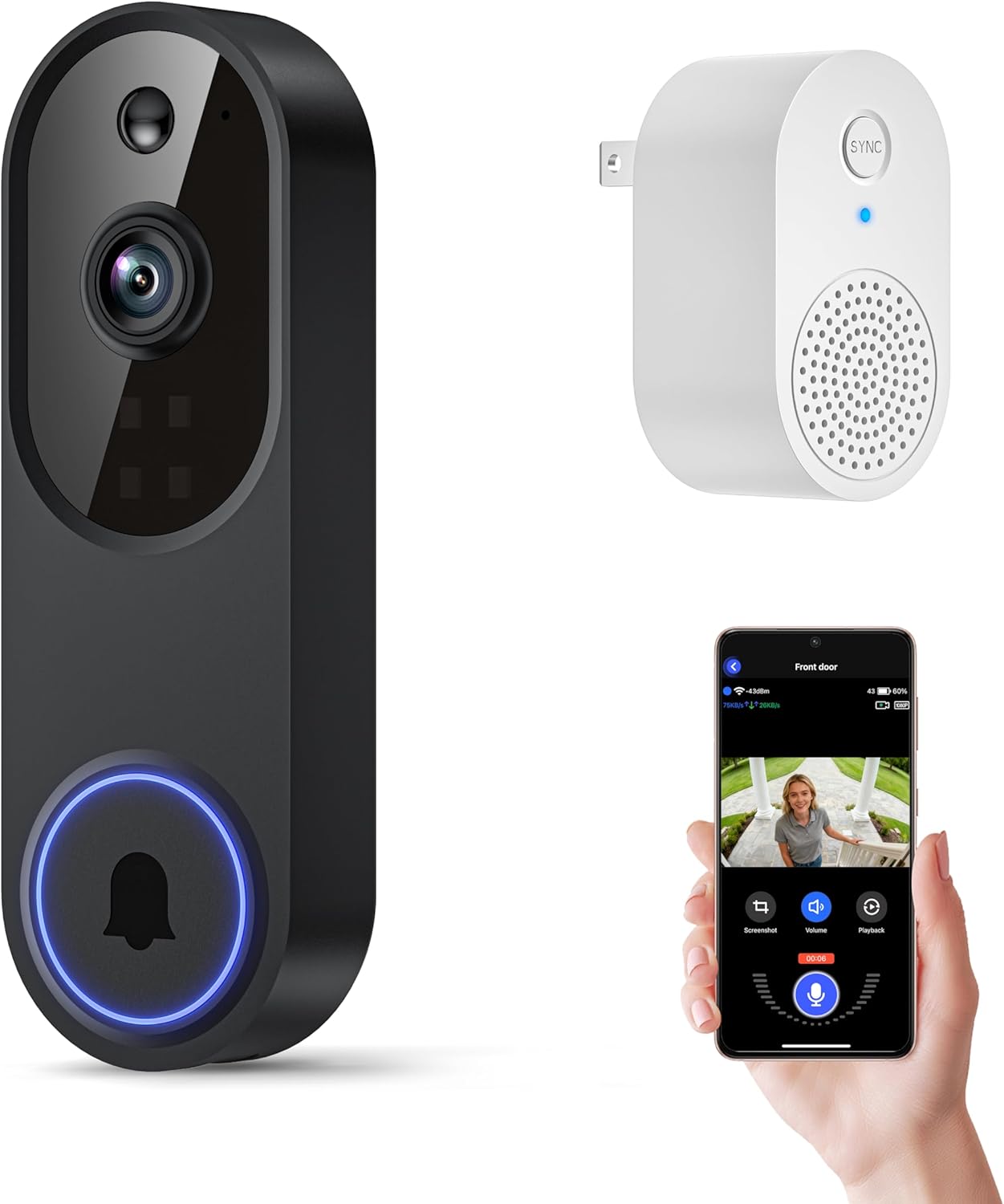
| Connectivity Technology | Wi-Fi (2.4GHz only) |
|---|---|
| Effective Video Resolution | 1080p |
| Night Vision | Night Color with infrared LEDs |
| Indoor Outdoor Usage | Indoor, Outdoor |
| Other Special Features | 2-Way Audio, Motion Sensor |
The Orbitell M52 is a battery-powered wireless doorbell camera designed for year-round outdoor use that records 1080p video, sends instant motion alerts, and lets you speak with visitors via two-way audio. It connects only to 2.4GHz Wi-Fi and uses AI motion detection to reduce false alerts from cars and animals, while cloud storage (AES-128 encrypted) and pre-capture for subscribers preserve short clips around events. Night color vision and four infrared LEDs provide clearer footage after dark and the IP65-rated housing handles rain and cold temperatures typical of outdoor mounting. Setup is app-driven, the unit recharges over micro-USB, and the manufacturer advises several hours of initial charging and placement within about 33 feet of the router. Limitations to note are the lack of local SD recording and no 5GHz Wi-Fi support, which could complicate connections on modern dual-band networks, and cloud access is required for full recording features.
Best for: Buyers wanting an affordable, weather-ready wireless doorbell that emphasizes reliable person detection and clear night footage for seasonal outdoor use.
Less Ideal for: Users who need local onboard storage or must connect the camera to a 5GHz-only Wi-Fi network should consider other options.
- AI-powered motion detection that filters people from vehicles and animals to reduce false alerts
- Two-way audio for real-time communication with visitors
- Night color vision plus infrared LEDs for usable footage in low light
- Weather-resistant IP65 design suitable for outdoor cold weather exposure
- Only supports 2.4GHz Wi-Fi and will not connect to 5GHz networks
- No local SD card recording; full recording requires a cloud subscription
Verdict: A budget-friendly, weatherproof doorbell camera focused on accurate person detection and usable night footage for cold climates.
Ring Battery Doorbell

| Video coverage | Head-to-toe vertical video |
|---|---|
| Power | Built-in rechargeable battery, USB-C charge port |
| Two-way talk | Yes |
| Motion alerts | Yes, Smart Alerts available (subscription) |
The Ring Battery Doorbell is a wireless doorbell intended for home or small-business entry monitoring that records vertical head-to-toe video, sends motion alerts, and offers live two-way conversation from your phone. Installation is straightforward: charge the built-in battery via the USB-C port, mount the unit, and connect to Wi-Fi to receive notifications and view Live View on demand. Notable features include expanded vertical field of view for packages at the doorstep, on-device motion detection with optional Smart Alerts that distinguish people and packages (requires a Ring Protect subscription), and Alexa integration for hands-free access. The battery charging workflow is simple because you can detach the unit and plug the included cable into the USB-C port rather than uninstalling wiring. Limitations to consider are the reliance on battery power that requires periodic recharging and the need for a subscription to unlock cloud video history and advanced alert types, and performance depends on your Wi-Fi signal strength in cold-weather conditions.
Best for: Buyers who prioritize a reliable, easy-to-install wireless doorbell that provides clear vertical coverage and remote live access without running new wiring, especially where cold weather can make wired work difficult.
Less Ideal for: People who need continuous hardwired power or full cloud history without a subscription should consider wired models or systems that include free video storage.
- Head-to-toe vertical video captures more of the doorway and packages
- Built-in rechargeable battery with USB-C charging for convenient removal and recharge
- Live View and two-way talk let you see and speak to visitors in real time
- Motion alerts and optional Smart Alerts provide proactive notifications
- Works with Alexa for hands-free notifications and video launch
- Requires periodic recharging since it is battery powered
- Advanced features and cloud video storage require a paid Ring Protect subscription
Verdict: A practical, easy-to-install battery video doorbell that gives extra vertical coverage and dependable remote access for buyers who want a wireless solution suited to cold-weather installs.
Blink Video Doorbell

| Battery life | Up to two years (with 3 AA Energizer lithium batteries) |
|---|---|
| Included module | Sync Module Core with USB-C cable and adapter |
| Video | Head-to-toe HD with infrared night vision |
| Power options | Wire-free or existing doorbell wiring |
The Blink Video Doorbell is a straightforward battery-first smart doorbell designed for minimal fuss installation and long runtimes. It records a wide head-to-toe HD view, offers infrared night vision, and supports two-way talk through the Blink app so you can see and speak with visitors or monitor deliveries. Setup can be wire-free using the included three AA Energizer lithium batteries and the Sync Module Core, or wired to make the chime inside your home sound. The Sync Module and supplied corner mount simplify connecting multiple Blink devices and placing the doorbell where you need coverage. In practical use this model excels when you want quiet, infrequent maintenance and clear daytime and nighttime clips, and it integrates with Alexa for basic voice control. Important trade-offs are that advanced person-detection features and cloud clip stitching require a Blink subscription to access, and high-traffic locations may produce more alerts that fill cloud storage or need frequent battery or clip management.
Best for: Buyers who want a low-maintenance, easy-to-install wireless doorbell with long battery life and clear day/night video for routine home security in cold climates.
Less Ideal for: Users who need fully local storage, extensive free advanced analytics, or intensive continuous recording for very high-traffic doorways should consider other solutions.
- Long up-to-two-year battery life with included Energizer lithium batteries
- Wide head-to-toe HD field of view for good coverage of door and package areas
- Includes Sync Module Core for local device coordination and simpler setup
- Night vision and two-way talk for 24/7 monitoring and guest interaction
- Key advanced features like person detection and stitched Moments require a paid Blink subscription
- Battery-powered operation can still need occasional battery replacement under heavy activity
Verdict: Choose this Blink doorbell if you need a simple, long‑running wireless doorbell that delivers wide HD video and easy setup for cold-weather installations.
Ring Battery Doorbell Retinal 2K

| Video resolution | Retinal 2K |
|---|---|
| Enhanced zoom | Up to 6x |
| Connectivity | Wireless |
| Battery | Built-in rechargeable (USB-C) |
The Ring Battery Doorbell Retinal 2K is a wireless doorbell meant to capture higher-resolution video at the front door and provide basic smart-alert features. It records Retinal 2K footage with a wide field of view and an enhanced digital zoom up to 6x so you can inspect faces and distant details, and it supports live two-way talk from your phone. Motion detection sends real-time push alerts, and clips can be reviewed with a Ring Protect subscription. The unit uses a removable, rechargeable internal battery that you detach with the included tool and recharge over USB-C, which keeps installation cable-free but requires occasional charging. It also integrates with Alexa devices for hands-free viewing and notifications. For cold-weather use, the sealed battery and wireless design avoid wiring issues that can be complicated by freezing, but battery life will shorten in very low temperatures and you will need to recharge more often. This is a straightforward choice if you want crisp video, simple setup, and Alexa integration, with the usual need for a subscription for cloud history and the practical consideration of battery maintenance in winter months.
Best for: Buyers who want an easy-to-install wireless doorbell that prioritizes clear video, Alexa integration, and straightforward setup rather than a hardwired or maintenance-free solution.
Less Ideal for: Users who want a maintenance-free, always-on hardwired doorbell or those who need long unattended battery life in extreme cold without frequent recharging.
- Retinal 2K video with up to 6x enhanced zoom for clearer identification and distant detail.
- Wireless battery operation makes installation simple and avoids running doorbell wiring.
- Two-way talk and live view let you communicate with visitors in real time.
- Rechargeable internal battery using USB-C for convenient recharging and removal tool included.
- Works with Alexa for hands-free announcements and Echo Show video launch.
- Battery life will decrease in cold temperatures and requires periodic removal and recharging.
- Cloud video history requires a Ring Protect subscription for full functionality.
Verdict: Choose this Ring wireless 2K doorbell if you want higher-resolution, easy-to-install video monitoring with Alexa support and are willing to manage seasonal battery recharging.
Choosing the Right Wireless Video Doorbell for Cold Weather: Key Factors to Consider
Operating Temperature Range
The listed operating temperature range shows whether a doorbell is rated for freezing conditions. Batteries and electronics behave differently at low temperatures, so a unit rated only for mild cold may lose runtime or fail to boot when temperatures drop. Choosing a model with a wide approved temperature window reduces the risk of seasonal failures.
Also check whether the manufacturer specifies separate storage and operating ranges. A doorbell left unheated near an exterior wall can experience both storage and operating stresses. When an operating range includes subzero Fahrenheit or Celsius values, you can expect better resilience in winter climates.
Battery Type and Cold Performance
Battery chemistry matters in cold weather. Lithium-based batteries retain capacity better at low temperatures than older chemistries, and designs that include thermal management or protected battery compartments can prevent cold-induced voltage drops. Removable battery packs let you swap in a warm spare during extreme conditions, while hardwired options avoid battery exposure but require reliable wiring and power conversion.
Consider how easy it is to access the battery in winter. Models that need extensive disassembly for battery changes become impractical in freezing rain or ice. Also look for clear guidance on expected runtime at low temperatures rather than only room-temperature figures.
Ingress Protection and Exterior Build
Water, ice, and salt can all compromise doorbell electronics. Look for high-quality seals, gasketed battery doors, and corrosion-resistant fasteners to minimize moisture ingress. An IP rating provides a baseline for water and dust resistance, but construction details such as recessed seams, covered micro-USB ports, and hydrophobic lens coatings make a real difference in winter storms.
Materials that handle thermal contraction and expansion without cracking are important. Plastic housings that become brittle in the cold or paint that flakes away can expose internal components. A solid exterior design reduces the chance of weather-related failures and simplifies maintenance.
Motion Detection and False-Alarm Control
Cold weather brings moving snow, blowing debris, and condensation on lenses that can trigger false alerts. A model with adjustable motion zones, sensitivity settings, and intelligent person detection will reduce nuisance notifications. Sensor placement and field-of-view also matter; a wide angle increases coverage but may see more background movement from snow banks or trees.
Look for cameras that support firmware updates and algorithm improvements. In winter, the ability to tune detection profiles for seasonal changes helps maintain useful alerts without overwhelming you with unnecessary clips.
Connectivity and Network Robustness
Wi-Fi performance can be affected by colder air and thicker winter clothing around the house. Strong connectivity and support for dual-band Wi-Fi or mesh networks improve stability for live streams and event uploads. Some doorbells include local storage options that buffer recordings if the network drops, which is useful during brief outages caused by weather.
Also consider signal placement and whether a chime extender or dedicated bridge is available to strengthen communication between the doorbell and your home network. Reliable network behavior ensures you still receive alerts when it is most critical.
Installation and Maintenance in Low Temperatures
How a unit is installed affects long-term winter performance. Hardwired installations avoid battery drain but must be done with weatherproof junction boxes and proper seals to prevent condensation. For battery models, easy-access battery doors and clear removal instructions make swaps feasible in cold conditions. Some designs include mounting templates and sturdier screws that resist stripping when using gloved hands.
Maintenance considerations include lens cleaning to remove condensation and snow, checking seals each season, and having spare batteries or a charging plan for extended cold snaps. A doorbell that is straightforward to service will stay operational through multiple winters.
How Cold Weather Affects Camera Image Quality
Low temperatures and moisture can change how the camera captures light and contrast. Condensation on the lens, frost, or ice buildup reduces clarity and may confuse motion algorithms. In addition, reduced ambient light during winter months makes low-light performance more important than at other times of year.
Look for models with good low-light sensors, automatic exposure adjustments, and lens treatments that minimize fogging. Positioning the camera under an overhang or using a small protective hood can reduce direct exposure to precipitation and improve image reliability.
- Condensation and frost can blur daytime and nighttime images
- IR illumination may reflect off nearby snow and cause bloom
- Wide dynamic range helps preserve detail against snow glare
- Physical hoods or recessed mounts reduce direct precipitation
Mounting Best Practices for Winter Durability
Proper mounting reduces the risk of water ingress and keeps the doorbell working through freeze-thaw cycles. Use a stable, insulated substrate if possible and avoid mounting on surfaces that collect melting snow or ice runoff. Tilted mounts can help shed water and ice away from seams and lenses.
Sealing around screw holes and cable entry points with an approved exterior sealant provides extra protection. Periodic inspection after storms helps catch seal degradation before water compromises electronics.
- Choose sheltered locations when available
- Angle the unit slightly downward to prevent pooling
- Seal entry points with exterior-rated caulk
- Check mounts for corrosion or loosening after heavy weather
Power Options: Battery Vs Hardwired in Cold Climates
Battery models provide installation flexibility and reduce the risk of condensation from indoor wiring, but batteries lose efficiency in cold conditions. Hardwired units avoid cold-related battery issues but must be installed with weatherproof connections and consider transformer sizing for freeze-thaw performance.
If you rely on batteries, plan for shorter winter runtime and keep spares warm for quick swaps. For hardwired setups, confirm the wiring and transformer are rated for low temperatures and that any in-line components are protected from moisture.
- Battery units need easier access for winter swaps
- Hardwired units require proper outdoor-rated junctions
- Consider a hybrid option if available to get the best of both
- Assess local climate to decide which power option makes more sense
Maintaining Performance: Seasonal Checks and Firmware
Regular maintenance keeps doorbells reliable through winter. Clean the lens and housing to remove salt spray and road grime, inspect seals and fasteners, and test motion detection settings after major temperature shifts. Small preventive steps reduce the chance of downtime.
Firmware updates often include camera and sensor improvements that address false alarms and cold-start behavior. Install updates when convenient and review release notes for winter-related fixes or settings that help performance in low temperatures.
- Wipe lenses and housings after storms to prevent salt buildup
- Run a quick motion test after heavy snow or wind events
- Keep replacement batteries stored in a warm place
- Apply firmware updates during milder conditions to avoid interrupting critical alerts
Local Storage and Privacy Considerations
In areas prone to network disruptions during winter storms, local storage options let the doorbell keep recordings until connectivity is restored. This prevents gaps in footage during critical weather events. Evaluate whether a model supports on-device storage or requires continuous cloud uploading.
Privacy controls and encryption remain important regardless of weather. Ensure the doorbell offers secure access controls and configurable retention settings so recordings are handled according to your privacy preferences.
- Local storage buffers footage during brief network outages
- Check retention controls for automatic overwrite policies
- Use strong authentication to secure live access
- Balance cloud convenience with local resilience based on your network reliability
How We Chose the Best Wireless Video Doorbell for Cold Weather
We focused on features and performance that directly affect reliability and usability in freezing temperatures. Key evaluation dimensions included battery performance in low temperatures, firmware and software handling of cold-start conditions, motion detection consistency when sensors may be affected by snow or wind, and physical weather sealing against ice and moisture intrusion. We also considered installation flexibility for cold climates, such as battery vs hardwired power options and the ease of swapping batteries in low temperatures. Additional filters removed models without published cold-temperature specs or with unsealed housings that risk moisture ingress. We prioritized units with clear documentation of operating temperature ranges, manufacturers that provide cold-start routines or thermal management, and proven connectivity stability under reduced signal conditions. Units failing basic ruggedness tests or lacking replaceable battery options were excluded. Our approach balances practical winter use, maintainability, and core security performance to produce a shortlist tailored to cold-weather needs.
Our full evaluation process is outlined in our review methodology.
FAQ
Will a wireless video doorbell work in subzero temperatures?
Many models are designed to operate in subzero temperatures, but performance depends on the specific operating temperature rating and battery chemistry. Check the manufacturer's stated range and prioritize units with lithium batteries or thermal protections for better cold-weather reliability.
How often will I need to change batteries in winter?
Battery life usually decreases in cold weather, so expect shorter intervals between charges or swaps compared with milder seasons. The exact frequency depends on usage patterns, motion events, and battery capacity, so plan for more frequent checks during extended cold snaps.
Does snow or ice affect motion detection?
Snow, blowing debris, and lens condensation can trigger false alerts or obscure true motion. Models with adjustable motion zones, sensitivity controls, and person detection algorithms typically handle winter conditions better than systems with fixed basic sensors.
Can I install a doorbell outside without shelter?
You can install an outdoor doorbell in exposed locations if it has appropriate ingress protection and durable construction. However, mounting under an overhang or using a small hood reduces direct exposure to precipitation and helps preserve seals and lens clarity.
Should I choose hardwired or battery-powered for cold climates?
Hardwired units avoid battery degradation in cold weather but need properly sealed exterior connections and an appropriately rated transformer. Battery-powered units offer installation flexibility but require easier access for swaps and a plan for reduced winter runtime.
Final Verdict
For winter security, prioritize doorbells with verified low-temperature operating ranges, rugged weather sealing, and battery designs that tolerate cold. Decide between hardwired and battery options based on access and how much seasonal maintenance you are willing to perform. Focus on motion detection controls and network resilience to avoid false alarms and missed events. With those tradeoffs in mind, choose the model that matches your climate, installation constraints, and maintenance preferences so you get dependable performance through the coldest months.